
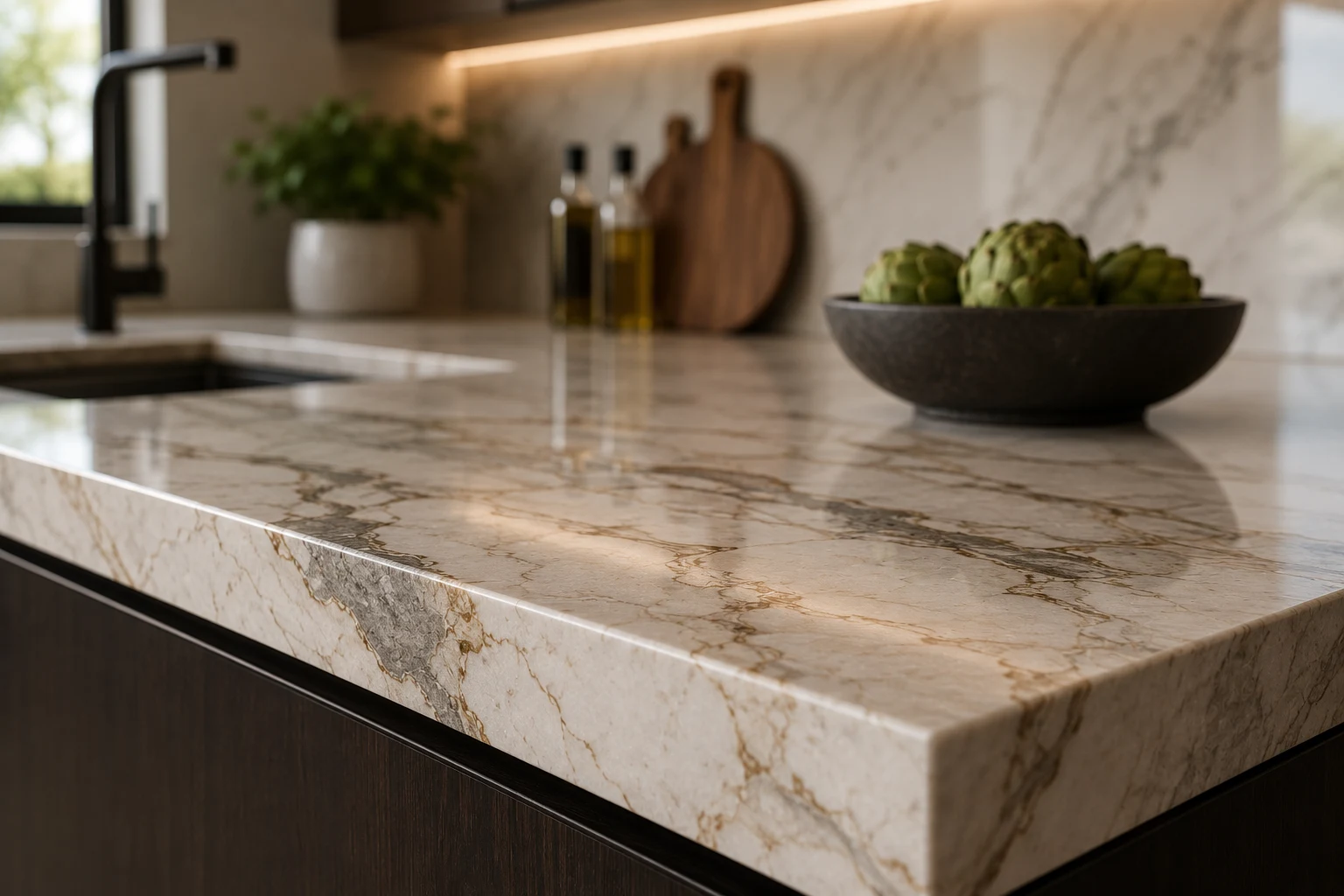
Countertops Guide
Countertop Materials: Quartz, Porcelain, Marble, Quartzite and Natural Stone Guide
Countertops are one of the most visible and most used surfaces in a home or commercial space. The right countertop must look beautiful, support daily activity, resist stains and moisture, coordinate with cabinets and flooring, and fit the long-term design vision. This guide explains how to compare quartz, porcelain, marble, quartzite, granite, natural stone and large-format slab countertops before choosing the best surface for your project.

Why Countertop Material Matters
A countertop is not just a decorative surface. It is a working surface. It is used for cooking, serving, cleaning, storing appliances, placing hot or cold items, working with water, and often gathering with family or guests. In a kitchen, the countertop is one of the main contact points between design and daily life. In a bathroom, it affects cleanliness, visual calm, and the quality of the vanity area. In commercial interiors, it helps communicate brand value and durability.
This is why choosing a countertop material only by color is a mistake. A beautiful slab may not be the best choice if it is too sensitive for the way the space is used. A very practical material may still look wrong if it conflicts with cabinets, flooring, backsplash, lighting, or wall panels. The best countertop decision balances beauty, durability, maintenance, budget, slab size, edge profile, installation method, and the overall design concept.
At Luxiomer, countertops are treated as part of a complete surface system. The countertop may connect with a waterfall island, backsplash, flooring, shower walls, fireplace cladding, or wall panels. When all surfaces are selected together, the project feels more intentional and more premium.
Main Types of Countertop Materials
The most common premium countertop categories include quartz, porcelain, marble, quartzite, granite, and other natural stones. Each material has a different personality and different technical behavior. There is no single best countertop for every project. The right choice depends on the room, the lifestyle, the level of maintenance the client accepts, and the visual result the designer wants to create.
For example, quartz is often chosen for consistency and everyday practicality. Porcelain is chosen for modern performance, heat resistance, and large-format design possibilities. Marble is selected for timeless elegance and natural veining. Quartzite is chosen for natural drama and strength. Granite is selected for durability and classic stone performance. Other stones, such as limestone, travertine, soapstone, onyx, and dolomite, may be used when the project needs a very specific aesthetic.
Quartz Countertops
Quartz countertops are engineered surfaces made from mineral content, resins, and pigments. They are popular because they offer consistency, a wide range of colors, and relatively easy maintenance. Many homeowners choose quartz because it can deliver a clean modern look without the same sealing expectations as many natural stones.
Quartz is commonly used in kitchens, bathroom vanities, laundry rooms, office counters, reception desks, and other interior applications. It is especially useful when the project needs a controlled pattern, predictable color, and a practical surface for daily use.
Advantages of Quartz Countertops
- Consistent color and pattern options.
- Good resistance to many common household stains.
- No regular sealing in most standard applications.
- Wide range of marble-look, concrete-look, solid and modern designs.
- Strong choice for busy kitchens and family homes.
However, quartz still has limits. It is not the same as natural stone, and it may have heat sensitivity depending on the product and manufacturer guidance. Very hot objects should not be placed directly on quartz surfaces. For outdoor use, many quartz products are not recommended because UV exposure can affect color and resin stability. The exact product specifications should always be checked.
Porcelain Countertops
Porcelain countertops are becoming more popular because they offer a strong combination of beauty and performance. Porcelain slabs can be very large, thin, and visually dramatic. They can imitate marble, concrete, metal, limestone, travertine, terrazzo, and other premium surfaces. Porcelain is also highly resistant to moisture and many stains.
One of the biggest advantages of porcelain is design flexibility. Large-format porcelain slabs can create a clean modern countertop, a full-height backsplash, a waterfall island, or even coordinated wall and floor surfaces. This makes porcelain valuable for luxury kitchens, bathrooms, outdoor kitchens, restaurants, hotels, and commercial spaces.
When Porcelain Countertops Are a Strong Choice
Porcelain is especially useful when the project needs a modern, durable, low-maintenance surface with a high-end look. It can be a practical alternative to natural marble when the client wants a marble-inspired design but does not want the maintenance concerns of marble. Porcelain can also work well when designers want the same visual language across countertops, backsplashes, walls, and flooring.
Porcelain does require skilled fabrication and installation. Thin slabs, mitered edges, cutouts, and large panels must be handled correctly. Edge design matters because some porcelain slabs have a printed surface pattern that may not continue through the full body of the material. This does not make porcelain bad, but it means details must be planned carefully.
Marble Countertops
Marble countertops are known for elegance, softness, and natural beauty. They can transform a kitchen, bathroom, bar, or feature surface into something timeless and refined. White marble with grey veining, warm beige marble, dramatic black marble, and richly colored marble can all create a strong design statement.
The important point is that marble requires realistic expectations. Marble is a natural stone that can be sensitive to acidic substances, etching, staining, and scratching. For some clients, this natural aging is part of the charm. For others, especially those who want a perfect-looking surface with minimal care, marble may be less suitable for heavy-use kitchens.
Marble can be excellent for bathroom vanities, fireplace surrounds, feature islands, low-traffic areas, and design-focused spaces. It can also be used in kitchens when the client understands care and accepts the natural patina that may develop over time.
Quartzite Countertops
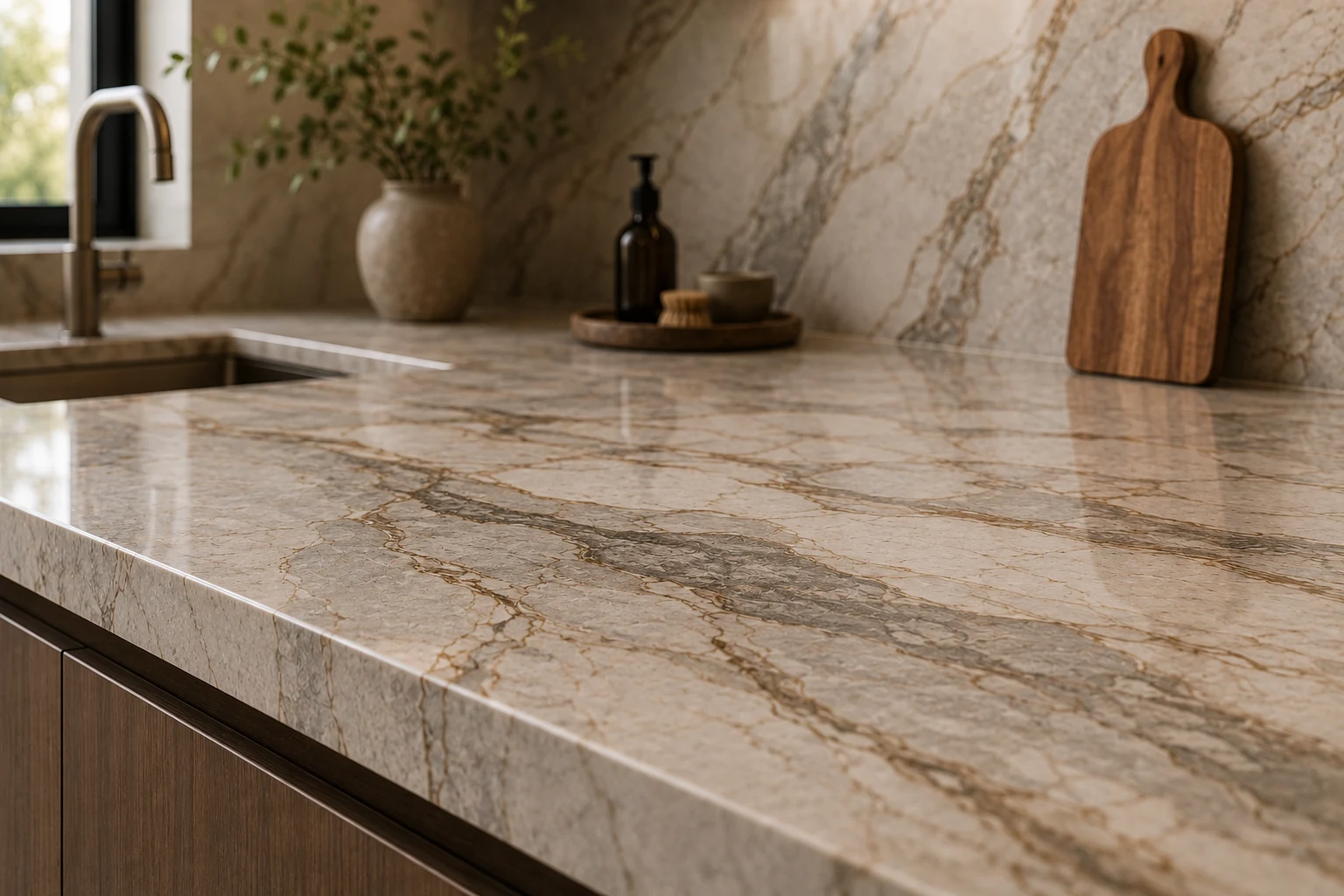
Quartzite is a natural stone that often combines dramatic beauty with strong physical performance. It is formed through natural geological processes and can offer striking veining, depth, and movement. Many quartzites have the visual excitement people love in marble but can be harder and more durable than many marble varieties.
Quartzite countertops are often chosen for luxury kitchens, statement islands, bars, feature walls, and projects where natural uniqueness is important. Each slab can be different, so slab selection is a key part of the design process. Clients should view the actual slabs whenever possible, not only small samples.
Even though quartzite can be very durable, it is still natural stone. Sealing, finish, porosity, and maintenance instructions should be reviewed. Some stones sold under quartzite-like names may behave differently, so proper supplier information matters.
Granite Countertops
Granite has been used for countertops for decades because it is durable, natural, and widely available in many colors and patterns. It can be a strong choice for kitchens, bathrooms, commercial counters, and practical stone installations. Granite is generally harder and more scratch-resistant than many softer stones, although it still benefits from proper sealing and care.
Granite can look traditional or modern depending on the selected slab. Dark granite can create a strong, elegant effect. Light granite can support a cleaner interior. More active patterns can become a visual feature, while calmer granite selections can work as a practical background surface.
Natural Stone Countertops
Natural stone is a broad category. Marble, quartzite, granite, dolomite, soapstone, limestone, travertine, onyx, and other stones all have different characteristics. The main advantage of natural stone is authenticity. No two slabs are exactly the same. Natural movement, mineral details, and color variation can make a countertop feel unique and valuable.
The challenge is that natural stone selection requires more knowledge. Some stones are dense and durable. Some are porous. Some are sensitive to acids. Some need sealing. Some are better for bathrooms than kitchens. Some are ideal for feature areas but not heavy-use work surfaces. A good stone selection process should include technical review, not only visual preference.
Countertops for Kitchens
The kitchen is the most demanding countertop environment in most homes. A kitchen countertop must handle water, oil, food, knives, plates, cleaning products, small appliances, coffee, wine, citrus, heat, and daily movement. It also has to work visually with cabinets, flooring, backsplash, hardware, lighting, and the overall style of the home.
Quartz is often selected for family kitchens because it is practical and consistent. Porcelain is strong for modern kitchens where large-format surfaces and full-height backsplashes are desired. Quartzite is excellent for statement islands and luxury natural stone kitchens. Granite remains a reliable practical stone option. Marble can be beautiful, but it should be selected with clear maintenance expectations.
Kitchen Island Countertops
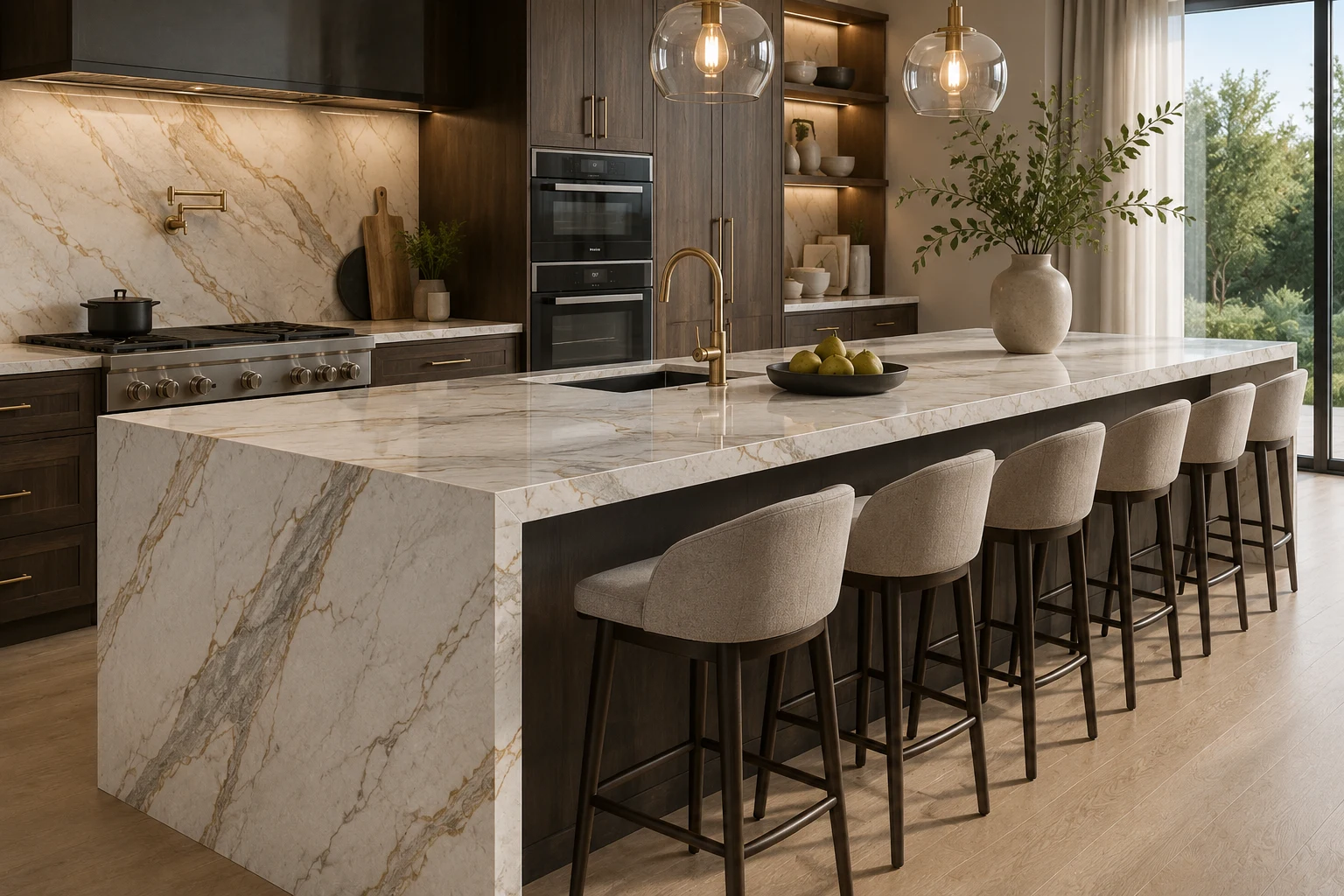
The island is often the focal point of the kitchen. It may be used for preparation, dining, serving, homework, entertaining, and visual impact. A waterfall edge can make the island feel more architectural. A dramatic natural stone slab can turn the island into a centerpiece. A calm quartz or porcelain surface can create a clean and modern look.
When choosing a kitchen island countertop, size and slab availability matter. Large islands may require careful slab layout or seams. Pattern direction should be planned before fabrication. If the material has strong veining, bookmatching or vein alignment can significantly affect the final result.
Countertops for Bathrooms
Bathroom vanity countertops have different needs than kitchen countertops. They must handle water, soap, cosmetics, toothpaste, cleaning products, and humidity. The visual goal is often calm, clean, and spa-like. Materials such as quartz, porcelain, marble, quartzite, and other stones can all work depending on the design and maintenance expectations.
Quartz is practical for bathrooms because it is easy to clean and available in many designs. Porcelain can be excellent for modern vanities and coordinated wall panels. Marble can create a luxury bathroom atmosphere, especially when combined with matching wall or floor surfaces. Natural stone should be sealed and maintained according to its specific properties.
Backsplashes, Waterfall Edges and Full-Height Slabs
Countertop design does not stop at the horizontal surface. The backsplash, side panels, edge profiles, and wall transitions can change the entire character of the project. A full-height backsplash in the same material as the countertop can create a clean and luxurious effect. A waterfall island can make the countertop material look more architectural and intentional.
Porcelain and natural stone slabs are especially powerful for these applications because they allow larger continuous surfaces. Quartz can also be used for backsplashes and waterfall panels depending on the product and design. The key is to plan slab movement, seams, edge details, and installation before fabrication begins.
Choosing the Right Finish
Finish affects both the appearance and the daily experience of a countertop. A polished finish is glossy, reflective, and elegant. A honed finish is softer and more matte. A leathered or textured finish can add tactile depth and may hide fingerprints or minor marks better in some materials.
Polished stone can make colors and veining look more vivid, but it may show etching or scratches more clearly depending on the material. Honed stone can feel more natural and modern, but it may show oils or marks differently. Porcelain and quartz finishes vary by manufacturer, so samples should be viewed under project lighting whenever possible.
Edge Profiles and Fabrication Details
The edge profile is a small detail that has a large visual effect. A simple eased edge feels modern and clean. A thicker mitered edge can make a slab look more substantial. A rounded edge can feel softer and more traditional. Waterfall edges create a strong architectural statement.
Fabrication quality is critical. Sink cutouts, cooktop cutouts, seams, corners, overhangs, support brackets, and edge alignment all affect the final result. Even the best slab can look average if fabrication and installation are not precise.
How Countertops Coordinate With Cabinets, Flooring and Walls
A countertop should be selected as part of the full interior palette. Cabinets, flooring, wall color, lighting, hardware, appliances, and backsplash all influence how the countertop appears. A dramatic countertop may need calmer flooring and simple cabinets. A quiet countertop may allow bolder wall panels or stronger cabinet color.
Warm beige, cream, travertine-look, and soft stone tones can create a natural and inviting interior. White marble-look surfaces can make the room feel bright and refined. Dark stone or porcelain can create drama and contrast. Grey, concrete-look, or minimalist quartz can support a modern architectural design.
Common Mistakes When Choosing Countertops
- Choosing only by color without understanding maintenance.
- Assuming quartz, quartzite and marble behave the same way.
- Ignoring heat, stain, acid and scratch resistance.
- Not viewing the actual slab before fabrication.
- Forgetting to plan seams and vein direction.
- Selecting backsplash and flooring separately from the countertop.
- Choosing an edge profile too late.
- Using a material outdoors without checking manufacturer guidance.
How to Choose the Best Countertop Material
The best way to choose a countertop is to start with use. Is this a busy family kitchen, a luxury show kitchen, a bathroom vanity, a bar, an outdoor kitchen, a commercial counter, or a feature island? Will the surface face heavy cooking, water, heat, cosmetics, food acids, or frequent cleaning? Does the client want low maintenance, natural character, visual drama, or design consistency?
After that, the material choice becomes clearer. Quartz may be best for practical consistency. Porcelain may be best for modern large-format performance. Marble may be best for timeless beauty. Quartzite may be best for natural drama and strength. Granite may be best for reliable stone durability. Other natural stones may be best for unique design statements.
Maintenance Basics
Every countertop material needs proper care. Use cutting boards, clean spills promptly, avoid harsh cleaners, and follow the care instructions for the specific surface. Natural stone may need sealing. Marble should be protected from acidic substances. Quartz should be protected from excessive heat. Porcelain is generally very resistant, but edges and fabricated details should still be treated with care.
Good maintenance is not only about keeping the surface clean. It is about protecting the investment and keeping the material beautiful for years. The right habits can extend the life and appearance of any premium countertop.
Frequently Asked Questions About Countertop Materials
What is the best countertop material?
There is no single best countertop material for every project. Quartz is practical and consistent, porcelain is modern and durable, marble is elegant, quartzite is natural and dramatic, and granite is strong and reliable. The best choice depends on the room, use, maintenance expectations and design goal.
Are quartz countertops better than marble?
Quartz is usually easier to maintain than marble, but marble offers natural beauty and unique veining that engineered surfaces cannot fully duplicate. Quartz may be better for busy kitchens, while marble may be better for clients who value natural character and accept more care.
Are porcelain countertops good for kitchens?
Yes, porcelain countertops can be excellent for kitchens. They are moisture-resistant, visually versatile, and available in large slabs. They require skilled fabrication, especially for edges, cutouts and large-format installation.
Is quartzite good for countertops?
Quartzite can be an excellent countertop material when the right stone is selected. It often provides natural beauty and strong performance. As with all natural stone, sealing, finish and supplier information should be reviewed.
Should countertops match the floor?
Countertops do not need to match the floor exactly. They should coordinate with flooring, cabinets, backsplash and wall surfaces. Often the best design uses balance: a dramatic countertop with a calm floor, or a simple countertop with a more textured surface palette.
What countertop is easiest to maintain?
Quartz and porcelain are often among the easiest premium countertop materials to maintain. Natural stone can also be practical, but the exact maintenance depends on the stone type, finish and sealing requirements.
Final Thoughts
Countertops shape the look and function of kitchens, bathrooms and commercial interiors. They are both design elements and working surfaces. Choosing the right countertop means understanding the difference between quartz, porcelain, marble, quartzite, granite and other natural stones, then matching the surface to the way the space will actually be used.
For homeowners, designers, builders and commercial clients, the strongest results come from planning countertops together with flooring, backsplashes, wall panels and architectural details. A well-selected countertop does more than complete a room. It can define the entire project.