
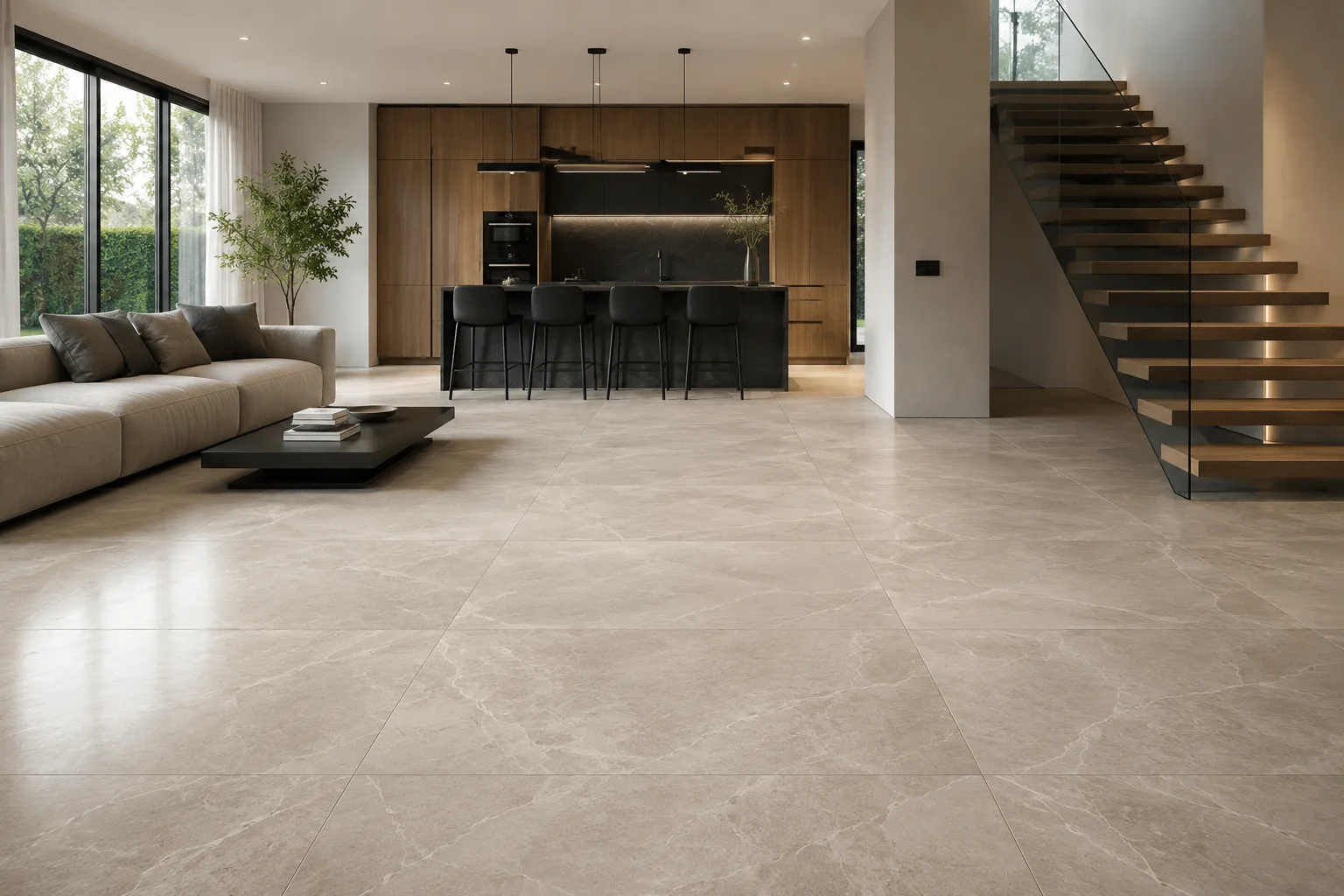
Flooring Guide
Flooring Materials: Stone, Porcelain, Quartz and Large-Format Slab Flooring Guide
Choosing flooring is not only about color or pattern. The right floor has to support daily use, match the interior concept, work with countertops and wall surfaces, and stay practical for years. This guide explains how to compare porcelain, natural stone, quartzite, marble-look slabs, finishes, formats, and installation factors before choosing a premium flooring material.

Why Flooring Material Matters
Flooring is one of the largest visible surfaces in any interior. It affects how a room feels, how light moves through the space, how furniture is perceived, and how easy the room is to maintain. A floor can make a home feel calm and natural, bright and luxurious, modern and minimal, or bold and dramatic. It can also become a daily problem if the material is too slippery, too sensitive, too hard to clean, or poorly matched to the way the space is used.
For that reason, flooring should never be selected only from a small sample or a single inspiration photo. A material that looks beautiful in a showroom may behave differently in a kitchen, bathroom, entryway, commercial lobby, or family living room. The best flooring choice balances appearance, durability, maintenance, safety, installation requirements, and long-term design value.
At Luxiomer, flooring is considered part of a complete surface system. The floor may connect visually with countertops, backsplashes, shower walls, fireplace surrounds, wall panels, stairs, outdoor areas, and other architectural details. When these surfaces are planned together, the whole interior feels more intentional and more valuable.
Large-Format Flooring: Why Slabs Are Different
Traditional flooring often uses smaller tiles or planks, which means more joints and more visual interruptions. Large-format flooring changes that impression. Bigger porcelain slabs or stone panels create longer lines, fewer grout joints, and a more seamless visual field. This is especially important in open-plan homes, luxury bathrooms, hotel lobbies, showrooms, retail interiors, and modern kitchens.
The main design advantage is continuity. When a floor has fewer breaks, the room can feel wider, calmer, and more architectural. A large-format floor also allows the material pattern to become part of the design. Marble-look veining, soft limestone movement, concrete effects, or dramatic natural stone patterns can be displayed with more impact than on small pieces.
Large-format flooring is especially useful when the goal is a high-end interior with clean lines. It can also help connect rooms. For example, the same porcelain slab look may continue from the kitchen into the dining area, then into a hallway or bathroom wall. This kind of coordination is difficult to achieve with ordinary flooring materials.
However, large-format flooring requires better planning. The subfloor must be flat and stable. Cutting, handling, leveling, adhesive selection, grout joints, and layout must be prepared carefully. A large slab is less forgiving than a small tile. If the installation is not planned properly, even an expensive material can look wrong.
Porcelain Flooring
Porcelain is one of the strongest choices for modern flooring because it combines design flexibility with practical performance. It is dense, hard, moisture-resistant, and available in many finishes and styles. Porcelain can imitate marble, travertine, limestone, concrete, terrazzo, metal, wood, and other natural or architectural materials.
For many homeowners and designers, porcelain flooring offers a practical path to a luxury look. A marble-look porcelain slab, for example, can create a similar visual direction to natural marble while being easier to maintain in busy spaces. This is why porcelain is widely used in kitchens, bathrooms, entryways, commercial interiors, restaurants, hospitality spaces, and high-traffic residential areas.
Where Porcelain Flooring Works Well
Porcelain works well in kitchens because it handles moisture, spills, and cleaning better than many sensitive materials. It is also a strong bathroom option because it does not absorb water like porous stone. In living rooms and open interiors, large-format porcelain can create a calm, continuous floor. In commercial spaces, it provides durability and predictable design control.
Another advantage is consistency. Natural stone varies from slab to slab, which is part of its beauty but also requires careful selection. Porcelain collections are usually more controlled, so the final result is easier to predict. This is useful for projects where the designer needs a specific color tone, pattern rhythm, or repeatable finish.
Natural Stone Flooring
Natural stone flooring brings a depth that manufactured materials cannot fully copy. Marble, limestone, travertine, slate, granite, quartzite, and other stones contain natural mineral movement, veining, color variation, and texture. Every installation is different. For some projects, this uniqueness is the main reason to choose stone.
Natural stone is often selected for luxury residences, formal entry halls, boutique hotels, feature bathrooms, staircases, fireplace zones, and interiors where material authenticity matters. It can make a space feel permanent, elegant, and connected to nature.
But natural stone is not one simple category. Marble is different from quartzite. Limestone is different from granite. Travertine is different from slate. Some stones are harder, some are more porous, s
ome need more sealing, some show wear more quickly, and some are better suited for high-traffic areas. The exact stone and finish matter.
Marble Flooring
Marble flooring is associated with classic luxury. It can be bright, soft, elegant, and dramatic. White marble, grey marble, beige marble, and strongly veined marble can all create a high-end interior. However, marble can be sensitive to scratches, etching, and acidic substances. It is best for clients who value natural beauty and accept that the surface may develop character over time.
Quartzite Flooring
Quartzite is a natural stone known for strength and dramatic visual movement. It can be a good option when a project needs the character of natural stone with better durability than some softer stones. Still, every quartzite should be reviewed individually. Finish, sealing, thickness, slip comfort, and intended use must be checked before flooring installation.
Limestone and Travertine Flooring
Limestone and travertine create warmer and softer interiors. They are often used in Mediterranean, organic modern, rustic luxury, and spa-style spaces. These materials can be beautiful, but they are usually more porous and need realistic maintenance expectations. They may be excellent for the right project, but they should not be chosen only because of color.
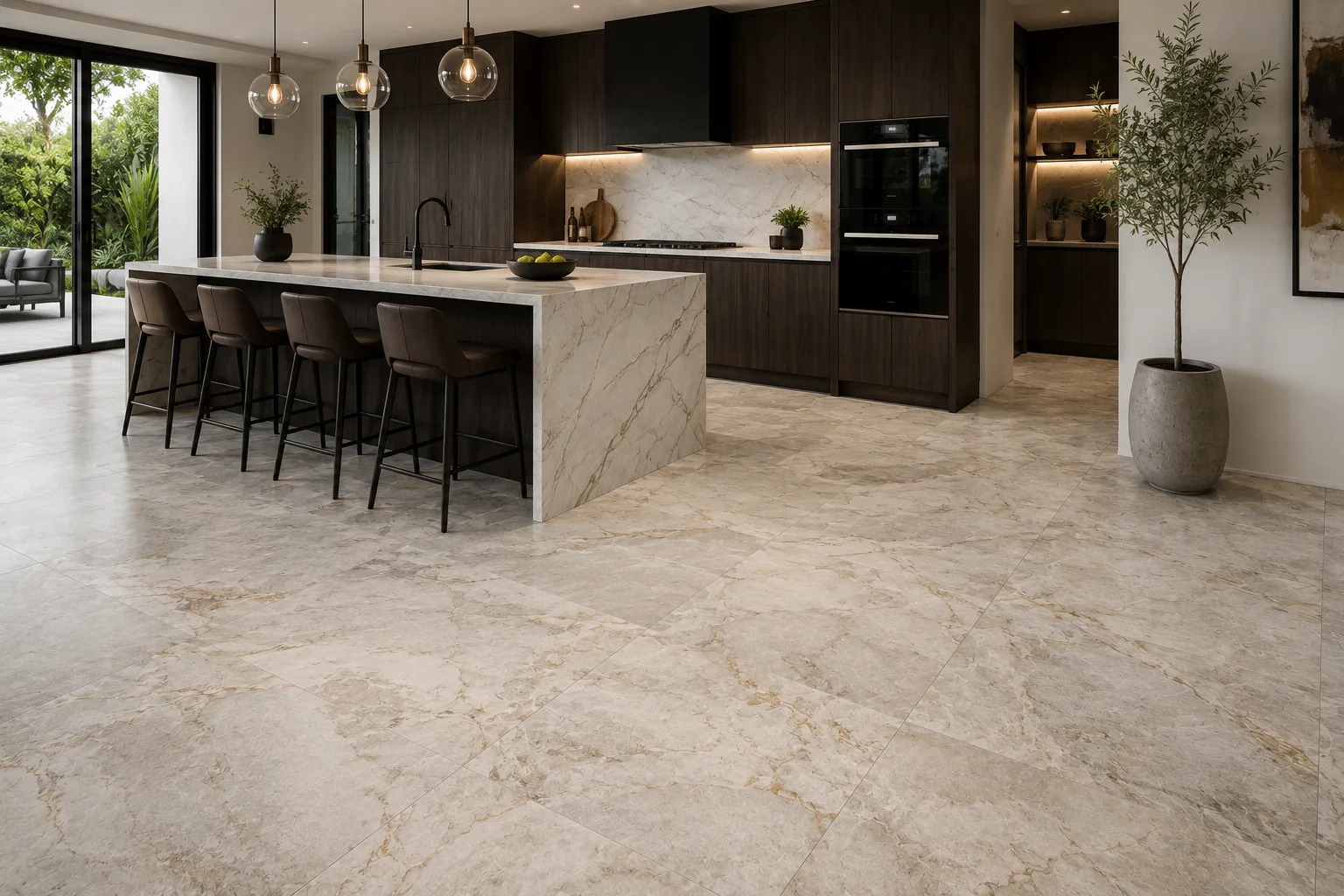
Flooring for Kitchens
Kitchen flooring must handle daily movement, food spills, water, dropped objects, chairs, pets, and frequent cleaning. It also has to look good with cabinets, countertops, backsplash, lighting, and appliances. This makes the kitchen one of the most important rooms for careful flooring selection.
Porcelain is often one of the strongest kitchen flooring choices because it offers durability and easy maintenance. A porcelain floor can look like marble, concrete, limestone, or natural stone while being more forgiving in a busy household. Large-format porcelain can also reduce the number of grout lines, which helps create a cleaner appearance.
Natural stone can also work beautifully in kitchens, especially when the goal is a premium, authentic material. But the stone must be chosen carefully. Some stones require sealing, some can be sensitive to acidic spills, and some finishes are more practical than others. A polished marble floor may look stunning, but it may not be ideal for every kitchen lifestyle.
Flooring for Bathrooms
Bathroom flooring has to deal with water, humidity, cleaning products, and bare feet. Slip comfort is very important. The floor also needs to connect with shower walls, vanity surfaces, mirrors, lighting, and sometimes heated floor systems.
Porcelain is a very common bathroom flooring material because it is moisture-resistant and available in many finishes. Matte or textured porcelain can be especially practical. Large-format porcelain slabs can create a spa-like bathroom with fewer grout joints and a more seamless look.
Natural stone bathrooms can feel luxurious and unique. Marble, limestone, travertine, and quartzite can all create beautiful bathroom designs. But the client should understand sealing, cleaning, and maintenance before choosing stone for wet areas. The finish is also important because polished surfaces may become slippery when wet.
Flooring for Living Rooms and Open Spaces
In living rooms, flooring sets the mood for the entire interior. It works as a visual foundation for furniture, rugs, lighting, wall color, and architectural details. In open-plan spaces, the floor often connects the kitchen, dining area, lounge, hallway, and sometimes outdoor transitions.
Light flooring can make the room feel larger and brighter. Beige, cream, limestone-look, and travertine-look floors create warmth. Grey or concrete-look floors create a modern architectural feeling. Dark stone-look floors can be dramatic and elegant, but they may show dust or footprints more clearly depending on the finish.
The best flooring for a living room should support the design without fighting with other surfaces. If the countertop is very dramatic, the floor may need to be calmer. If the furniture is minimal, a floor with more movement can add visual interest. Balance matters more than matching everything exactly.
Flooring for Commercial Spaces
Commercial flooring has different demands than residential flooring. A showroom, office, restaurant, salon, hotel lobby, or retail store may receive much more traffic than a private home. The material must support the brand image while remaining durable and easy to maintain.
Porcelain is often a strong commercial solution because it offers many design options and reliable performance. Natural stone can also be used in high-end commercial areas where character and luxury are important. In both cases, the project should consider traffic level, cleaning schedule, slip requirements, replacement strategy, and installation quality.
Choosing the Right Finish
The finish of the flooring material affects both appearance and performance. The same stone or porcelain design can look completely different when polished, honed, matte, brushed, textured, or leathered.
Polished Finish
A polished finish reflects light and creates a glossy, luxurious look. It can make a room feel brighter and more formal. However, polished flooring can show scratches, dust, footprints, and water marks more easily. It may also be more slippery in wet areas.
Honed and Matte Finish
Honed and matte finishes are often more practical for daily use. They create a softer, less reflective surface and usually feel more modern. Matte porcelain and honed stone can be strong choices for kitchens, living rooms, bathrooms, and commercial interiors.
Textured Finish
Textured finishes can improve grip and are often useful for bathrooms, entryways, outdoor areas, and high-traffic zones. The trade-off is that textured surfaces may require more cleaning effort because dirt can settle into the surface structure.
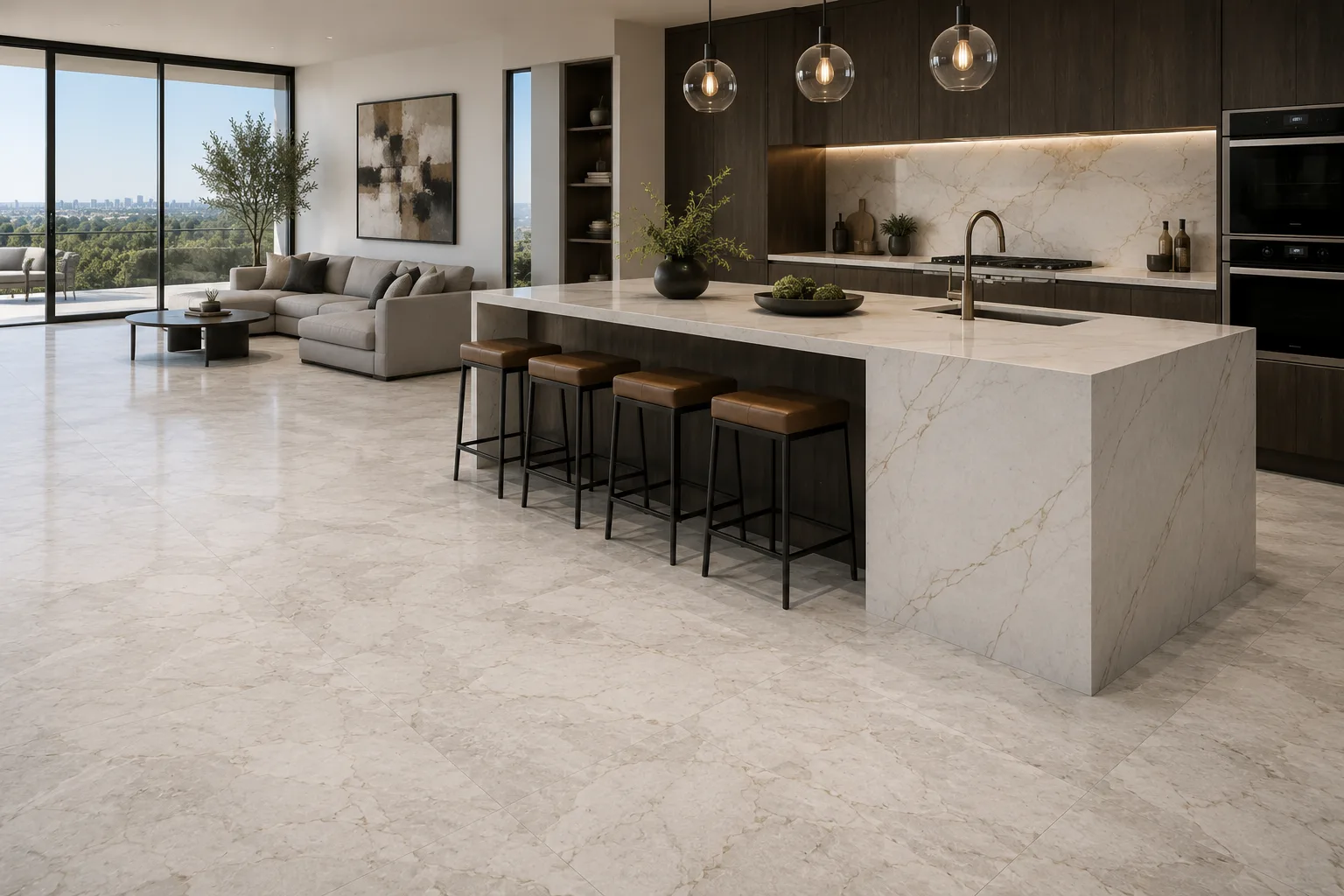
How Flooring Connects With Countertops and Wall Surfaces
One of the strongest design opportunities is coordination between flooring and other surfaces. A floor should not be selected in isolation. It should be considered together with countertops, backsplashes, shower walls, fireplace cladding, stairs, cabinets, and furniture.
Coordination does not mean everything must match. In fact, exact matching can sometimes make an interior feel flat. A better approach is to create a balanced surface palette. A calm floor can support a dramatic countertop. A warm travertine-look floor can soften modern cabinetry. A grey stone-look floor can pair well with white quartz or porcelain wall panels.
When flooring and surfaces are planned together, the project feels more complete. This is especially important in luxury homes, design studios, hospitality interiors, and commercial spaces where material quality is part of the overall impression.
Common Mistakes When Choosing Flooring
Many flooring mistakes happen because the selection is made too quickly. A small sample does not always show how the material will look across a full room. Lighting, scale, finish, grout color, pattern direction, and surrounding materials can change the final impression.
- Choosing flooring only by color and ignoring maintenance.
- Using polished surfaces in wet or high-slip areas.
- Ignoring subfloor preparation for large-format slabs.
- Selecting natural stone without understanding sealing needs.
- Mixing too many strong patterns in one interior.
- Forgetting to coordinate flooring with countertops and cabinets.
- Choosing grout color too late in the project.
- Assuming every stone behaves the same way.
How to Plan a Flooring Project
A good flooring project starts with practical questions. What room is the flooring for? How much traffic will it receive? Will the surface get wet? Are there pets or children? Is low maintenance more important than natural character? Does the floor need to connect visually with countertops, walls, or outdoor areas?
After answering these questions, material selection becomes much clearer. Porcelain may be ideal for practical luxury. Natural stone may be ideal for uniqueness and depth. Large-format slabs may be ideal for seamless architectural design. Smaller formats may be better for some technical layouts or budgets.
Before installation, the project should also define layout direction, slab placement, grout width, transition details, baseboards, thresholds, stair connections, and how the flooring will meet other surfaces. These details are what separate an average floor from a premium result.
Flooring Maintenance Basics
Maintenance depends on the material, but several general rules are useful. Use the correct cleaner for the surface. Avoid harsh chemicals on sensitive stone. Clean spills promptly. Protect the floor during construction. Use mats near entries. Add furniture pads where needed. For natural stone, sealing may be part of the care plan.
Porcelain is usually easier to maintain than many natural stones, but it still needs proper cleaning. Grout lines also need attention. One advantage of large-format flooring is that fewer grout joints can make the surface look cleaner and easier to maintain visually.
Frequently Asked Questions About Flooring Materials
Is porcelain good for flooring?
Yes. Porcelain is one of the most practical flooring materials for residential and commercial spaces. It is durable, moisture-resistant, available in many finishes, and can imitate marble, natural stone, concrete, terrazzo, and other premium surfaces.
Is natural stone good for floors?
Natural stone can be excellent for flooring when the right stone and finish are selected. Marble, quartzite, limestone, travertine, granite, and slate all have different properties, so the choice should match the room and expected use.
Are large-format slabs better than regular tile?
Large-format slabs are not always better, but they create a more seamless and premium look with fewer grout lines. They are especially useful in modern interiors, luxury bathrooms, open-plan homes, and commercial spaces.
What flooring is best for kitchens?
Porcelain is often one of the best kitchen flooring options because it is durable, moisture-resistant, and easy to clean. Natural stone can also work well, but it may require sealing and more careful maintenance.
What flooring is best for bathrooms?
Porcelain is a strong bathroom flooring choice because it handles moisture well and comes in many slip-conscious finishes. Natural stone can create a luxury bathroom look, but sealing, finish, and cleaning requirements must be considered.
Should flooring match countertops?
Flooring does not need to match countertops exactly. It should coordinate with the full design palette. A calm floor can support a dramatic countertop, while a stronger floor may work better with simple cabinetry and neutral walls.
Final Thoughts
The best flooring material is the one that fits the space, the lifestyle, the maintenance expectations, and the design vision. Porcelain, natural stone, quartzite, marble-look slabs, limestone, travertine, and other premium surfaces all have their place. The important thing is to choose with both beauty and performance in mind.
For homeowners, designers, builders, and commercial clients, flooring should be part of a larger surface strategy. When floors, countertops, walls, and architectural details are planned together, the result feels more refined, more durable, and more complete.