
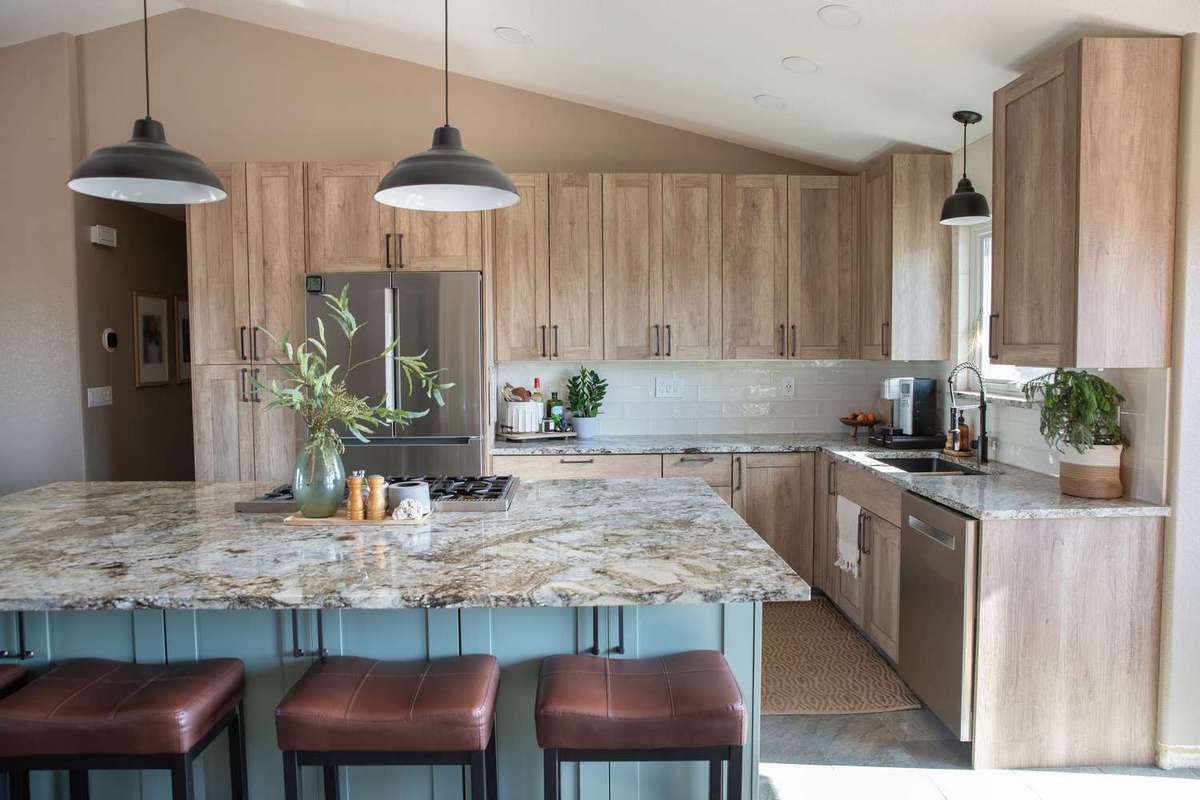
Selecting new kitchen surfaces requires balancing material performance against your budget. Homeowners comparing natural stone with engineered stone regularly analyze the total cost of quartz vs granite to determine which surface fits their financial plan.
Granite arrives straight from quarries as raw natural stone. Quartz is an engineered product composed of roughly 90% to 93% crushed natural stone mineral mixed with 7% to 10% polymer resins and color pigments. Both materials provide durable surfaces for kitchens and bathrooms, but their pricing models differ based on slab origin, manufacturing, fabrication, and installation labor.
Is quartz cheaper than granite?
The short answer is no, quartz is rarely cheaper than granite at entry pricing levels. If you shop strictly for baseline inventory, granite offers lower initial rates. Common varieties of natural granite start at roughly $45 to $50 per sq ft installed, while basic engineered quartz starts closer to $50 or $60 per sq ft installed.
Is quartz cheaper than granite across all project tiers? Look at mid range and luxury slabs. The pricing relationship shifts depending on stone rarity and brand engineering. At the mid tier level, prices converge. A standard speckled or lightly veined granite slab costs between $60 and $90 per sq ft installed. A comparable mid grade quartz slab from manufacturers such as Silestone or Caesarstone averages between $70 and $100 per sq ft installed. Within this bracket, the difference in final billing is negligible.
At the high end, granite frequently outpaces quartz. Exotic granite slabs sourced from Brazil or India feature rare colors like blue, emerald green, or dramatic gold veining. These slabs can command between $150 and $250 per sq ft installed. High tier quartz, including premium Calacatta styles with continuous wide veins, generally caps out between $120 and $160 per sq ft installed.
Consequently, basic granite costs less than basic quartz, but top tier exotic granite costs significantly more than the most luxurious engineered slabs on the market.
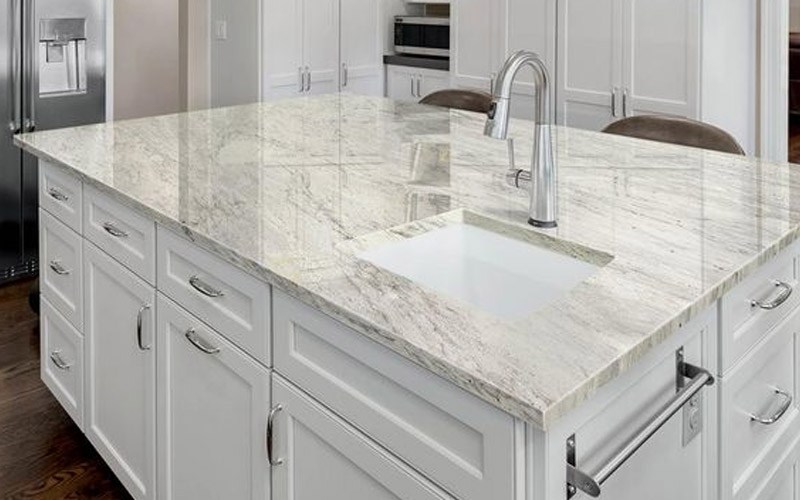
Quartz vs. Granite price: quick cost breakdown
Evaluating a direct quartz vs granite price comparison requires looking at material costs, professional fabrication, and job site installation. The following table displays typical 2026 market rates for standard residential installations.
| Cost Factor | Quartz Countertops | Granite Countertop |
| Entry Slab (Material Only) | $30 to $50 per sq ft | $15 to $40 per sq ft |
| Mid Tier Slab (Material Only) | $50 to $80 per sq ft | $40 to $70 per sq ft |
| Luxury / Exotic Slab (Material Only) | $80 to $130 per sq ft | $80 to $180+ per sq ft |
| Fabrication and Labor | $50 to $90 per sq ft | $30 to $90 per sq ft |
| Average Total Installed (Per Sq Ft) | $60 to $150 per sq ft | $50 to $140 per sq ft |
| Typical 30 Sq Ft Kitchen Project | $1800 to $4500 | $1500 to $4200 |
| Typical 50 Sq Ft Kitchen Project | $3000 to $7500 | $2500 to $7000 |
| Annual Sealant and Surface Upkeep | $0 | Periodic; varies by product/service |
Fabrication fees run parallel for both surfaces because technicians use comparable diamond tooling, water jet cutters, and bridge saws. Granite slab density varies widely across natural quarries, which means certain brittle granite slabs require extra labor, fiberglass mesh backing, or slow cutting speeds to prevent structural cracking.
Quartz maintains structural uniformity. Installers cut engineered slabs with minimal breakage risk, but its synthetic resins generate fine silica dust during fabrication. This factor requires wet cutting equipment and certified ventilation systems in fabrication shops.
What affects the final cost of quartz and granite
When calculating, which is cheaper, granite or quartz for a kitchen remodel, several physical variables determine the final invoice from your fabricator.
Slab Grade and Classification
Granite wholesalers categorize stone into numerical tiers ranging from Level 1 up to Level 5. Level 1 covers standard commercial slabs, often called builder grade stone, featuring uniform speckled patterns in gray, tan, or white. Level 4 and Level 5 cover rare structural compositions, unusual color movements, and high quartz crystal deposits.
Quartz producers classify inventory into pricing series. Series 1 features solid tones and simple salt and pepper aggregates. Top tier series replicate rare Italian marbles using multi layered vein pours, bookmatched slab sets, and specialized matte or suede textures.
Surface Area and Waste Percentage
Fabricators price jobs based on slab yield. Countertop fabricators order full slabs measuring roughly 110″ by 60″ to 130″ by 65″. If a kitchen layout measures 45 sq ft, an installer might need 2 full slabs to preserve consistent vein orientation across corners.
You pay for the full slabs even if 30% of the raw material turns into scrap during sink cutouts and edge shaping. Engineered quartz offers slightly better yield because slabs are flat, square, and structurally consistent without internal faults that must be bypassed.
Edge Fabrication Profiles
Standard edge profiles like eased, straight, or half bullnose come included in baseline square footage rates. Custom edges require dedicated CNC router passes and hand polishing.
Are quartz countertops cheaper than granite once custom profiles are added? Fabricators evaluate edge complexity, as intricate details like a 2″ to 3″ mitered apron or ogee edge add $15 to $45 per linear ft regardless of stone type. Mitered waterfall drop panels down the side of a kitchen island add substantial labor, requiring 45° cuts, epoxy laminations, and continuous vein matching.
Cutouts and Cutout Polishing
Every cutout incurs a mechanical processing fee. Fabricators charge for specific appliance and fixture preparations:
- Undermount sink cutouts: $150 to $300 per cutout, which includes grinding, profiling, and polishing exposed interior rims.
- Drop in sink cutouts: $50 to $100 per cutout, requiring unpolished cuts hidden under the sink lip.
- Cooktop drop in cutouts: $100 to $200 per opening.
- Faucet, water filtration, and soap dispenser holes: $15 to $35 per hole drilled on site.
Project Site Logistics and Demolition
Job site conditions introduce additional project expenses. Professional contractors itemize several preparatory and accessory tasks:
- Demolition and haul away of existing laminate, tile, or stone counters: $6 to $15 per sq ft.
- Substrate reinforcement: Installing ¾″ plywood underlayment or steel bracket supports for breakfast bars with overhangs exceeding 10 in: $150 to $400.
- Multi floor delivery logistics: Carrying heavy stone slabs weighing 18 to 22 lb per sq ft up stairs or through narrow elevators adds $100 to $300 in site access labor.
- Plumbing disconnect and reconnect services: $150 to $350 per sink location.
Evaluating these job site variables helps determine final project expenses in practical scenarios, where complex layouts and predictable quartz fabrication waste can balance out initial differences in raw slab rates. When a job requires complex cuts and seams, quartz fabrication predictable waste can sometimes make total project charges equal to mid grade granite, despite higher raw slab rates.
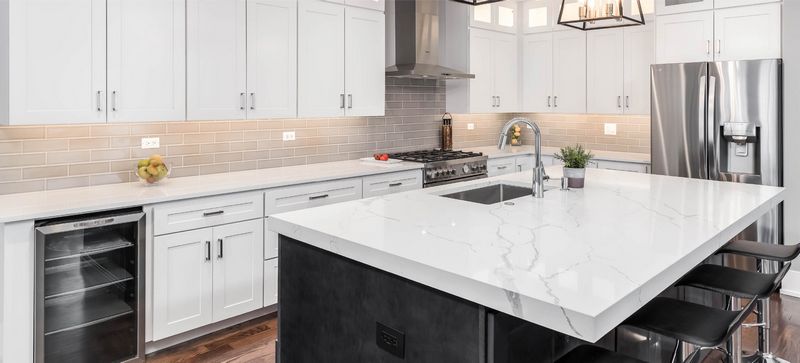
Is quartz more expensive than granite in the long run?
Evaluating surface value requires looking past initial installation invoices. Is quartz more expensive than granite across a 10, 15, or 25 year timeline? Life cycle maintenance and repair realities change the total financial equation.
Quartz features nonporous engineering. The polymer resin binders seal microscopic cavities, creating an impervious surface that never requires chemical sealants, wax coatings, or conditioning oils. Spilled red wine, coffee, olive oil, and citrus juice wipe away using warm water and mild liquid dish soap. You incur $0 in routine chemical maintenance across the lifetime of quartz surfaces.
Granite is naturally porous igneous rock. Without a protective hydrophobic barrier, liquids seep into microscopic fissures, creating dark discolorations, organic staining, or bacterial colonization. Granite countertops require regular sealing:
- Initial sealing completed by your fabricator during residential installation.
- Water droplet testing every 6 to 12 months to verify surface tension.
- DIY application of penetrating fluoropolymer or silicone based impregnating sealers every 12 to 24 months, costing $15 to $40 per bottle.
- Professional deep cleaning, chemical poultice stain extraction, and industrial resealing every 5 to 7 years, costing $200 to $450 per visit.
Over a 20 year span, granite maintenance products and professional treatments add $300 to $1000 to the total surface ownership budget.
Durability limitations also introduce variable repair expenses. Granite excels at thermal resistance. You can place hot pots, cast iron skillets, and baking sheets straight from a 450°F oven onto granite without scorching the surface.
Quartz handles temperatures up to roughly 300°F before the polymer resins undergo thermal shock. Placing hot cookware directly on quartz causes permanent yellow discoloration or structural cracking. Repairing burned quartz requires specialized diamond resurfacing or section replacement, which can amount $300 to $800 per incident.
Both materials resist scratching under standard kitchen use, though sharp culinary knives will dull against either stone. If heavy objects strike an outer edge, both materials can chip. A stone restoration specialist repairs localized edge chips on either surface using color matched epoxy or UV curing acrylic resin for $200 to $400 per repair.
Considering initial pricing, ongoing chemical upkeep, and accidental damage risks, the total life cycle expense of mid grade quartz and mid grade granite remains virtually identical over a 15 year period.
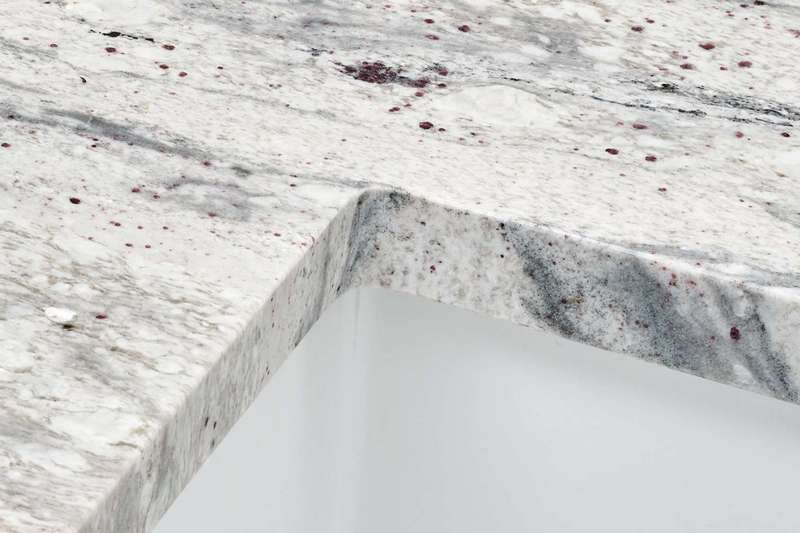
Which should you choose: quartz or granite?
Choosing between these 2 materials requires matching stone characteristics to your cooking habits, property type, and visual preference. To settle which is more expensive, quartz or granite, for your specific home, balance the following considerations.
- Choose quartz if you prioritize low maintenance daily living and clean modern design. Quartz fits busy family kitchens where spills sit unnoticed for hours. It provides consistent patterns across multiple slabs, which simplifies seam matching in large L shaped or U shaped kitchens. Quartz is also ideal for modern contemporary aesthetics that demand solid white, uniform concrete gray, or precise marble veining without natural pitting.
- Choose granite if you appreciate natural geological character and frequently cook at high heat. Granite fits homeowners who want a unique stone centerpiece where no 2 slabs are identical. It remains the superior option for outdoor kitchens, patio dining bars, and sunrooms because natural mineral pigments resist UV sun fading. Quartz exposed to direct sunlight will discolour and warp due to resin degradation.
Granite also proves advantageous in historic properties, rustic farmhouses, and traditional home styles where natural movement, mineral flecks, and earthy tones complement architectural woodwork.
Frequently Asked Questions
What is the price difference between granite and quartz?
▼
When comparing entry options, granite can be less expensive. Natural builder-grade granite starts around $45 to $50+ per sq ft installed, while entry-level quartz starts around $50 to $60+ per sq ft. In luxury categories, exotic granite can surpass quartz by $30 to $80 per sq ft.
Does granite or quartz add more resale value to a home?
▼
Both surfaces offer nearly identical return on investment, recouping between 60% and 80% of project expenses during home sales. Home buyers view both materials as premium upgrades over laminate or solid surface counters, with selection preferences leaning toward contemporary quartz in modern homes and granite in traditional properties.
Which is cheaper: quartz or granite countertops?
▼
When comparing entry options, granite is cheaper. Natural builder grade granite costs roughly $45 to $50+ per sq ft installed, whereas entry level quartz costs $50 to $60+ per sq ft.
Can you cut directly on quartz and granite surfaces?
▼
You should never cut directly on quartz or granite. Both surfaces are hard enough to ruin and dull kitchen knife blades instantly. Cutting directly on quartz can scratch its protective resin matrix, while cutting on unsealed granite can compromise the protective topical sealant layer. Always use wooden or composite cutting boards.
What’s more expensive: quartz or granite countertops?
▼
Natural exotic granite is more expensive than high tier quartz. Top level quartz tops out around $120 to $160 per sq ft installed, while rare imported granites with exotic colors can exceed $200 to $250 per sq ft.