
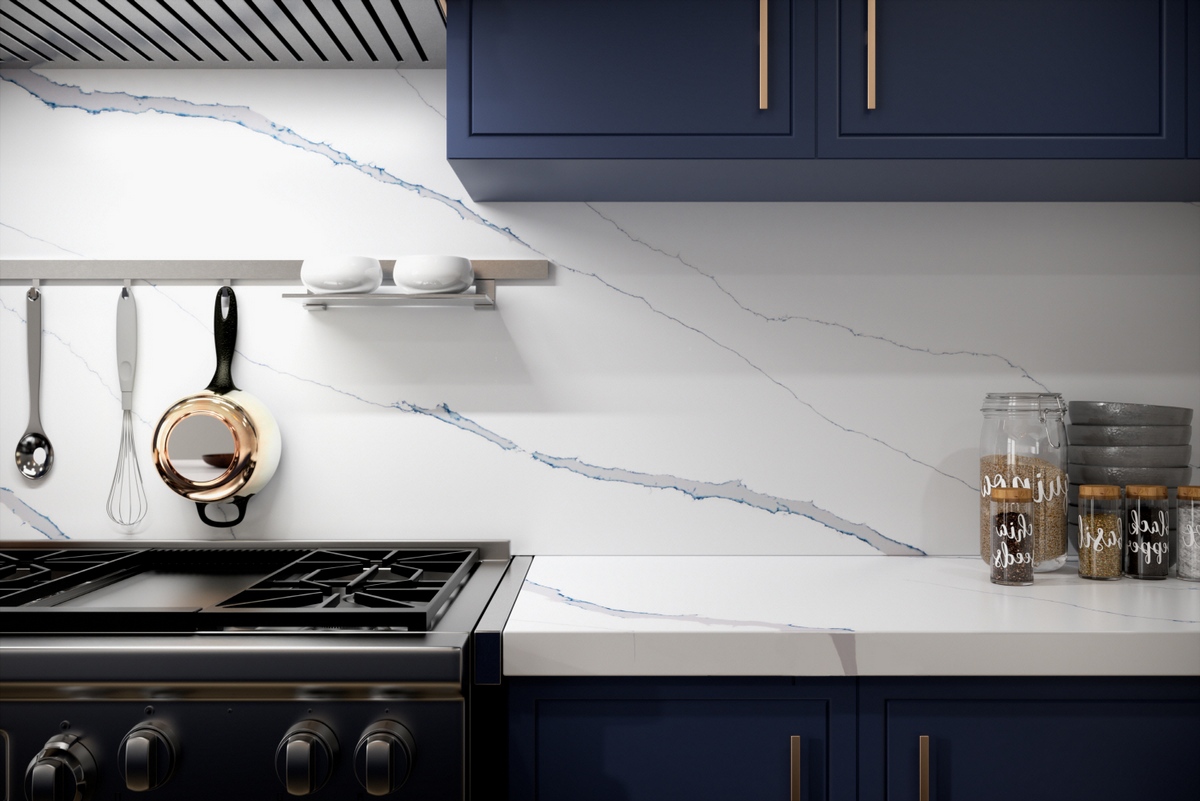
White backgrounds and flowing veins give marble its appeal. Choosing another material can reduce maintenance and leave more room in your renovation budget.
Today’s marble look countertops range from patterned quartz to porcelain and naturally veined quartzite. The right choice depends on how you cook, clean, and use the room.
Why choose a marble countertop substitute?
Natural marble reacts with acidic spills, including lemon juice and vinegar. These reactions can leave dull patches called etching, even when the surface has been sealed.
A marble countertop substitute can offer better resistance to everyday spills while preserving the pale colors and veining you want. Some options also eliminate routine sealing.
Cost is another reason to compare materials, although savings are not guaranteed. Premium engineered slabs and complex installations can cost more than some natural marble selections.
Consider the upkeep you will realistically perform. A kitchen used for daily cooking needs different protection from a decorative powder room vanity.
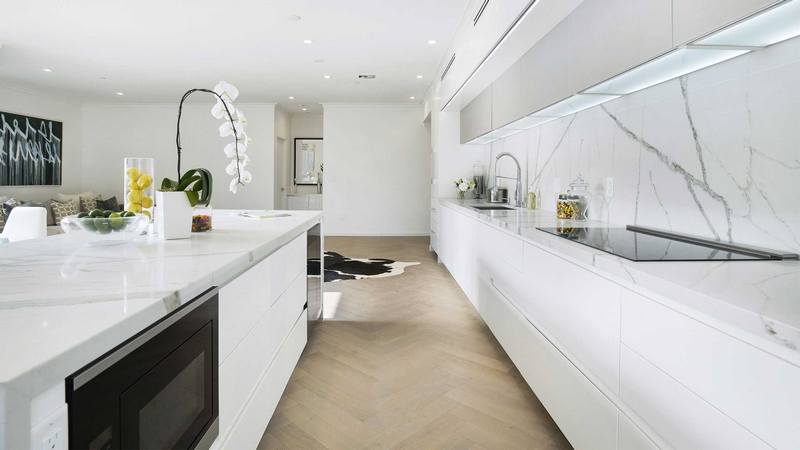
Best marble alternatives for countertops
Start with the demands of the room before comparing patterns. Heat exposure, cleaning products, and the likelihood of scratches will help narrow the selection.
The best marble alternatives for countertops balance convincing veining with practical benefits you will use. Below are the main materials worth comparing.
Quartz
Quartz combines mineral particles with binders and pigments to create a dense, nonporous surface. It requires no routine sealing and comes in designs ranging from delicate gray threads to broad gold veins.
For busy kitchens, quartz is a popular choice among countertops that look like marble. Its resistance to ordinary stains makes daily cleanup manageable.
Protect it from hot cookware and appliances that release heat downward. Inspect a full slab before ordering, since a small sample cannot show the complete pattern.
Porcelain
Porcelain slabs reproduce detailed stone patterns on a manufactured ceramic surface. They generally resist moisture, household stains, and heat, although performance depends on the specific product and finish.
A porcelain marble look alike countertop can suit a kitchen island or a vanity where you want crisp, dramatic veining. Large slabs also allow broad areas with relatively few joints.
Check how the design appears along exposed edges. Some products carry the pattern mainly on the face, so edge construction affects the finished appearance.
Sintered Stone
Sintered stone is manufactured using mineral ingredients, pressure, and high temperatures. Product specifications differ, so compare the selected brand’s guidance for heat, scratches, and outdoor exposure.
Choose a marble imitation with veining scaled to your countertop dimensions. A bold pattern that looks balanced on a large island may feel crowded on a narrow vanity.
Edges and cutouts require careful fabrication and handling. Ask whether the installer has experience with the exact product you are considering.
Quartzite
Quartzite is natural stone with individual mineral patterns and variations between slabs. Genuine quartzite resists scratching and ordinary kitchen acids better than marble, although some varieties benefit from sealing.
If your preferred stone looks like marble, confirm its geological identity before purchasing. Trade names alone do not establish how a slab will perform.
Ask the supplier about sample testing, surface treatments, and sealing requirements. Quartzite offers natural variation, but its hardness can make fabrication more expensive.
Acrylic and Mineral Composites
Acrylic resins and mineral fillers form solid surface countertops, including designs with soft veining. Fabricators can create inconspicuous joints and integrate compatible sinks for easier cleaning.
These surfaces can scratch, and hot cookware may damage them. Many marks can be professionally refinished, making repairability a useful advantage.
Choose this material when easy upkeep around sink joints matters more than sharp, crystalline detail. Examine a finished display to judge the depth and movement of the pattern.
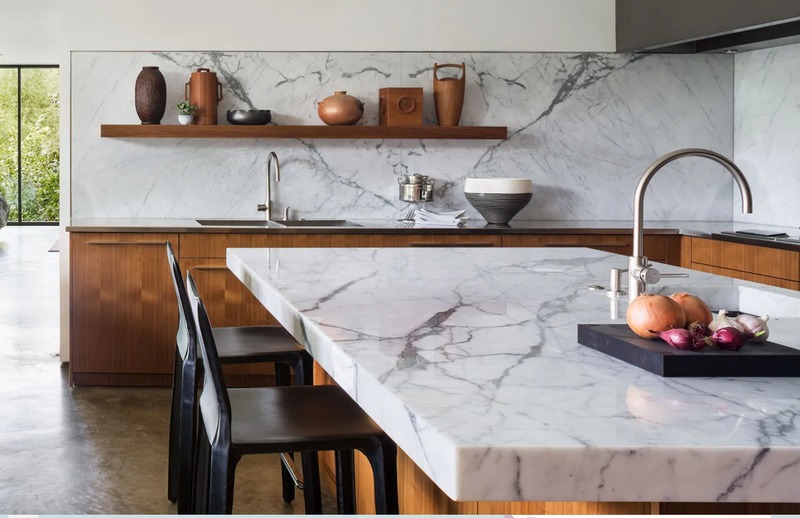
Cultured Marble
Cultured marble typically combines crushed stone with resin beneath a protective gel coat. It is commonly used for bathroom vanity tops, sometimes with an integrated basin.
A synthetic marble countertop can provide coordinated curves and molded details at a manageable price. Confirm that the specific product is approved for your intended location.
The protective coating needs gentle cleaning. Scratches, strong chemicals, and heat can damage it, so bathroom suitability does not automatically mean suitability beside a kitchen cooktop.
Laminate
Laminate places a decorative surface over a supporting core. Printed designs offer an accessible way to introduce pale backgrounds and veining during a budget renovation.
Modern faux marble laminate can look convincing from normal viewing distance. Rounded or carefully finished edges help improve the result.
Protect joints from standing water and use boards for cutting. Damage to the decorative layer is generally harder to repair invisibly than light wear on a renewable acrylic surface.
Marble countertop alternatives compared
Every material has a weakness worth understanding before purchase. Compare maintenance and repair options alongside appearance.
| Material | Main advantage | Main limitation | Typical price position |
| Quartz | No routine sealing | Needs heat protection | Midrange to premium |
| Porcelain | Detailed patterns and low absorption | Edges can chip | Midrange to premium |
| Sintered stone | Strong everyday surface performance | Specialist fabrication | Often premium |
| Quartzite | Natural veining and hardness | Variable sealing needs | Often premium |
| Acrylic composite | Repairable surface and discreet joints | Scratches and heat marks | Usually midrange |
| Cultured marble | Molded vanity and basin options | Protective coating can suffer damage | Often budget to midrange |
| Laminate | Low initial material cost | Limited invisible repair options | Usually budget |
These marble countertop alternatives vary widely within each category. A premium pattern, difficult layout, or elaborate edge can change the price ranking.
Request samples of the actual finish you intend to buy. Gloss, texture, and background color can affect your decision as much as the material itself.
How to choose the right marble look countertop
Start with your daily habits and the room’s lighting. Bring samples home and place them beside cabinet doors, flooring, and backsplash materials.
An alternative to marble countertops should solve a specific concern, such as sealing, acid sensitivity, or replacement cost. Write down that priority before visiting a showroom.
Use this checklist to compare your shortlisted products:
- Check the background color in daylight and under evening lighting.
- Inspect the full pattern for repeated features and abrupt changes.
- Ask how the chosen edge will reveal the material underneath.
- Confirm compatibility with your sink and planned overhang.
- Read care instructions before committing to the surface.
Photograph samples together to make differences easier to remember. Keep in mind that phone cameras can shift white balance, so make the final color decision in person.
Cost breakdown & value considerations
Compare complete installed estimates using the same layout and scope. A slab price does not include every expense involved in making a finished countertop.
Material selection is only part of the bill. Fabrication, transport, cutouts, installation, and removal of the existing surface can substantially affect the total.
An imitation marble finish may lower the material expense, but complicated fabrication can consume those savings. Ask for separate prices for optional details.
For example, compare a simple eased edge with a thicker mitered profile. Price the backsplash separately so you can decide whether extending the slab up the wall is worthwhile.
Confirm whether the estimate includes plumbing disconnection and reconnection. Ask about cabinet leveling, support brackets, disposal, and taxes.
For smaller vanities, an available remnant may reduce material waste and cost. Its dimensions and pattern placement must still suit the project.
Luxiomer offers quartz, porcelain, and natural stone alongside fabrication and installation services. Request an estimate based on your measurements and preferred material to compare a realistic project total.
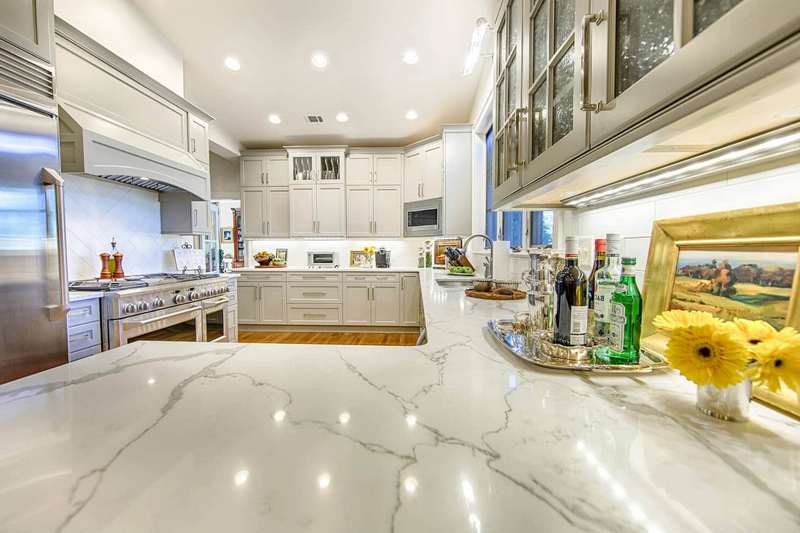
Installation & design tips for a convincing marble look
A convincing installation depends on the placement of the pattern. Veins that stop abruptly at a joint can distract from an otherwise attractive slab.
Treat a showroom label such as “looks like marble countertops” as a starting point for inspection. Ask to see finished edges and seam examples using the actual material.
Plan these details before fabrication begins:
- Approve the slab layout with the sink and cooktop positions marked.
- Choose seam locations that balance appearance with structural requirements.
- Discuss vein direction across adjoining countertop sections.
- Confirm edge profiles, corner shapes, and exposed ends.
- Review cabinet support and appliance clearances with the installer.
On a waterfall island, ask how veins will meet at the vertical panel. Some patterns allow a convincing continuation, while others require a compromise or additional material.
Keep neighboring finishes restrained when the countertop has strong movement. A quiet backsplash lets the veining remain visible without competing patterns.
Avoid selecting by a tiny sample alone. What shoppers call fake marble can range from a flat printed design to a detailed surface with convincing depth.
Maintenance of marble alternatives
Follow the care instructions for the exact brand and finish. Similar-looking surfaces may respond differently to abrasives, solvents, or polishing products.
Begin routine cleaning with a soft cloth and the recommended cleaner. Remove spills promptly, rinse away residue, and dry around faucets where mineral deposits collect.
Use cutting boards and heat protection as everyday habits. Avoid placing heavy objects near exposed edges, especially around sinks.
Do not apply stone sealer to a manufactured surface unless its maker specifically requires it. For natural quartzite, follow the supplier’s recommendations based on the slab and existing treatment.
Keep the product name, finish details, and installation paperwork. These records help a repair specialist identify suitable treatments if damage occurs.
Frequently Asked Questions
What looks like marble but is more durable?
▼
Which option usually costs the least?
▼
Can a replacement surface match existing marble?
▼
Do manufactured countertops need sealing?
▼
Marble alternatives for bathroom?
▼