
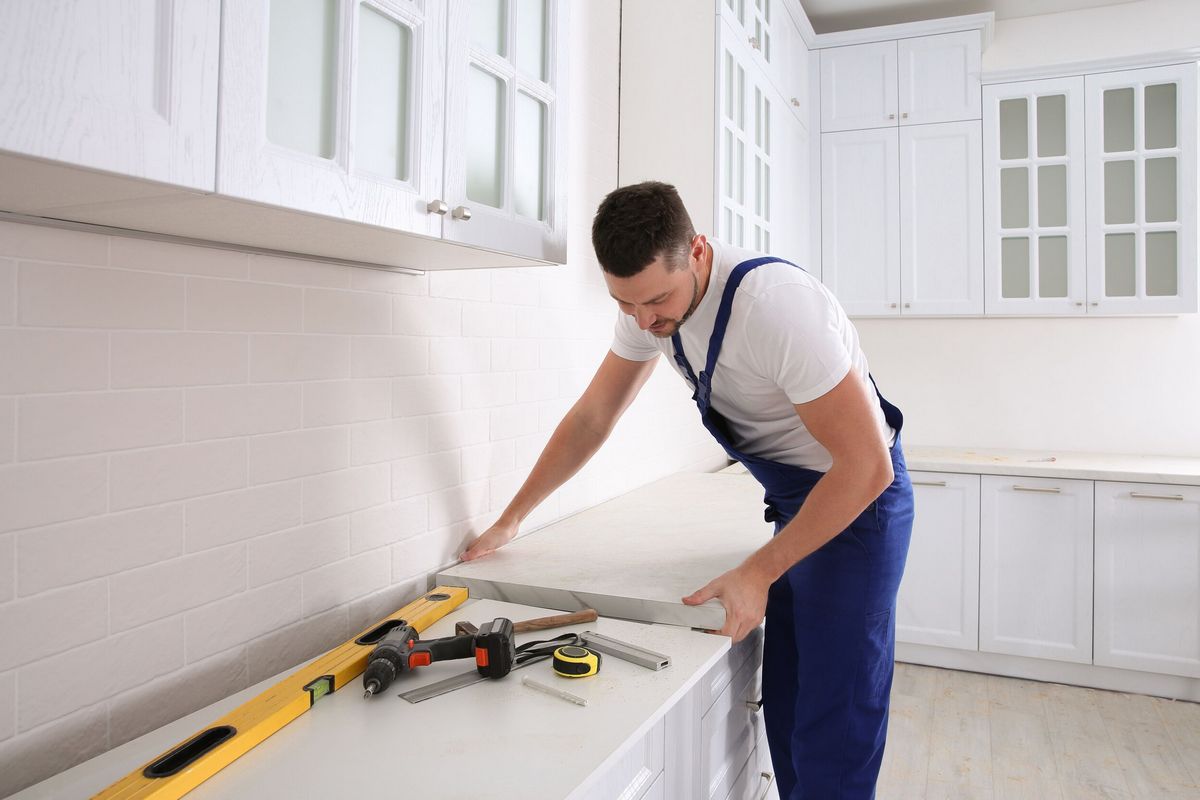
Most standard kitchen countertops take about 4 to 8 hours to install once the finished pieces arrive. Measuring, ordering, and fabrication happen beforehand and can stretch the project over several weeks. Planning these stages helps you avoid unnecessary days without a working sink.
Average countertop installation time overview
How long does it take to install a countertop? The answer depends on when you start counting. Your installer may be describing only the fitting appointment. Confirm which starting point applies before scheduling other work.
Use these general planning ranges for a straightforward kitchen with available material:
- Measuring appointment: approximately 1 to 2 hours.
- Fabrication and scheduling after measurement: commonly 1 to 3 weeks.
- Installation visit: approximately 4 to 8 hours.
- Adhesive curing before normal use: often around 24 hours, subject to product instructions.
Material selection, delivery, and cabinet preparation can add time before measurement. A large island, multiple seams, or difficult access can extend the fitting appointment. These estimates are planning guides, not a guaranteed Luxiomer schedule.

Countertop fabrication and installation process
A countertop order moves through several dependent stages. Cutting cannot begin until dimensions and design choices are approved. Keeping those decisions settled helps the shop avoid revisions.
Step 1: Choose your material and confirm the scope
Successful countertop fabrication and installation starts with choosing the slab, edge profile, sink, and backsplash arrangement. Luxiomer offers quartz, porcelain, and natural stone, with sourcing and fitting services available through the same company. Ask which materials are available for your preferred dates.
Review the estimate for removal, disposal, delivery, and any separate trade visits. Confirm who will handle plumbing connections before the installation date is booked. Also check whether the quoted completion date includes the backsplash.
Step 2: Prepare cabinets and take measurements
Base cabinets must be secured, level, and ready to support the chosen surface before final measurements. Changing their position afterward can make the template inaccurate. An unsupported overhang may also need brackets or another approved support system.
Have the sink and faucet available, along with appliance specifications. The technician records wall shapes, cutouts, and overhangs to create a template. Tell the team about stairs, narrow doors, and building access restrictions during this visit.
Step 3: Approve the layout and fabricate the pieces
The shop uses the template to plan cuts, seams, and visible patterns. For veined slabs, review how the design will run across the island and adjoining sections. A layout approval is the time to resolve preferences about prominent markings.
Fabrication includes cutting the slab, shaping edges, preparing openings, and checking finished pieces. The quoted lead time also includes the shop’s production queue. It does not mean workers spend several weeks cutting your individual countertop.
Step 4: Deliver, position, and secure the countertop
The crew checks the supporting cabinets and carries the pieces into position. Installers then adjust alignment, join seams, and secure the surface using the specified system. Sink mounting and joints at walls require attention before cleanup.
For stone countertops installation, access and piece size can affect the schedule as much as kitchen area. A long slab carried upstairs needs different handling from a small vanity delivered at ground level. Keep the route clear throughout the appointment.
Step 5: Allow curing and reconnect fixtures
Ask the installer when the surface, seams, and sink can be used. Different adhesives and sealants have different curing requirements. A joint that feels dry on the outside may still need more time.
Arrange plumbing reconnection after the required waiting period. The plumber should check the supply lines, drain, and disposal connection for leaks. Cooktop reconnection may require a separate qualified professional, depending on the appliance.
How long does it take to install different materials?
Material affects cutting, finishing, and handling, but it does not determine the schedule by itself. Compare projects with similar dimensions and layouts. A simple natural stone countertop can take less time to fit than an engineered surface with several waterfall panels.
Quartz countertops
How long does it take to install quartz countertops? Allow roughly 4 to 8 hours for a typical kitchen fitting. Complex layouts can take longer or require another visit. Confirm whether removal is included in that appointment.
Quartz generally needs no penetrating sealer, which removes a maintenance step associated with some natural stones. However, mounting materials and sink joints still need time to cure. A nonporous surface does not make every part of the installation immediately ready for use.
Granite countertops
How long does it take to install granite countertops? Use the same broad 4 to 8 hour installation window. Seam count, access, and cabinet condition influence the estimate. Large or intricate projects need an individual schedule.
The slab’s pattern may require additional layout decisions before cutting. Sealing requirements depend on the selected stone and any treatment already applied. If a sealer is used, follow its drying and curing instructions before preparing food on the surface.
Other stone countertops
Marble and quartzite often fit within a similar installation day, but the fabrication schedule can vary. The shop must assess the particular slab and its intended use. Natural features, edge details, and fragile sections around openings can require additional care.
Avoid choosing stone solely by the shortest quoted turnaround. Ask whether the estimate allows for slab inspection and the planned edge finish. Matching a backsplash to the countertop may also require extra material and a separate fitting appointment.
Other popular materials
Stock laminate tops may allow a quicker project when the available sizes suit your cabinets. Custom laminate still requires measurement and production. Solid surface countertops need time for fitted joints and finishing.
Butcher block timing depends partly on whether the surface arrives finished or requires treatment after fitting. Porcelain needs suitable fabrication equipment and careful handling around edges and openings. Concrete follows its own production and curing schedule, so a stone installation estimate should not be applied to it.

How long does it take to replace existing countertops?
Removal can sometimes happen on installation day, followed by fitting the prepared replacement. In other cases, the old surface must come off before accurate measurements are possible. Ask your fabricator which method suits your cabinets and existing countertop.
How long does it take to replace countertops? To answer this question, include demolition, repairs, fabrication, and reconnection in your schedule. A straightforward swap may involve only a short period without the sink. Earlier removal or unexpected cabinet damage can extend that disruption considerably.
Tile surfaces, attached backsplashes, and stubborn adhesives can complicate removal. Water damage beneath the sink may remain hidden until the old top is lifted. Allow time for repairs rather than covering an unstable cabinet with a heavy slab.
Check whether the new thickness changes the fit around appliances or exposes unfinished wall areas. Keeping the existing backsplash may limit countertop choices or require careful adjustment. Discuss these details before placing the order.
Set up a temporary area for drinks and simple meals outside the work zone. Store frequently used items there before demolition begins. If the sink will be unavailable for several days, discuss temporary washing arrangements with your contractor.
New countertop installation timeline
A practical schedule gives each trade a confirmed place in the sequence. It also leaves room for approvals and delivery changes. Use the following order when coordinating a kitchen project:
- Finalize the cabinet layout, material, edge, sink, and appliance choices.
- Confirm slab availability and complete the required order paperwork.
- Finish cabinet installation and arrange the measuring appointment.
- Approve the slab layout and reserve the fabrication slot.
- Coordinate removal, delivery, and countertop fitting.
- Allow the specified curing period, then reconnect and test fixtures.
For a new countertop installation, the most useful dates are the template appointment and the confirmed fitting day. Ask what must be ready for each milestone. A tentative delivery estimate should not be treated as permission to disconnect the kitchen.
Keep a written record of approvals and appliance model numbers. Send changes to the project contact promptly. Even a different sink model can affect the opening and cause rework once fabrication begins.
Before the crew arrives, empty the sink cabinet and move small appliances elsewhere. Reserve parking or elevator access where necessary. Arrange for someone who can approve details to attend the final inspection.
Luxiomer can help you choose a surface and request an estimate for your layout. Share your dimensions, cabinet readiness, and preferred completion date. Ask for a schedule that includes fabrication, installation, and any work you must arrange separately.
Frequently Asked Questions
How long does it take to replace countertops?
▼
Can I use the kitchen during fabrication?
▼
What usually causes installation delays?
▼
Does a small kitchen take less time?
▼
How long after quartz is installed can you use it?
▼