
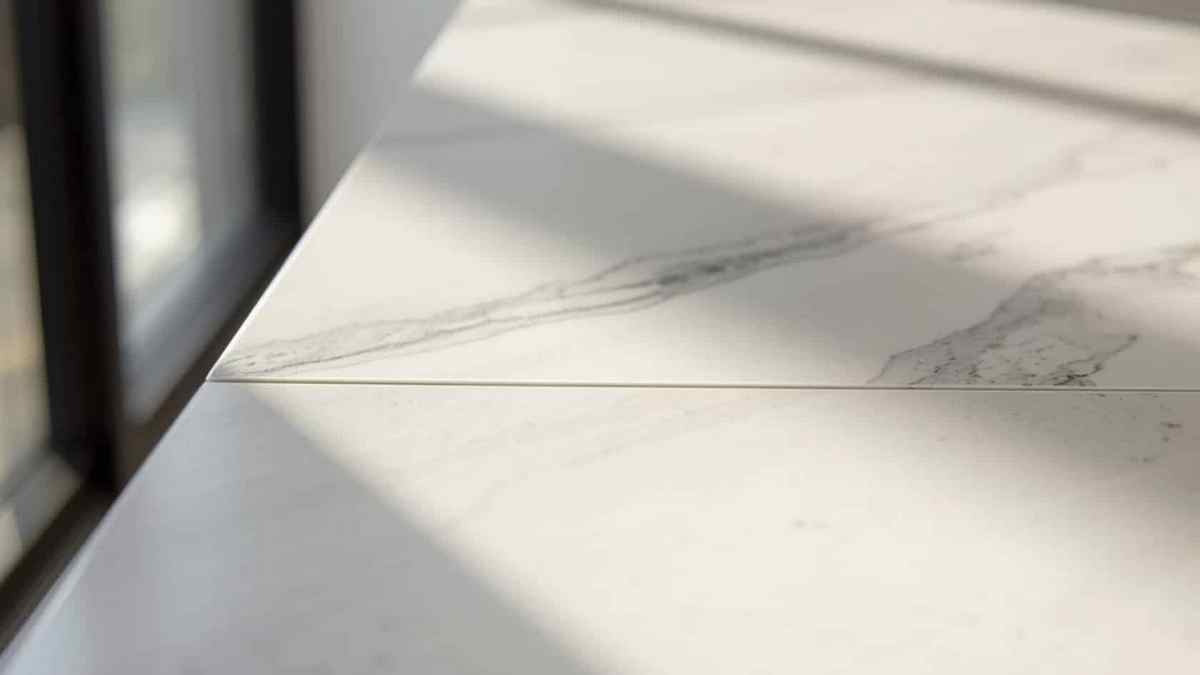
A visible line between slabs can surprise homeowners who chose their surface from a small sample. That line is often a planned part of the installation. Its appearance depends on the material, layout, and workmanship.
Understanding countertop seams helps you review a proposal and know what to expect. A properly finished connection should be discreet, smooth, and supported, although it may remain visible.
What are countertop seams and joints?
A seam is the meeting point between 2 separate countertop pieces. Fabricators prepare the adjoining edges and bond them with a suitable adhesive. The finished line allows individual sections to form a continuous work surface.
In everyday countertop discussions, “seam” and “joint” often mean the same connection. However, the flexible connection against a wall serves a different purpose. It accommodates movement and requires treatment appropriate to that location.
For example, quartz countertop joints between adjoining slabs typically use a compatible resin adhesive selected to blend with the surface. The connection should have consistent spacing and closely aligned edges. A conspicuous ridge, missing filler, or an opening deserves inspection.
Visibility alone does not prove poor workmanship. A narrow line can remain noticeable against a plain background or beneath direct lighting.
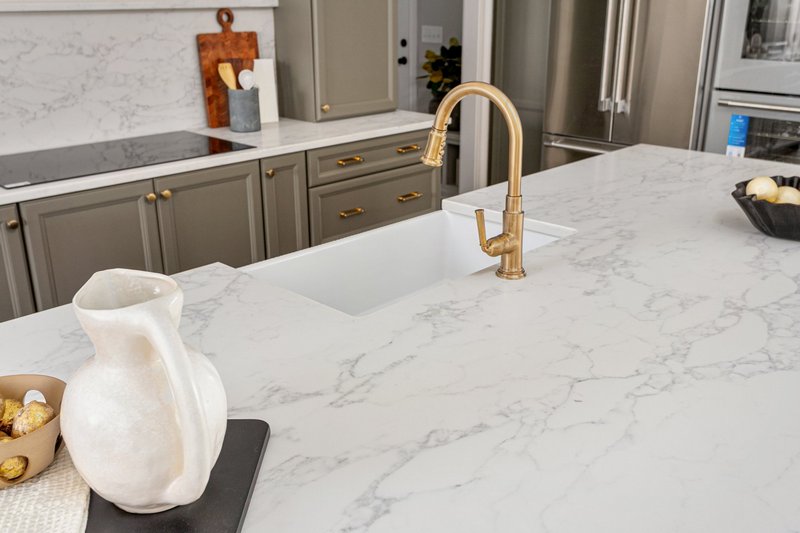
Why do marble, quartz, granite and quartzite countertops have seams?
Slabs have limited usable dimensions, while kitchens often include long runs, corners, and oversized islands. A design may require several pieces even when its total area seems modest. The shape of each piece matters as much as its size.
Access also affects the plan. Doorways, stairs, and tight turns can prevent a large section from reaching the kitchen safely. Sink openings and narrow strips of material further complicate transport.
Planned granite countertop joints let installers divide a layout into sections they can fabricate, carry, and support. Positioning still requires judgment. An attractive location must also work with cabinet support and the stone’s condition.
Before approving fabrication, discuss these details:
- Available slab dimensions and usable areas.
- Proposed connection locations on the layout.
- Pattern direction across adjoining pieces.
- Access restrictions along the delivery route.
- Support beneath each connection.
Ask whether reducing the number of pieces would change the price or require another slab. Sometimes a different layout improves appearance without eliminating every line.
Countertop seams by material
The same workmanship can look different across materials. Background color, grain size, and surface finish influence how clearly a connection shows.
Review full slabs and finished examples whenever possible. A small showroom sample cannot demonstrate how a large pattern will meet across separate sections.
Marble
With marble seams, matching the direction of prominent veins often matters as much as matching the adhesive. A dark vein that stops abruptly at a pale section draws attention. Thoughtful slab placement can make that transition less distracting.
Natural variation limits how precisely separate pieces can match. Even adjacent slabs may contain changes in tone or vein spacing. Bookmatching creates a mirrored arrangement where suitable slabs are available, but it does not remove the physical connection.
Well-planned seams in marble countertops should respect both the pattern and the supporting cabinetry. Ask to review the proposed cuts before fabrication. Moving a connection slightly may preserve a prominent vein or avoid an abrupt color change.
Marble also needs careful cleaning around the finished line. Acidic cleaners can etch the surrounding stone, creating a dull patch that makes the area more noticeable.
Quartz
Engineered quartz offers controlled colors and patterns, but separate slabs are not guaranteed to look identical. Fabricators should check the actual pieces together before cutting. This is especially useful for pale backgrounds and designs with broad veins.
A seam in quartz countertop material can become conspicuous when adhesive contrasts with the base color. Plain white surfaces leave little pattern to disguise the line. Speckled designs may make the same connection less obvious.
Veined products introduce another consideration: the printed or manufactured pattern may not continue naturally between pieces. Ask which direction the design will run across corners. A layout preview can reveal a mismatch before cutting begins.
With quartz countertops seams, a close color match and careful alignment are realistic goals. An invisible result should not be assumed. Avoid sanding the surface yourself, since altering the factory finish can leave a noticeable patch.
Granite
Granite ranges from fine, evenly distributed speckles to large crystals and sweeping movement. Fine patterns can help disguise a connection. Strong directional patterns require more attention during slab selection and layout.
The visibility of seams on granite countertops depends partly on how neighboring sections compare in color and grain. Joining a dark area to a much lighter section creates a noticeable boundary. Adhesive alone cannot correct that difference.
Inspect the actual slabs rather than relying only on the material name. Natural stone sold under the same name can vary considerably. Ask the fabricator to show where each section will come from.
Properly supported connections should remain stable during ordinary kitchen use. Avoid standing on the surface or placing concentrated loads near vulnerable areas. If a line starts opening, have the support and alignment checked before arranging a cosmetic repair.
Quartzite
Quartzite is natural stone with patterns that may include long veins, translucent areas, and visible mineral changes. Its hardness requires suitable fabrication equipment and careful edge preparation. Hardness does not prevent chipping at an exposed edge.
For quartzite seams, the fabricator must consider both visual continuity and the condition of the slab. Existing fissures and repaired areas can affect where cuts belong. A visually attractive location may be unsuitable if it leaves a fragile section.
Light transmission can also make filler stand out on some translucent materials. Review adhesive compatibility and appearance with the fabricator before installation. Where practical, testing on an offcut helps assess the cured color.
Choose the layout with the whole surface in mind. Preserving a dramatic vein across an island may be more valuable than hiding a short connection elsewhere.
How countertop seams are made
Good results begin before installation day. Measurements, slab selection, and cabinet preparation determine whether the pieces will meet correctly. Adhesive cannot compensate for a poorly fitted layout or unstable base.
When seaming granite countertops, professionals prepare the edges to fit closely and choose a stone-compatible bonding product. Similar planning applies to other slab materials, although adhesive and finishing requirements differ. The manufacturer’s instructions guide the specific process.
A typical professional workflow follows these stages:
- Measure and plan. The fabricator records cabinet dimensions, openings, and wall conditions, then chooses connection locations with support and appearance in mind.
- Lay out the slabs. Sections are arranged to balance color and pattern. The proposed cuts also account for defects and usable slab dimensions.
- Cut and prepare the edges. Suitable equipment creates matching edges. Bonding surfaces must be clean and prepared for the selected adhesive.
- Check the fit. Installers position the pieces without bonding them and verify alignment, support, and clearances. Problems are corrected before the adhesive is applied.
- Bond and align. The installer applies the selected adhesive and uses professional seam-setting equipment to bring the pieces together while controlling their relative height.
- Finish and inspect. Excess adhesive is removed using an appropriate method. The connection is checked after the required curing period.
During the final walkthrough, view the surface from normal standing positions and under the room’s lighting. Check the front edge as well as the middle. A photograph taken at an extreme angle may exaggerate a line, but an obvious ridge still warrants discussion.
Ask for the relevant use and curing instructions in writing. The time before cleaning, loading, or reconnecting fixtures depends on the products and installation details.
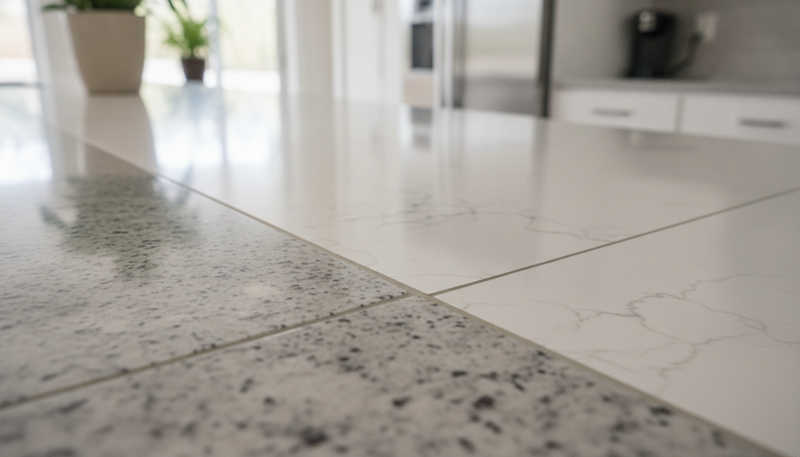
Maintenance and longevity of seams
Daily care should protect both the slab and the bonding material. Wipe spills promptly with a soft cloth and a cleaner approved for the surface. Remove residue gently instead of scraping along the connection with a blade.
Do not leave water pooled around sinks or countertop appliances. Persistent moisture near an opening should prompt an inspection. Cleaning the surface will not correct a failing connection underneath.
Use cutting boards and trivets during food preparation. Keep hot cookware away from bonded areas, even when the surrounding stone tolerates heat well. The adhesive may respond differently from the slab.
Sealing and bonding are separate treatments. Some natural stones benefit from an appropriate penetrating sealer, while engineered quartz generally does not require routine sealing. Applying sealer will not close a gap or restore failed adhesive.
Properly installed marble, quartz, quartzite or granite joints can last for many years without replacement when the underlying support remains stable. There is no universal maintenance interval for replacing filler. Its condition matters more than its age.
Watch for widening gaps, loose filler, persistent discoloration, or a new difference in height. A technician should identify the cause before repairing the visible line. Cabinet movement or inadequate support can cause a fresh repair to fail again.
For a new project, bring your dimensions and material preferences to Luxiomer and request an estimate. Discuss the proposed slab layout and expected joint appearance before approving fabrication.
Frequently Asked Questions
How to seam quartz countertop?
▼
Should a finished joint be completely invisible?
▼
How to seam granite countertops?
▼
Can an existing connection be repaired?
▼
Do quartz countertops have seams?
▼
“`