
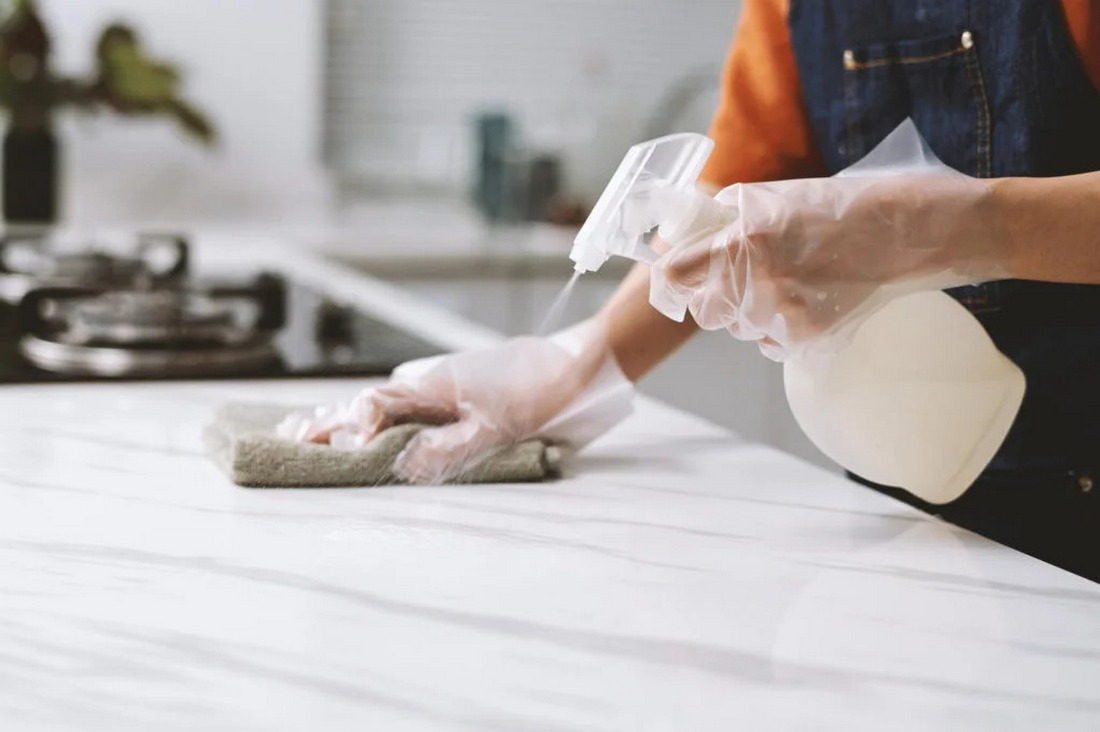
Quartz surfaces bring elegance, durability, and practical luxury to any kitchen or bathroom. Engineered with roughly 90% natural quartz mineral blended with 10% polymer resins and pigments, quartz creates a nonporous, hygienic worktop.
Even with advanced engineering, everyday spills happen. When coffee, red wine, turmeric, or metal cans sit on the surface for too long, you might notice discoloration. Knowing the correct methods to restore your counters protects your investment without dulling the factory finish.
Do quartz countertops stain?
Homeowners often ask: does quartz countertops stain? The short answer is that quartz is stain-resistant, but it is not 100% stain-proof.
Because quartz is nonporous, liquids cannot easily penetrate deep into the material the way they do in unsealed granite or marble. The danger comes from chemical reactions with the binding resins. Harsh chemicals, high pH cleaners, and prolonged exposure to dark pigments can cause a surface mark or chemical burn.
Common culprits that cause surface discoloration include:
- Concentrated food pigments like saffron, curry, beet juice, and berries.
- Tannin-rich liquids such as red wine, black tea, and espresso.
- Acidic fluids including lemon juice, vinegar, and tomato sauce left for 12 hr or more.
- Corrosive household items like drain cleaners, oven degreasers, and nail polish removers.
- Metal objects left in pools of water that oxidize and leave rust deposits.
When you notice a mark, act fast. Removing a fresh spill requires only seconds, whereas a dried spot demands targeted spot cleaning.
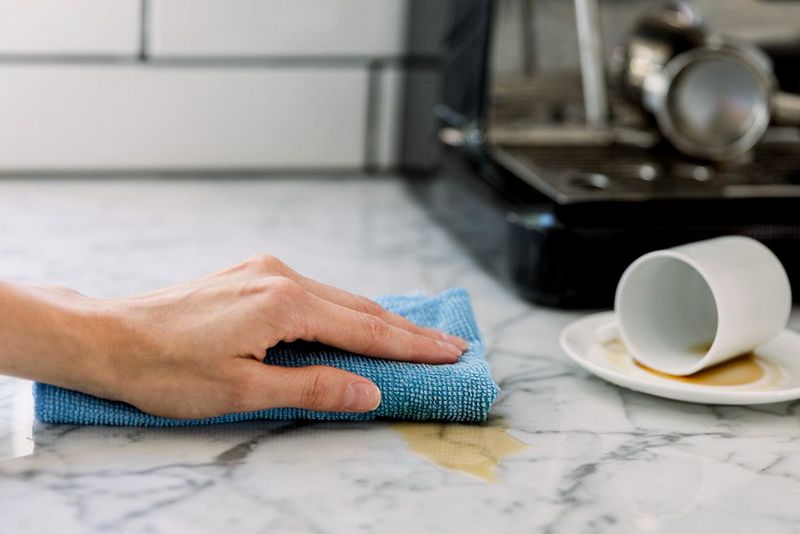
How to remove stains from quartz countertops
When simple wiping fails, you need a structured method to treat the area safely. Learning how to remove stains from quartz countertops involves starting with the mildest cleaning agent before moving to stronger solutions. Follow these 5 steps to lift stubborn spots without scratching the polymer layer.
Step 1: Wipe down with mild dish soap and warm water
Begin every cleaning session with warm water and 2 or 3 drops of pH-neutral dish soap. Apply the solution using a soft microfiber cloth or a non-scratch sponge. Rub in gentle circular motions for 30 sec to break down top-layer grease and surface film. Rinse with clean water and dry with a fresh towel. This step reveals whether the mark is a true discoloration or just dried residue.
Step 2: Apply a gentle baking soda paste
If you need to know how to get stains out of quartz countertops when dish soap fails, baking soda is your best natural option. Mix 3 parts baking soda with 1 part warm water in a small bowl until it forms a thick paste.
Spread the paste directly over the spot with a soft spatula or your fingers. Let it rest for 10 to 15 min. Baking soda provides mild alkalinity to lift organic pigments without scratching the resin. Wipe the paste away gently using a damp microfiber cloth, then buff dry.
Step 3: Treat persistent spots with isopropyl alcohol
For oily spots, ink, or sticky residues, reach for 70% isopropyl rubbing alcohol. Pour a small splash of rubbing alcohol onto a clean microfiber cloth.
Rub the spot firmly using circular motions for 45 sec. Isopropyl alcohol dissolves stubborn oils and evaporates quickly without leaving water streaks or chemical residue behind. It is safe for engineered stone resins when used in moderation.
Step 4: Use an approved non-abrasive glass or surface cleaner
When surface dullness or cloudy rings persist, use an approved, bleach-free stone cleaner or ammonia-free glass cleaner. Spray a light mist over the area from a distance of 6 in. Let the cleaner sit for 2 min to dissolve grease films. Wipe clean with a soft cloth. Always ensure the product label states it is safe for engineered quartz.
Step 5: Rinse thoroughly and dry with a microfiber cloth
Residual cleaning solutions can leave a hazy film over time if not removed. After treating any spot, wipe the entire surface with a clean cloth saturated in pure warm water. Finish by drying the area thoroughly with a dry microfiber towel. Polishing in circular motions restores the glossy, reflective sheen of the stone.
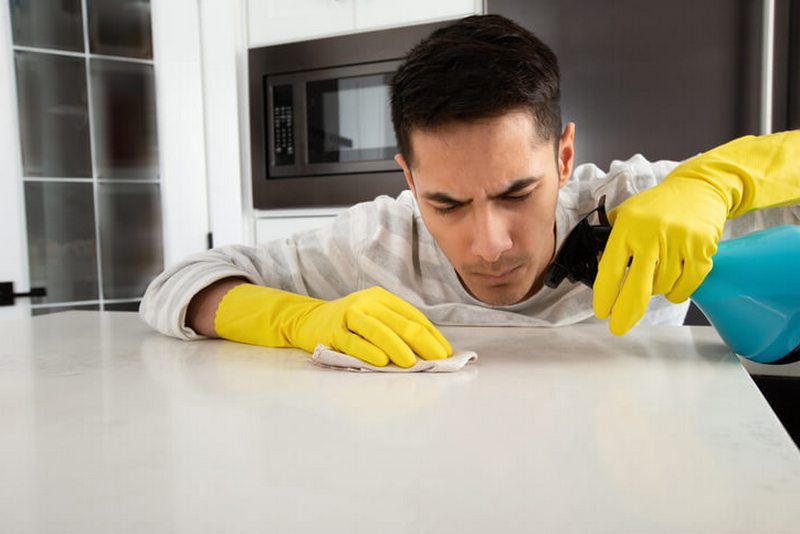
How to clean quartz countertops with different types of stains
Different spills require distinct cleaning techniques. Using the wrong product can set the mark permanently. Here is a breakdown of how to clean quartz countertops stains depending on the substance involved.
Grease and cooking oil
Splattered cooking oil and butter attract dust and leave sticky dark patches around stoves.
- Spray a degreasing dish soap diluted in warm water directly on the grease.
- Let the soapy water sit for 5 min to emulsify the lipids.
- Wipe away the grease with a damp sponge.
- For stubborn grease films, apply 70% isopropyl alcohol to a cloth and wipe clean.
Wine, berry, and fruit juice spills
Dark organic liquids contain tannins and natural acids that cause a noticeable stain on quartz countertop surfaces if neglected.
- Blot the spill immediately with a paper towel; avoid wiping across the counter to prevent spreading.
- Mix a paste of baking soda and water.
- Apply the paste over the discoloration and cover it with plastic wrap.
- Let it sit for 30 min to draw out the pigment.
- Wipe the paste off with a wet cloth and dry thoroughly.
Hard water marks and limescale
Hard tap water contains calcium and magnesium. When water dries around faucets, white crusty rings form.
- Do not use acidic descalers or concentrated vinegar, as acids can pit the resin.
- Wet the spot with warm water and a drop of dish soap.
- Gently rub the mineral buildup with a non-scratch nylon scrubbing pad or a melamine foam pad saturated in water.
- For stubborn limescale, apply a specialized pH-neutral stone cleaner formulated for hard water.
- Buff dry with a clean microfiber cloth immediately after rinsing.
Permanent marker and ink
Accidental pen marks or permanent marker lines do not need to ruin your countertop.
- Dampen a cotton ball with 70% isopropyl alcohol.
- Dab the ink line gently until the ink transfers to the cotton ball.
- Replace dirty cotton balls to prevent smearing the ink.
- Once the ink lifts, wipe the area with a wet cloth and mild soap.
- If the marker persists, use a small amount of citrus-based adhesive remover, let it sit for 1 min, and wipe clean.
Dried food, gum, and candle wax
Hardened residues like melted wax, chewing gum, or dried syrup need mechanical removal before chemical treatment.
- Hold a flexible plastic putty knife at a 45-degree angle against the counter.
- Gently scrape away the excess dried residue. Never use metal razor blades, as steel can scratch the resin.
- Once the bulk material is removed, wipe away remaining stickiness with rubbing alcohol.
- Wash the area with warm soapy water and dry with a cloth.
How to remove rust stain from quartz countertop
Metal cans, wet cast iron skillets, and leaky metal soap dispensers can leave orange-brown oxidation rings. Because quartz resins are sensitive to strong acids, learn how to remove rust stain from quartz countertop using safe, non-corrosive methods.
Never apply standard rust removers containing hydrofluoric acid, phosphoric acid, or oxalic acid. These chemicals permanently etch quartz surfaces.
Follow this safe rust removal procedure:
- Create a thick paste using baking soda and warm water.
- Add 2 drops of mild dish soap to increase lifting power.
- Spread a 1/4 in layer of paste directly over the rust ring.
- Cover the paste with a damp paper towel and plastic wrap to keep it moist for 2 hr.
- Remove the cover and gently wipe the paste in circular motions using a soft microfiber cloth.
- If a faint ring remains, apply an oxalic-acid-free, non-abrasive liquid cleanser designed specifically for engineered stone.
- Rub gently for 1 min, rinse with clean water, and dry completely.
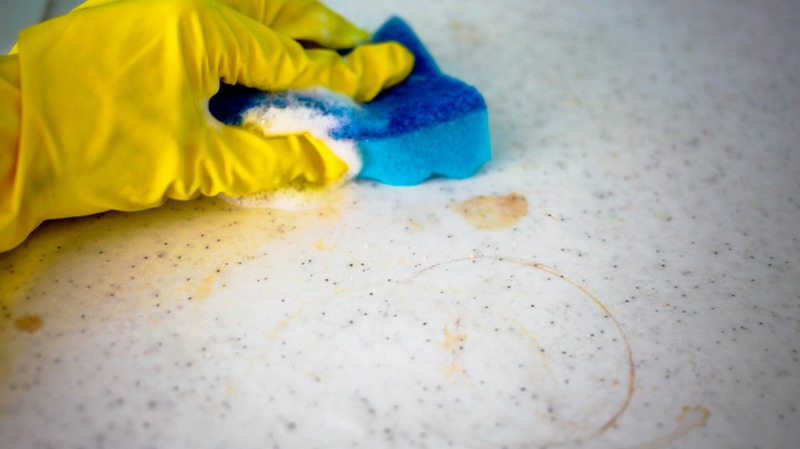
What not to use on quartz countertops
Quartz is tough, but its resin matrix makes it vulnerable to extreme pH levels and physical abrasion. Avoiding harmful chemicals is just as important as knowing how to clean.
Avoid these products on your quartz surfaces:
- Highly acidic chemicals: Avoid toilet bowl cleaners, limescale removers, and undiluted lemon juice.
- Highly alkaline agents: Steer clear of oven cleaners, drain cleaners, and lye-based soaps with a pH over 10.
- Bleach and chlorine: Undiluted bleach causes chemical burns and yellow discoloration on light quartz.
- Abrasive scouring powders: Cleansers with quartz silica, pumice, or micro-beads dull the factory shine.
- Steel wool and scouring pads: Wire pads and hard abrasive sponges leave permanent micro-scratches.
- Acetone and paint thinners: Strong solvents soften and degrade the binding resins, leaving cloudy white patches.
- Heat exposure: Never place hot pans directly on the stone; thermal shock can crack the slab or scorch the resin above 300 degrees F.
How to prevent stains on quartz countertops
Daily prevention keeps your quartz looking brand new for decades. By creating smart kitchen habits, you reduce the time needed for deep cleaning.
Implement these preventive measures:
- Wipe spills instantly: Treat spills from red wine, coffee, mustard, and vinegar within 5 min.
- Use cutting boards: Never chop vegetables or meat directly on the quartz surface.
- Place trivets and hot pads: Protect the resin from hot pots, slow cookers, and air fryers.
- Set coasters under drinks: Keep acidic citrus drinks and dark teas off the raw surface.
- Use silicone trays: Place trays under metal soap dispensers, cooking oil bottles, and sponge holders to catch drips.
- Clean daily: End each day by wiping counters down with a damp microfiber cloth and pH-neutral soap.