
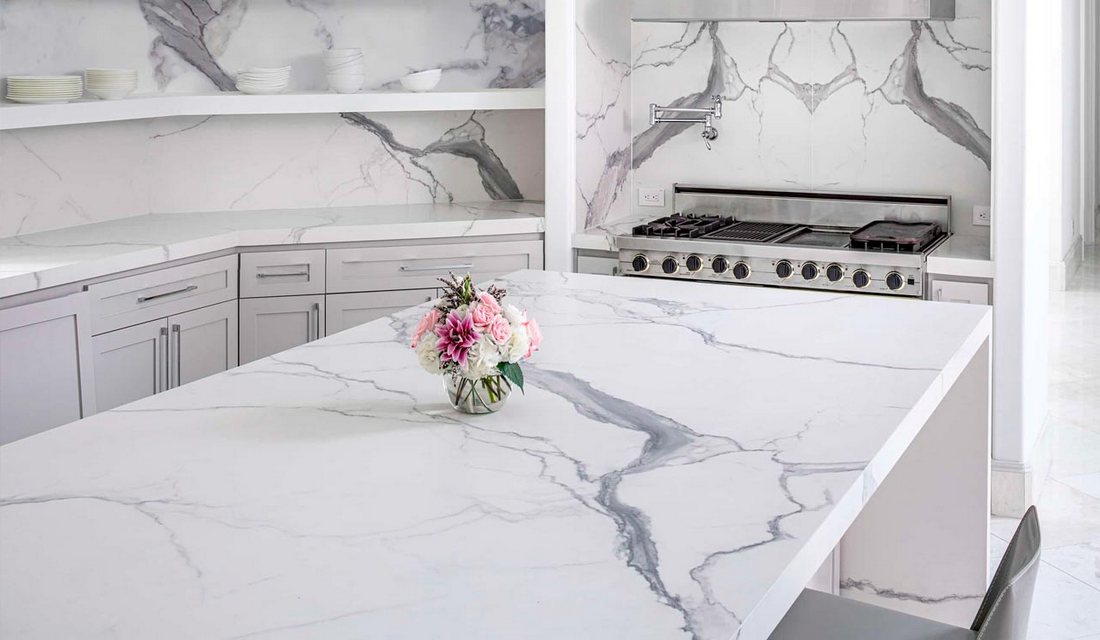
Porcelain slabs have transformed modern interior design. Originally popular across European architectural projects, this sintered surface now commands attention in upscale residential kitchens throughout North America.
Homeowners seeking sleek aesthetics, superior hygiene, and unmatched thermal resistance frequently turn to porcelain. Evaluating the pros and cons of porcelain countertops helps determine if this advanced material fits your lifestyle, cooking habits, and kitchen remodel budget.
Are porcelain countertops durable?
When evaluating surface longevity, homeowners inevitably ask: are porcelain countertops durable enough for high-traffic kitchens? The short answer is yes. Porcelain is 1 of the most resilient surfaces available in modern interior architecture.
Porcelain manufacturing relies on an industrial process called sintering. Raw natural materials including kaolin clay, feldspar, quartz, and mineral oxides are subjected to extreme compaction. Hydraulic presses apply over 10000 tons of force before the slabs enter kilns fired at temperatures exceeding 1200 °C (2192 °F).
This extreme thermal and mechanical processing fuses raw particles at a molecular level. It creates a solid slab with virtually 0 internal voids.
Key durability metrics include:
- Mohs Hardness Rating: Porcelain scores between 7 and 8 on the Mohs mineral hardness scale. This makes it harder than granite (6 to 7) and marble (3 to 5). Everyday steel kitchen knives cannot scratch its fired surface.
- Absorption Rate: Porcelain exhibits a water absorption rate below 0.05%. This dense composition prevents liquids, cooking oils, wine, and food acids from penetrating beneath the surface.
- Thermal Shock Resistance: Hot cookware transferred straight from a 450 °F oven onto the countertop will not burn, scorch, discolor, or crack the material.
- UV Resistance: The inorganic mineral pigments fired into porcelain do not degrade under sunlight. This allows outdoor kitchen installations in direct sunlight without fading.
While porcelain exhibits high tensile hardness and surface scratch defense, it behaves similarly to high-strength glass under blunt kinetic impact. Heavy metal objects dropped directly onto unsupported overhangs or sharp slab edges can cause localized chipping. Proper substrate support during installation prevents structural cracking.
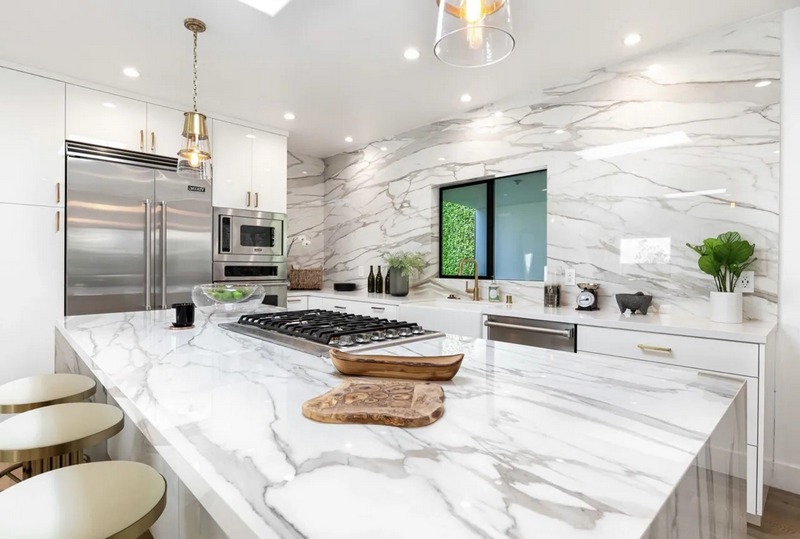
Pros and cons of porcelain countertops
Analyzing porcelain countertops pros and cons reveals why this material attracts designers while requiring skilled handling.
The benefits of porcelain countertops
Homeowners select porcelain due to its blend of technical performance and architectural elegance. The primary benefits include:
- Superior Thermal Endurance: You can place hot pots, boiling kettles, and baking pans directly on the slab without protective trivets or heat pads.
- Stain and Acid Proof: Lemon juice, red wine, turmeric, tomato paste, coffee, and household bleach cannot penetrate the surface. No chemical etching occurs.
- 0 Sealant Maintenance: Unlike natural quarried slabs, porcelain never requires chemical sealers, waxes, or regular surface conditioning.
- Lightweight Form Factor: Slabs are manufactured in standard thicknesses of 6 mm, 12 mm, and 20 mm. A 6 mm slab weighs roughly 3 lbs per sq ft, whereas 3 cm granite weighs roughly 18 to 20 lbs per sq ft. This lightweight profile allows installation directly over existing solid surfaces without tearing down cabinetry.
- Continuous Sizing: Large format slabs reaching 126 in by 63 in allow expansive kitchen island designs without visible grout lines or awkward seams.
- Hygienic Food Prep: The non-porous surface prevents bacterial growth, mold, and mildew. It meets stringent commercial food safety standards.
- Outdoor Compatibility: Freeze-thaw cycles, high humidity, rain, and UV rays do not compromise the slab.
The drawbacks
The benefits of porcelain countertops are balanced by potential drawbacks. Consider these realistic expectations before purchasing:
- Surface Pattern Limitations: High-definition inkjet printing creates realistic marble, concrete, and metal patterns. On standard printed slabs, this veining pattern resides exclusively on the top 1 mm layer. When an edge profile is cut, the white or beige interior core is exposed. Full-body or through-body veined porcelain resolves this issue but carries a higher price tag.
- Edge Fragility: The corners and edges of porcelain are its most vulnerable zones. Striking an unmitered edge with a cast iron skillet can cause chips. Fabricators recommend softened eased edges or mitered waterfall drops to minimize impact vulnerability.
- Complex Fabrication: Cutting dense porcelain requires high-speed waterjet machines, continuous-rim diamond blades, and constant water cooling. Inexperienced fabricators who push standard tools too fast can induce micro-fractures in the slab.
- Higher Installation Labor Cost: Because specialized tools and meticulous handling are required to prevent slab snapping before final placement, installation labor costs exceed those of standard engineered surfaces.
- Repair Difficulties: If a deep chip occurs along an edge, repairing it with colored epoxy requires an artisan technician. The repair might remain slightly visible under direct directional lighting.
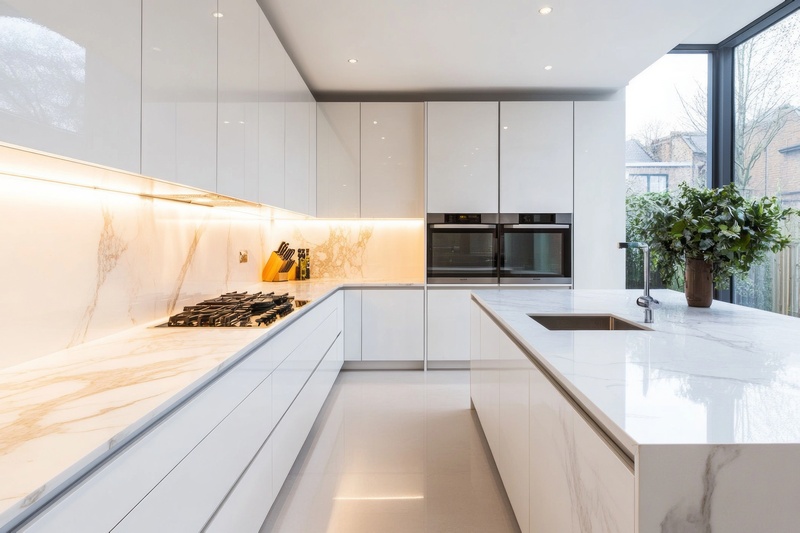
Porcelain countertops vs. Popular alternatives
Comparing porcelain to traditional kitchen surfacing options highlights critical differences in maintenance, heat tolerance, and structural performance.
Porcelain vs. Quartz
Quartz is an engineered product composed of 90% to 93% crushed natural quartz crystals bound together with 7% to 10% polymer resins and color pigments.
- Heat Resistance: Porcelain for countertops withstands direct heat above 2000 °F. Quartz cannot tolerate temperatures above 300 °F. Heat from hot pans melts or discolors the synthetic resin binders in quartz, leaving permanent white heat rings.
- UV Stability: Quartz resins yellow and break down when exposed to sunlight. Porcelain is 100% UV stable, making it suitable for both indoor and outdoor kitchens.
- Scratch Resistance: Porcelain is harder on the Mohs scale (7 to 8) than quartz (7).
- Fabrication: Quartz is easier to cut, fabricate, and install because its resin flexibility prevents edge shattering during handling.
Porcelain vs. Granite
Granite is a classic natural igneous stone formed under planetary geological pressure over millions of years.
- Porosity and Sealing: Granite contains natural micro-fissures and pores that absorb liquids if not regularly treated. Granite requires penetrating chemical sealers every 6 to 12 months. Porcelain has virtually 0 porosity and never needs sealing.
- Scratch Defense: Both materials resist knife scratches, though porcelain offers higher consistency across the entire slab without soft mineral pockets.
- Weight: Granite slabs (2 cm or 3 cm) add substantial structural load to cabinetry and subfloors. Porcelain provides equal or superior surface hardness at a fraction of the total weight.
- Aesthetic Uniqueness: Every granite slab features 100% natural, deep mineral variation. Standard porcelain relies on digital surface printing, though premium sintered slabs now simulate natural geological depth accurately.
Porcelain vs. Quartzite
Quartzite is a metamorphic rock formed when pure quartz sandstone undergoes extreme subterranean heat and pressure.
- Hardness: Natural quartzite is exceptionally hard (Mohs 7), rivaling porcelain.
- Chemical Sensitivity: While pure quartzite does not react to acids, many commercially sold quartzite slabs contain calcite deposits that etch when exposed to vinegar, wine, or citrus juice. Porcelain remains completely impervious to chemical etching.
- Pricing: High-grade quartzite is 1 of the most expensive surfacing options on the market, often exceeding $120 to $200 per sq ft installed. Porcelain provides a similar architectural aesthetic at a lower material price point.
- Maintenance: Quartzite requires regular periodic sealing to guard against deep oil stains. Porcelain demands no preventative chemical maintenance.
Porcelain vs. Marble
Marble represents the pinnacle of classical architectural beauty, composed primarily of calcium carbonate.
- Durability: Marble is soft (Mohs 3 to 4) and porous. It scratches easily from everyday contact with ceramic mugs, metal cutlery, and abrasive sponges. Porcelain easily resists these hazards.
- Acid Resistance: Common kitchen liquids like lemon juice, vinegar, and tomato sauce chemically dissolve marble surfaces on contact, leaving dull chalky patches known as etching. Porcelain does not react to acid.
- Maintenance Demands: Marble requires frequent sealing, specialized pH-neutral cleaners, and careful daily vigilance. Porcelain allows stress-free kitchen meal preparation without staining worries.
- Visual Replication: Modern porcelain digital scanning replicates Carrara, Calacatta Gold, and Statuario marble patterns with remarkable realism, delivering timeless marble visuals without fragile maintenance requirements.
| Feature / Metric | Porcelain | Quartz | Granite | Quartzite | Marble |
| Mohs Hardness | 7 to 8 | 7 | 6 to 7 | 7 | 3 to 5 |
| Heat Resistance | Over 2000 °F | Up to 300 °F | Up to 1200 °F | Up to 1000 °F | Up to 400 °F |
| Stain Resistance | Exceptional | High | Moderate (Sealed) | Moderate to High | Low |
| Requires Sealing | No (0%) | No | Yes (6 to 12 mo) | Yes (6 to 12 mo) | Yes (3 to 6 mo) |
| UV Resistance | 100% Stable | Degrades / Fades | 100% Stable | 100% Stable | Stable |
| Outdoor Use | Ideal | Not Recommended | Suitable | Suitable | Limited |
| Edge Chip Risk | Moderate | Low | Low to Moderate | Low to Moderate | High |
| Avg. Installed Cost | $60 to $120 / sq ft | $50 to $100 / sq ft | $45 to $90 / sq ft | $90 to $200 / sq ft | $80 to $180 / sq ft |
How to care for porcelain kitchen countertops
Maintaining porcelain kitchen countertops is straightforward thanks to the non-porous structure of the sintered material.
Follow these 5 care steps to keep your surfaces pristine:
- Perform Daily Surface Wipe-Downs: Clean everyday cooking spills using warm water, a soft microfiber cloth, and a few drops of mild dish soap. This removes surface grease and cooking residues in seconds.
- Remove Dried-On Food Spills: For hardened grease, sauces, or syrup, apply a standard non-abrasive household cleaner or a 50/50 mix of warm water and rubbing alcohol. Let it sit for 2 to 3 min, then wipe clean with a non-scratch sponge.
- Clean Hard Water Minerals: In areas with high mineral content, hard water can leave white limescale rings around sinks and faucets. Wipe the area with diluted white vinegar or a mild citric acid spray, rinse thoroughly with fresh water, and dry with a microfiber towel.
- Protect Exposed Edges and Corners: Always use a wooden or composite cutting board during heavy chopping tasks. While knives cannot scratch porcelain, cutting boards protect thin slab edges from accidental direct strikes by heavy cleavers or cast iron cookware.
- Avoid Unnecessary Mechanical Abrasives: Never use steel wool pads, diamond-grit scrubbers, or heavy-duty wire brushes on your counters. While the porcelain face is extremely hard, metal scrubbers can leave behind dark metal transfer marks that require chemical cleaning agents to lift.
Frequently Asked Questions
Is porcelain good for kitchen countertops?
▼
Can you cut directly on porcelain countertops?
▼
Why are porcelain countertops hard to install?
▼
Can chipped porcelain countertops be repaired?
▼
How long do porcelain countertops last?
▼