
Natural Stone Guide
Natural Stone Materials Guide: Marble, Quartzite, Granite, Limestone, Travertine and Premium Stone Slabs
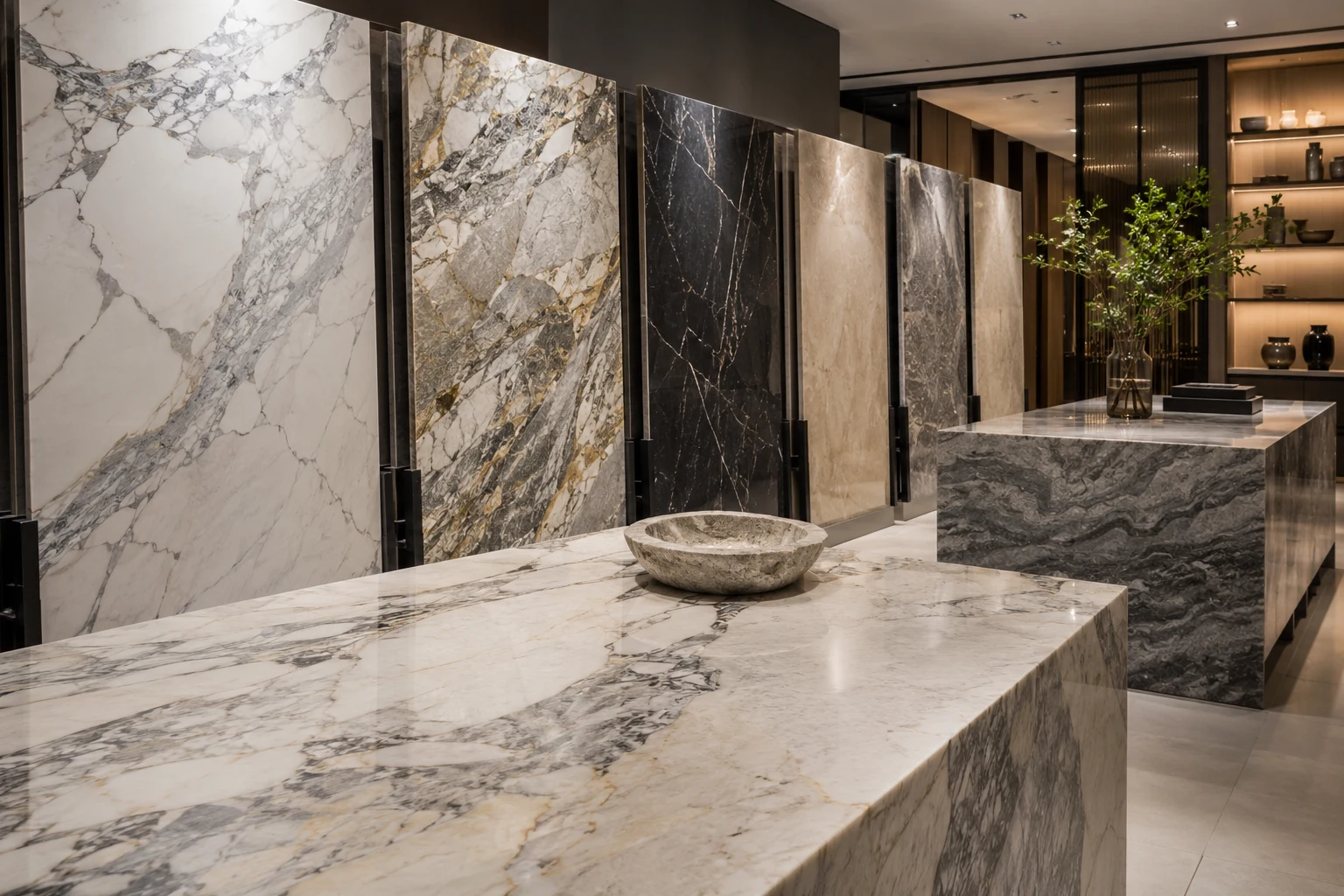
Natural stone is one of the most valuable surface materials in architecture and interior design. Marble, quartzite, granite, limestone, travertine, onyx, slate and other stones bring depth, movement, mineral character and uniqueness that manufactured materials cannot fully duplicate. This guide explains how to compare natural stone materials for countertops, flooring, walls, bathrooms, fireplaces, outdoor areas and luxury interiors.

What Makes Natural Stone Different
Natural stone is not just a surface finish. It is a real geological material formed over long periods of time through pressure, heat, mineral activity and natural transformation. Every slab carries its own pattern, movement, color variation and structure. This is why natural stone can make an interior feel richer and more permanent than many ordinary surface materials.
Unlike engineered surfaces, natural stone is never perfectly identical from one slab to another. This variation is part of its value. A marble slab may contain soft grey veining, golden movement, cloudy mineral areas or dramatic contrast. A quartzite slab may look like a piece of art with strong lines and layered color. Limestone and travertine can create calm, warm and organic interiors. Granite can provide strength and classic stone durability.
The important point is that natural stone is a broad category. Marble, quartzite, granite, limestone, travertine, slate, onyx and dolomite do not behave the same way. Each stone should be selected according to its appearance, hardness, porosity, finish, maintenance needs and intended application.
Why Natural Stone Is Used in Premium Design
Natural stone is often used when a project needs authenticity, depth and long-term visual value. It can become a centerpiece in a kitchen, a calm background in a bathroom, a dramatic feature wall in a hotel lobby, or a timeless floor in a luxury home. It works in both classic and modern interiors because stone can be bold, quiet, warm, cool, polished, matte, textured or sculptural.
Designers choose natural stone for many reasons:
- each slab is unique;
- stone adds real material value;
- natural veining creates visual depth;
- stone can be used across many surfaces;
- premium stone can define the entire design concept;
- natural materials often age with more character than synthetic surfaces.
However, natural stone also requires more informed selection. A stone that is perfect for a feature wall may not be ideal for a busy kitchen countertop. A stone that works beautifully in a bathroom may need special cleaning and sealing. The best results come from matching the stone to the actual use of the space.
Marble
Marble is one of the most recognizable natural stones. It is associated with elegance, luxury, sculpture, classic architecture and refined interiors. Marble can be white, grey, black, beige, green, red, gold or many other tones. Its veining can be soft and subtle or bold and dramatic.
Marble is often used for countertops, bathroom vanities, shower walls, fireplace surrounds, floors, wall panels, furniture tops and decorative surfaces. It can make a room feel bright, elegant and timeless. White marble with grey veining is a classic choice, while dramatic dark or colorful marble can create a strong design statement.
The main thing to understand is that marble is a natural calcium-based stone. It can be sensitive to acidic substances, etching, staining and scratching. Lemon juice, vinegar, wine, some cleaners and other acidic materials can affect the surface. This does not mean marble is bad. It means marble should be chosen by clients who understand and accept natural stone care.
Best Uses for Marble
Marble is excellent for spaces where elegance and visual impact are priorities. It works beautifully in bathrooms, powder rooms, fireplace walls, feature islands, luxury floors, wall cladding and decorative surfaces. It can also be used in kitchens, but the client should understand that the surface may develop patina over time.
Quartzite
Quartzite is a natural stone known for strength, visual movement and dramatic patterns. Many quartzites have the beauty people love in marble but can be harder and more durable than many marble varieties. Quartzite often appears in white, grey, green, blue, beige, gold and other complex tones.
Quartzite countertops and slabs are popular in luxury kitchens because they can create a strong natural statement while offering good performance. A quartzite island can become the visual center of a home. Quartzite can also be used for backsplashes, bathroom vanities, walls, fireplace surrounds and other premium surfaces.
Not every stone sold as quartzite behaves the same way. Some materials may be softer or more porous than expected. For this reason, the specific slab should be reviewed carefully. Sealing, finish, porosity and supplier information matter.
Best Uses for Quartzite
Quartzite is often a strong choice for kitchen countertops, islands, feature walls, bars, bathroom vanities and premium interior surfaces. It is especially useful
when the project needs natural stone drama with better durability than softer stones.
Granite
Granite is a classic natural stone used for countertops, floors, commercial surfaces and architectural applications. It is known for durability, hardness and a wide range of colors and patterns. Granite can be black, white, grey, brown, red, green, blue or mixed with mineral speckles and movement.
Granite is often selected for practical stone countertops because it generally performs well in kitchens and high-use areas. It can resist scratches and daily wear better than many softer stones. Like many natural stones, it may still need sealing depending on the slab and finish.
Design-wise, granite can look traditional or modern. Calm black or white granite can support a minimalist design. More active granite patterns can create a stronger natural stone look. The key is to select the slab according to the interior palette and desired level of movement.
Limestone
Limestone is a softer and warmer natural stone often used in calm, organic and architectural interiors. It usually has more subtle movement than marble or quartzite. Limestone colors often include beige, cream, grey, taupe and warm neutral tones.
Limestone can be beautiful for floors, walls, bathrooms, fireplace surrounds and exterior-inspired interiors. It creates a relaxed and natural atmosphere. It is especially useful in organic modern, Mediterranean, minimalist, spa-style and warm luxury spaces.
Because limestone can be more porous and softer than some other stones, it requires careful selection and maintenance. It should be sealed properly and cleaned with appropriate products. It may not be ideal for every heavy-use kitchen countertop, but it can be excellent in the right application.
Travertine
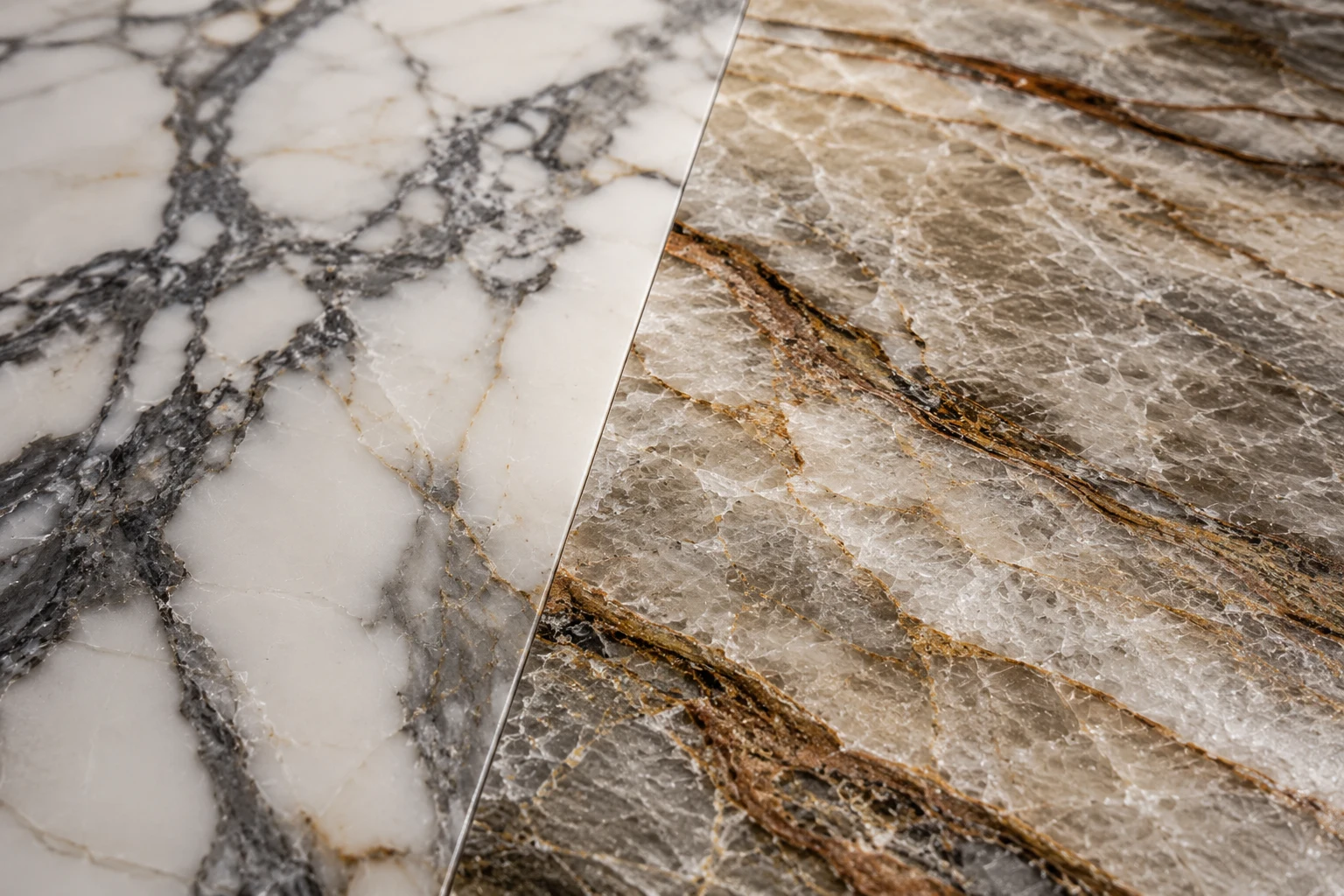
Travertine is a natural stone with a warm, textured and earthy character. It is often associated with Mediterranean architecture, classic villas, spa interiors and organic modern design. Travertine can be beige, cream, ivory, silver, walnut, gold or warm brown.
Travertine has visible pores and natural texture. It can be filled or unfilled, polished, honed, brushed or tumbled. These finish choices strongly affect the final look and maintenance. Filled and honed travertine can feel more refined, while tumbled travertine can feel more rustic and natural.
Travertine is often used for floors, walls, bathrooms, outdoor patios, pool areas, fireplace surrounds and feature surfaces. It creates warmth and softness that many modern interiors need. Like limestone, it should be selected with realistic maintenance expectations.
Onyx
Onyx is one of the most dramatic natural stones. It is known for translucent depth, strong color movement and a jewel-like appearance. Onyx can be backlit to create glowing walls, bars, reception desks, bathroom features and luxury decorative panels.
Onyx is usually used as a feature material rather than a heavy-use practical surface. It can be softer and more delicate than granite or quartzite. That makes it better for statement walls, decorative panels, powder rooms, bars and low-impact luxury areas.
When used correctly, onyx can create an unforgettable design effect. But it requires careful handling, fabrication, lighting planning and maintenance.
Slate
Slate is a natural stone with a layered structure and often a textured surface. It can be grey, black, green, rust, blue-grey or multicolor. Slate is commonly used for floors, outdoor areas, walls, fireplaces and rustic or modern interiors.
Slate can provide a strong natural texture and good slip comfort depending on the finish. It works well in projects that need an earthy, grounded and durable material. As with all natural stone, the specific slate product should be checked for thickness, finish, sealing and intended use.
Dolomite and Other Natural Stones
Dolomite, soapstone, serpentine and other natural stones can also be used in design projects. Each has its own properties. Dolomite can sometimes resemble marble but may behave differently. Soapstone has a soft, dark, matte character and develops patina. Serpentine and other stones may offer unique colors and patterns.
The broader the natural stone category becomes, the more important it is to evaluate each material individually. Names alone are not enough. The actual slab, finish, supplier data and intended use must guide the decision.
Natural Stone for Countertops
Countertops are one of the most common uses for natural stone. A stone countertop can define the entire kitchen or bathroom. Marble, quartzite, granite, dolomite and some other stones are frequently used for countertops, islands, vanities and bar tops.
The best countertop stone depends on lifestyle. A busy family kitchen may need a harder and more forgiving stone such as quartzite or granite. A luxury show kitchen may use marble for its beauty. A bathroom vanity can use marble, quartzite, limestone or other stones depending on cleaning and moisture expectations.
For countertops, always consider stain resistance, acid sensitivity, sealing, edge profile, slab size, seam placement and daily use. A stone that looks beautiful as a slab must also perform as a working surface.
Natural Stone for Flooring
Natural stone flooring can create a sense of permanence and luxury. Marble floors can feel elegant and formal. Limestone and travertine floors feel warm and natural. Slate floors can feel textured and grounded. Granite floors can provide durability in high-traffic areas.
Flooring requires special attention to finish and slip comfort. Polished stone may look luxurious but can be slippery in wet areas. Honed, brushed or textured finishes may be more practical. The stone should also be suitable for the expected traffic level.
Large-format stone flooring can create a more seamless and architectural look, but it requires careful installation and a properly prepared substrate.
Natural Stone for Bathrooms
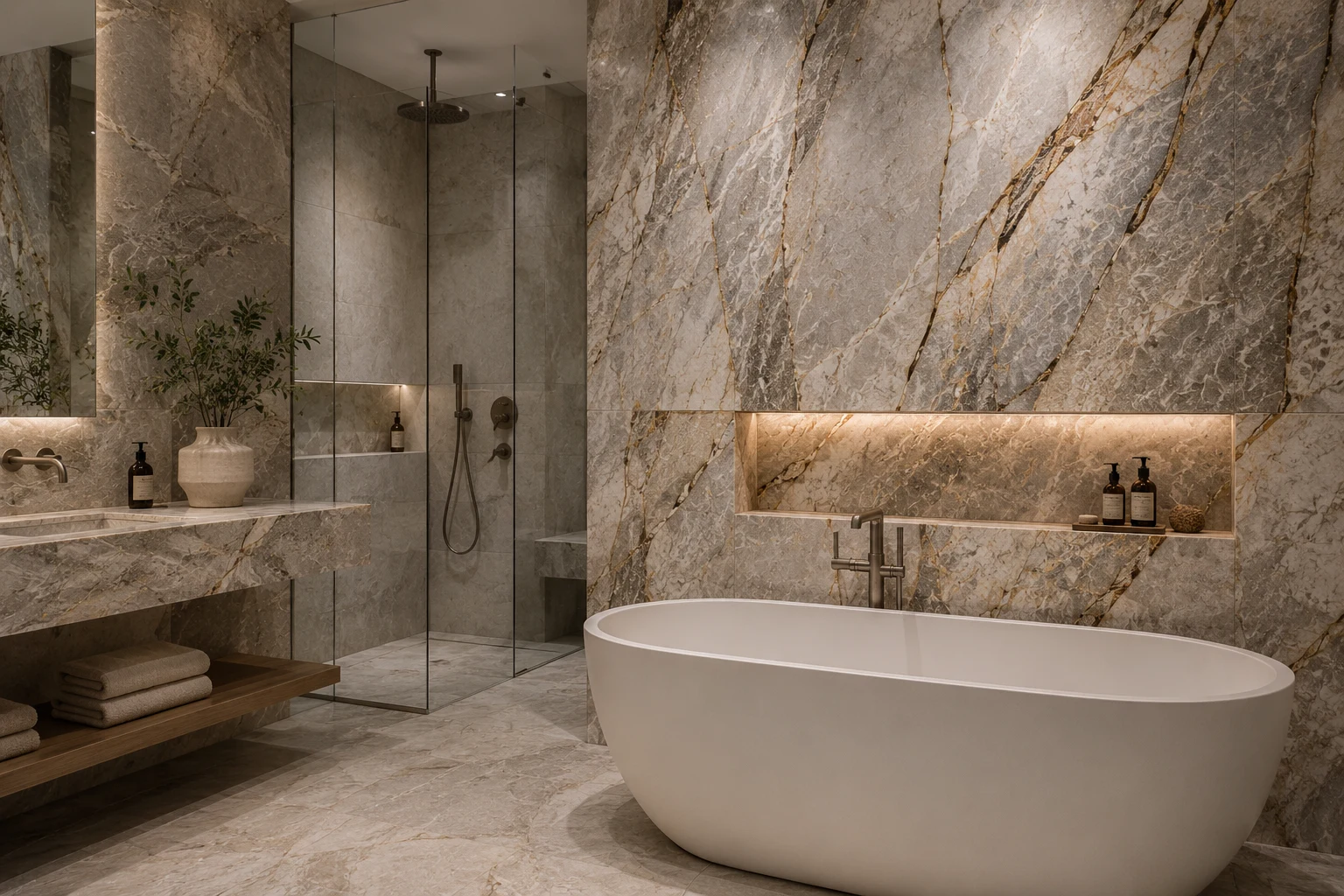
Bathrooms are a natural place for stone because stone can create a spa-like and luxurious atmosphere. Marble shower walls, limestone floors, travertine vanities, quartzite panels and stone feature walls can all make a bathroom feel more refined.
However, bathrooms also involve moisture, cleaning products and slip concerns. The stone must be chosen carefully. Sealing, waterproofing, grout, ventilation, finish and cleaning routine all matter. Some stones are better for walls and vanities than shower floors. Some finishes are better for wet areas than others.
When planned correctly, natural stone bathrooms can feel calm, expensive and timeless. When selected without technical review, they can become difficult to maintain. This is why material guidance is important before installation.
Natural Stone for Walls and Feature Panels
Stone wall panels can create some of the strongest visual effects in interior design. A full-height stone fireplace wall, marble TV wall, backlit onyx panel, quartzite feature wall or travertine accent surface can define the character of a room.
Walls usually face less wear than countertops or floors, which allows more freedom in stone selection. Delicate, dramatic or highly decorative stones may work better on walls than on working surfaces. This is where marble, onyx, travertine, limestone and highly patterned quartzite can shine.
Natural Stone for Fireplaces
Fireplace surrounds and feature walls are excellent uses for natural stone. Stone adds visual weight, texture and luxury around the fire area. Marble can create a classic or dramatic fireplace. Travertine and limestone can create warmth. Slate can create a darker and more rustic or modern mood. Quartzite can create a bold statement.
The selected stone and installation system should be appropriate for heat exposure and local building requirements. Design details such as slab layout, bookmatching, hearth design and edge treatment can make a major difference.
Natural Stone for Outdoor Areas
Some natural stones can be used outdoors for patios, pool decks, exterior walls, outdoor kitchens, steps and walkways. Travertine, granite, slate and some limestones are common outdoor options depending on climate, finish and application.
Outdoor stone must handle weather, moisture, UV exposure, temperature changes and slip requirements. Not every beautiful indoor slab is suitable outdoors. The finish is especially important because outdoor surfaces need grip and durability.
Choosing the Right Finish
The finish changes both the look and performance of natural stone. A polished finish is glossy and reflective. It makes colors and veining more vivid but can show scratches, etching or water marks more clearly. A honed finish is matte and softer. It often feels more modern and practical. A leathered finish adds texture and depth. A brushed or tumbled finish creates a more aged or rustic look.
The right finish depends on the application. Countertops, floors, walls, bathrooms and outdoor areas may each need a different surface finish. The same stone can feel luxurious, calm, rustic or architectural depending on how it is finished.
Sealing and Maintenance
Many natural stones benefit from sealing. Sealing helps reduce absorption, but it does not make stone indestructible. The need for sealing depends on the stone type, porosity, finish and use. Marble, limestone and travertine often need more careful maintenance than granite or some quartzites.
Basic maintenance includes cleaning spills promptly, using stone-safe cleaners, avoiding acidic products on sensitive stones, using cutting boards on countertops, protecting surfaces during construction and following supplier care instructions. Natural stone can last for many years when maintained correctly.
How to Select a Natural Stone Slab
Whenever possible, clients should view the actual slabs before final selection. Small samples are useful for color and finish, but they cannot show full slab movement. A stone may look calm in a sample and dramatic across a full slab. Vein direction, color zones, cracks, resin treatment, fill, thickness and usable area should all be reviewed.
For large projects, slab layout is critical. Countertops, islands, backsplashes, walls and fireplace panels should be planned before cutting. If the stone has strong movement, vein matching and seam placement can determine whether the final result looks premium or accidental.
Common Mistakes When Choosing Natural Stone
- Choosing stone only by appearance without checking maintenance.
- Assuming marble, granite and quartzite behave the same way.
- Using delicate stone in a heavy-use area without realistic expectations.
- Not viewing the actual slab before fabrication.
- Ignoring finish, sealing and cleaning requirements.
- Choosing polished stone for wet floors without considering slip comfort.
- Planning seams and vein direction too late.
- Using outdoor stone without checking climate and finish suitability.
How Natural Stone Coordinates With Other Surfaces
Natural stone should be selected as part of the full design palette. Countertops, floors, wall panels, cabinets, lighting, metal finishes and furniture all affect how stone appears. A dramatic stone island may need calm flooring and simple cabinets. A soft limestone floor can support a bold marble wall. A travertine bathroom can feel warmer when paired with wood and soft lighting.
Coordination does not mean every surface must match. The best interiors usually use balance. Natural stone can be the hero material or a quiet background, depending on the project.
Frequently Asked Questions About Natural Stone
What is the best natural stone for countertops?
Quartzite and granite are often strong choices for practical natural stone countertops. Marble is excellent for elegance and beauty but requires more care. The best stone depends on use, maintenance expectations and the selected slab.
Is marble good for kitchens?
Marble can be used in kitchens, but it requires realistic expectations. It can etch, scratch or stain more easily than some harder stones. Many clients still choose marble because of its timeless beauty and natural character.
Is quartzite better than marble?
Quartzite is often harder and more durable than many marble varieties, but the exact stone must be reviewed. Marble offers classic elegance, while quartzite often provides dramatic movement with stronger performance.
Does natural stone need sealing?
Many natural stones benefit from sealing, especially porous stones such as marble, limestone and travertine. Some dense stones need less frequent sealing. The supplier or fabricator should provide care guidance for the specific stone.
Can natural stone be used in bathrooms?
Yes, natural stone can be beautiful in bathrooms. The stone, finish, sealing, waterproofing and cleaning routine must be selected carefully because bathrooms involve moisture and frequent cleaning.
Is natural stone good for flooring?
Natural stone can be excellent for flooring when the right stone and finish are selected. Slip comfort, traffic level, maintenance and substrate preparation are important factors.
Final Thoughts
Natural stone is one of the most expressive and valuable materials in design. Marble, quartzite, granite, limestone, travertine, onyx, slate and other stones each offer different beauty and different performance. The best choice is not simply the most dramatic slab. It is the stone that fits the space, the lifestyle, the maintenance expectations and the design vision.
For homeowners, designers, builders and commercial clients, natural stone should be selected with both emotion and technical understanding. When the right stone is chosen and installed well, it can become the material that defines the entire project.