
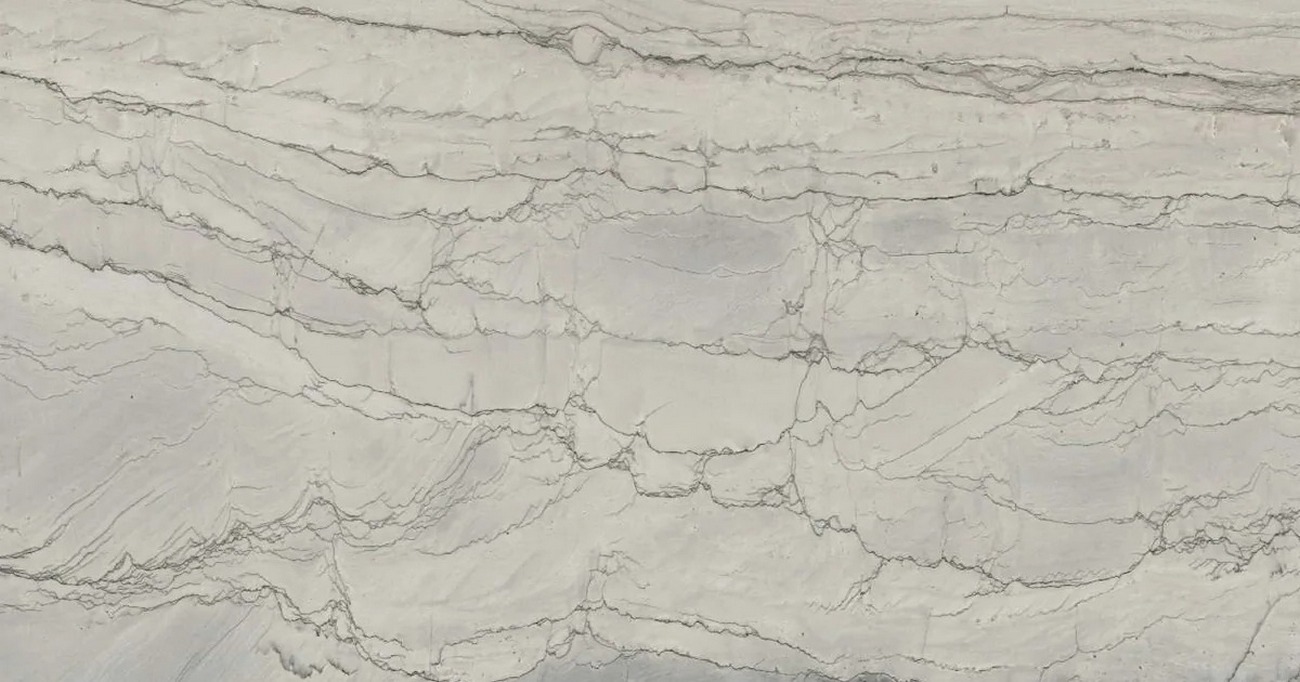
Granite dimensions determine whether your island fits, where seams go, and how much material you buy. A full slab can contain more surface area than your kitchen needs yet still be too short for its longest countertop.
The typical size of a granite slab varies by quarry and available inventory. Use approximate measurements for early planning. Approve the actual piece and cutting layout before ordering.
What is the average size of a granite slab?
Granite has no universal factory format. Suppliers receive pieces cut from natural blocks, so length and width vary even within the same color selection.
For initial planning, a granite slab measuring around 120 × 70 in, or approximately 305 × 178 cm, provides a useful reference. This is a useful reference, not a measured industry average or guaranteed stock size.
Natural stone suppliers may carry pieces ranging from about 104 × 70 in to 125 × 80 in, with other dimensions available. Ask for the measurements of the specific material you want rather than designing around a catalog estimate.
Overall dimensions and usable dimensions
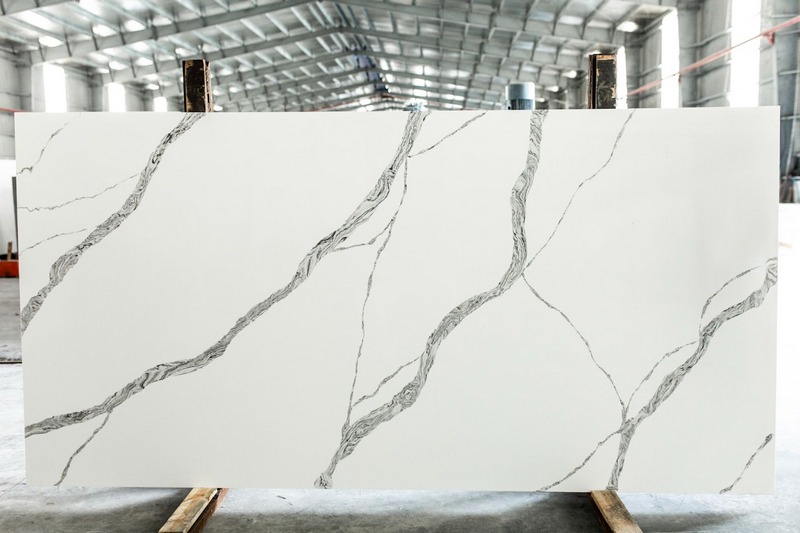
The longest and widest measurements describe the outside boundary. Rough edges, chipped corners, and sections requiring removal can reduce the rectangle available for fabrication.
A slab photographed upright may appear evenly rectangular while hiding an irregular lower edge. Request a marked photograph showing the usable perimeter and any areas the fabricator plans to exclude.
For an island close to the available length, even a small trimming allowance matters. A nominal 120″ piece should not be assumed to produce a finished 120″ countertop.
Thickness is a separate measurement
Common countertop thicknesses include 2 cm and 3 cm. These measurements describe the stone’s depth, not its length, width, or surface area.
Thickness affects weight, edge appearance, and support requirements. A thicker piece does not automatically permit every overhang or eliminate reinforcement around openings.
Choose thickness with the cabinet design and installation method in mind. Your fabricator should confirm the necessary support before you finalize seating projections or decorative edges.
Standard granite slab sizes
The word “standard” usually describes familiar stock dimensions rather than an enforced industry specification. A supplier’s current inventory may differ from the measurements shown in general buying guides.
Treat standard granite slab sizes as starting points for comparing material, not as fixed ordering dimensions. Record the actual length, width, and thickness alongside the stone name and identification number.
Full pieces, prefabricated tops, and remnants
A full piece gives the fabricator flexibility to position countertops, backsplashes, and decorative panels. It still requires a cutting plan that accounts for pattern direction and the shape of each component.
Prefabricated tops have already been cut to particular dimensions and may include finished edges. Their lower initial price can be attractive, but a fixed depth or edge profile may limit your design.
Remnants are leftover sections from earlier projects. They can suit vanity tops or small shelves when the usable shape, thickness, and finish match the job.
Measurements to confirm before purchase
Collect the following details when comparing available material. A photograph and written measurements help prevent confusion between similar pieces in the same bundle.
- Identification: Record the color name, slab number, and bundle number where available.
- Usable boundary: Confirm the dimensions remaining after required edge trimming.
- Surface condition: Identify repairs, fissures, or areas needing closer fabrication review.
- Finish and thickness: Verify that every selected piece matches the approved specification.
- Matching material: Check availability for backsplashes, waterfall panels, or additional countertops.
Ask whether the quote reserves the photographed material or only describes a general color. Natural variation can make a replacement look noticeably different, even when the product name is unchanged.
How many square feet are in a slab of granite?
To answer “how many square feet in a slab of granite“, multiply length by width in inches and divide by 144. This gives a gross area for a rectangular piece.
A 120″ × 70″ example contains approximately 58.3 sq ft. A 125″ × 80″ example contains approximately 69.4 sq ft.
Calculate the starting area
Use the same measurement units throughout the calculation. Mixing cm with in produces an incorrect result, even when the arithmetic itself is right.
- Measure: Obtain the actual length and width from the supplier or fabricator.
- Multiply: For a 120″ × 70″ piece, calculate 120 × 70 = 8,400 sq in.
- Convert: Divide 8,400 by 144 to get approximately 58.3 sq ft.
- Check: Compare the proposed countertop shapes with the usable cutting boundary.
For measurements recorded in cm, divide length × width by 10,000 to obtain m². Convert that result to sq ft only if your estimate uses that unit.
Understand why finished coverage is lower
Gross area includes material lost to perimeter trimming and the saw blade. It also includes sections that may remain unused because the countertop shapes do not fit together efficiently.
An island measuring 96″ × 40″ contains approximately 26.7 sq ft. Although that is less than half of the 58.3 sq ft example, its width may prevent another deep countertop from fitting beside it.
Sink and cooktop openings do not necessarily reduce the amount purchased. The surrounding countertop still occupies its full rectangle during layout, and the removed section may not be reusable.
Avoid applying a universal waste percentage to every kitchen. An actual cutting diagram gives a more dependable material count, especially for large islands or directional patterns.
Granite slab dimensions by type of stone
Granite color names do not define fixed measurements. Quarry conditions, the extracted block, and processing decisions influence what reaches the supplier.
The size of slab available in your chosen color may therefore differ from a visually similar alternative. Compare actual inventory before rejecting a layout or changing the kitchen design.
Fine grain and consistent patterns
Granite with a relatively uniform pattern often gives the fabricator more freedom to rotate components. That flexibility can help smaller countertops fit around the main island section.
Rotation still needs visual approval. Subtle changes in grain direction or color can become apparent where pieces meet, particularly under strong window light.
Flowing patterns and prominent veins
Stone with long mineral bands requires more deliberate positioning. Turning a countertop section may interrupt the movement you expected to continue across the kitchen.
A waterfall island adds vertical panels that should be considered alongside the horizontal top. Aligning their pattern can require more material than the combined finished area suggests.
Review the proposed cuts on a photograph of the selected stone. Mark the island, perimeter counters, and vertical panels so you can see which features will remain visible.
Commercial names and material identification
Retail stone categories can include materials with different geological compositions. A familiar color name alone does not establish strength, fabrication behavior, or stone slab dimensions.
Ask the supplier to identify the material and provide any relevant fabrication guidance. If you switch to marble or quartzite, reassess the layout and care requirements with the fabricator.
What factors affect granite slab size?
The original block sets the starting limits, but several later decisions determine the finished material available for your project. These include processing, selection, transport, and site access.
Quarrying and processing
Natural fractures influence the blocks that can be extracted intact. Sawing equipment and handling capacity then affect how those blocks are processed into saleable pieces.
Trimming removes unsuitable edges, sometimes changing the final proportions. Polishing and inspection may also reveal areas that need treatment or exclusion from a countertop layout.
A larger outside measurement does not necessarily provide more useful material. Compare the clean cutting area and proposed component positions before paying extra for additional length.
Transportation and installation access
A countertop must travel from the fabrication shop into its final room. The average size of granite slab available from a supplier does not determine whether your finished countertop can pass through narrow staircases, tight turns, elevators, or door openings.
An island that fits on the raw material may still require a seam because of delivery access. Discuss the route before approving a design that depends on a continuous surface.
The installation team should also review lifting arrangements and cabinet readiness. Stone weight, openings, and unsupported sections affect how a finished piece can be moved and placed.
Budget and layout priorities
The least expensive raw piece may produce a costly layout if it forces another purchase. Conversely, a larger piece may leave substantial leftovers without reducing the number of seams.
Ask for a comparison based on the complete installed project. Material, fabrication, edge work, cutouts, delivery, and installation should be clearly described so you can compare quotes fairly.
Decide which visual result matters most before revising the plan. A continuous island, aligned veining, or matching backsplash may each change how the material is allocated.
Granite slab size vs. quartz and other natural stone slab sizes
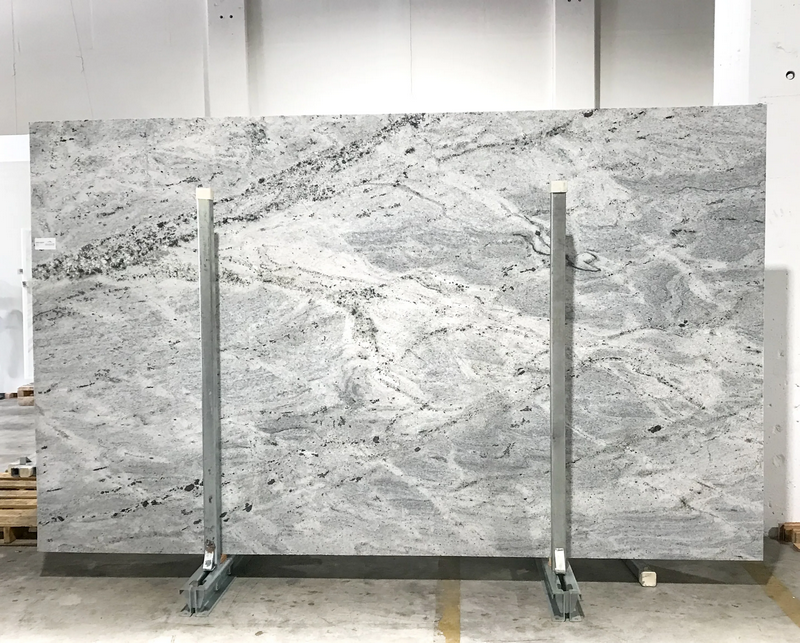
Engineered quartz is manufactured in product formats, while quarried stone varies with the available block. Neither category has a universal measurement that covers every supplier and collection.
Compare slab sizes using the exact products under consideration. The table separates published manufactured examples from natural materials that require individual measurement.
| Material | Dimensions or format | Area before cutting | Main planning consideration |
| Granite | Illustrative 120 × 70 in piece | 58.3 sq ft | Confirm the usable perimeter and actual inventory. |
| Quartz, standard example | 120 × 56.5 in | 47.1 sq ft | Check the selected brand, color, and specification. |
| Quartz, jumbo example | 131.5 × 64.5 in | 58.9 sq ft | Availability varies by product and market. |
| Marble | Individually measured natural pieces | Calculate from actual measurements | Review veining and areas requiring exclusion. |
| Quartzite | Individually measured natural pieces | Calculate from actual measurements | Confirm fabrication suitability and pattern layout. |
Compare usable layouts before choosing
The quartz measurements above are format examples; Luxiomer calculates displayed full-slab prices using an assumed 120 × 60 in area, equivalent to 50 sq ft, for pricing purposes only. Actual dimensions, final pricing, and availability may vary, so confirm these details with a Luxiomer manager before ordering.
For natural stone, request dimensions for available pieces rather than assuming marble or quartzite will match granite. Length alone cannot show whether a wide island and its surrounding countertops will fit.
Place the same project drawing against each candidate. This reveals whether an alternative reduces purchases, changes seam placement, or creates unwanted pattern breaks.
Luxiomer offers natural stone and manufactured surfaces alongside fabrication and installation services. Share your layout, preferred material, and island dimensions to request an estimate based on your project.
Frequently Asked Questions
How long is a slab of quartz?
▼
What is the typical size of a quartz slab?
▼
Do I need to buy a full piece for a small vanity?
▼
How big are quartz slabs?
▼