
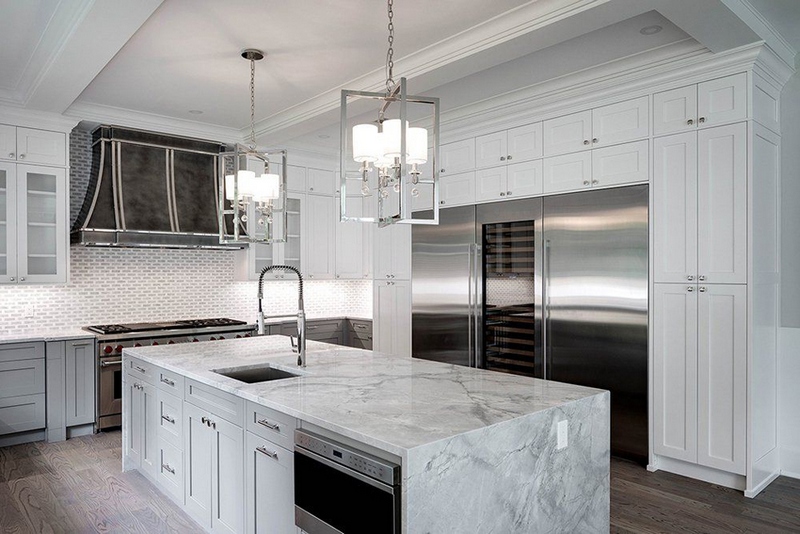
Selecting new kitchen surfaces often brings homeowners to a common dilemma. Both options sound almost identical, look luxurious, and deliver exceptional durability. Yet, they possess completely different mineral structures, care requirements, and price profiles.
Understanding quartz vs quartzite countertops helps you invest wisely in your home renovation. Luxiomer Stone Gallery fabricates both surfaces, helping clients balance everyday functionality with distinctive architectural appeal. Here is how these 2 popular surfaces stack up across every critical performance category.
What is the difference between quartz and quartzite?
Homeowners frequently ask what is the difference between quartz and quartzite. The core distinction comes down to nature versus manufacturing. 1 is created deep inside the earth over millions of years, while the other is assembled inside an industrial facility. Evaluating their distinct structural properties helps clarify which material best fits your daily cooking habits.
What is quartz?
Quartz is an engineered composite stone surface. Manufacturers produce it by blending roughly 90% to 93% ground natural quartz mineral crystals with 7% to 10% polymer resins, binding agents, and color pigments.
Because technicians control the manufacturing environment, quartz offers uniform patterns, predictable color consistency, and a completely nonporous surface. It never requires topical sealers. Leading brands manufacture slabs that replicate Italian Carrara marble, dark soapstone, or industrial concrete with exceptional realism.
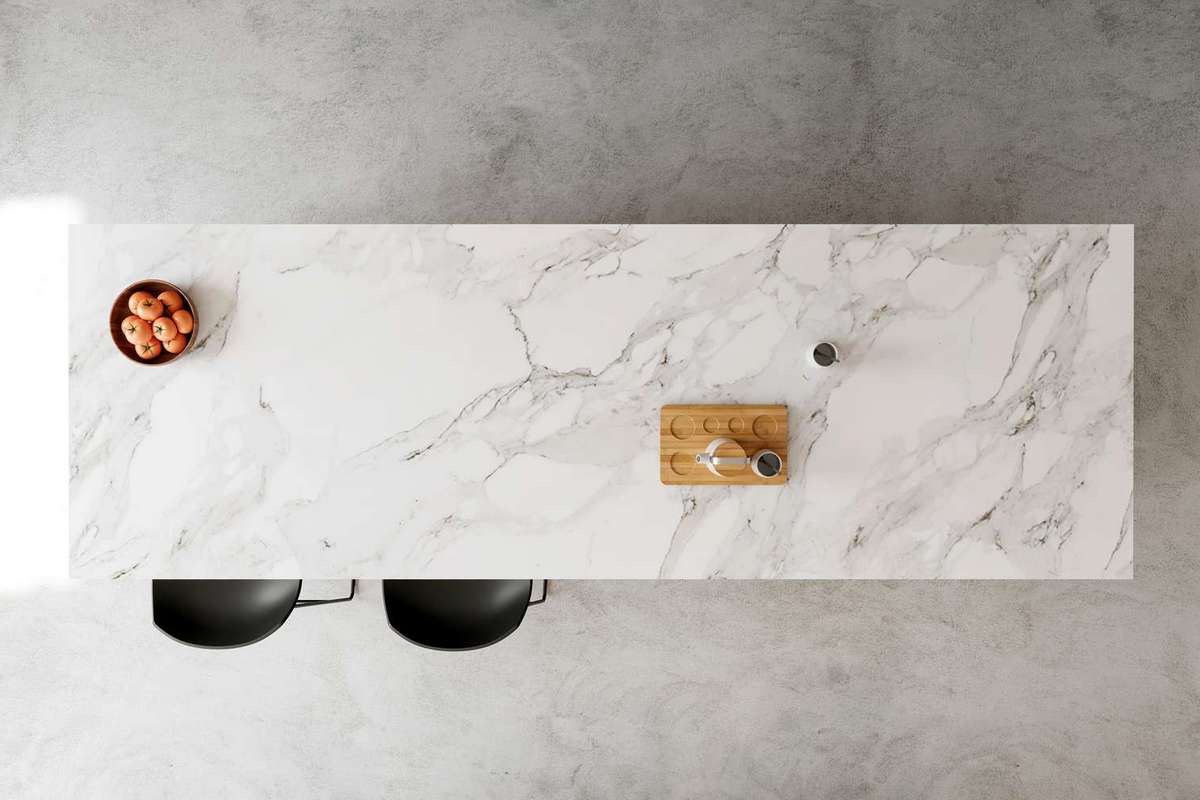
What is quartzite?
Quartzite is a 100% natural metamorphic rock.
It originates as pure quartz sandstone on riverbeds or coastal dunes. Tectonic movement pushes this sandstone deep into the earth crust, where intense heat and pressure recrystallize the individual quartz grains into an interlocking mineral mosaic.
Quarriers extract massive blocks from natural stone deposits, which fabricators slice into standard slabs measuring 2 cm or 3 cm thick. Quartzite displays raw, organic beauty with dramatic veining, translucent crystal fields, and subtle earth tones. Every single slab is 1 of a kind.
Key differences (add a comparison table)
To help you evaluate both options side by side, review this summary of structural and practical characteristics:
| Feature | Quartz Countertops | Quartzite Countertops |
| Material Origin | Manmade composite | 100% natural metamorphic stone |
| Mineral Composition | 90% to 93% quartz crystals, 7% to 10% resin | 98% to 99% recrystallized quartz sandstone |
| Mohs Hardness Rating | 7 out of 10 | 7 to 8 out of 10 |
| Surface Porosity | Completely nonporous | Naturally porous; requires penetrating sealer |
| Heat Tolerance | Low to medium; damages above 300°F | Extreme; withstands 1000°F or more |
| UV Light Resistance | Vulnerable to yellowing in direct sunlight | Completely unaffected by sunlight |
| Annual Maintenance | Soap and water only; zero sealing | Resealing required every 1 to 2 years |
| Visual Character | Consistent, repeatable patterns | Unique, raw veining and natural fissures |
| Average Slab Thickness | 2 cm or 3 cm | 2 cm or 3 cm |
| Average Installed Price | $50 to $150 per sq ft | $80 to $250 per sq ft |
Quartz vs. quartzite: detailed comparison
When you compare these 2 surfaces, distinct practical advantages emerge for different kitchen layouts. Evaluating these specific performance factors ensures your final choice aligns with your daily habits.
Hardness and Scratch Resistance
Hardness dictates how well your counter stands up to sharp knives, dropped utensils, and heavy cookware. Geologists measure mineral hardness on the Mohs scale from 1 (soft talc) to 10 (diamond). Quartz measures approximately 7 on the Mohs scale. Natural quartz crystals resist scratches effortlessly, though resin binders can show fine scuffs under heavy abrasive pressure. Quartzite rates between 7 and 8 on the Mohs scale, making it harder than granite or marble. Cutting directly on quartzite dulls knives rather than scratching the countertop. It provides exceptional impact tolerance against edge chipping during prep.
Heat Resistance and Thermal Shock
Heat handling represents one of the most significant functional differences between these materials, revealing clear pros and cons for each surface during daily cooking. Quartz contains polyester resins and plasticizers. Above 300 °F, these resins can scorch, melt, or discolor permanently. Setting a hot pan directly onto quartz can leave irreversible heat rings, so homeowners must use trivets or hot pads. Quartzite formed under subterranean heat, easily handling temperatures exceeding 1000 °F. Hot pans or boiling pots placed directly on quartzite will not burn or melt the stone. However, sudden thermal shock can occasionally crack cold slabs, making hot pads a sensible protective measure.
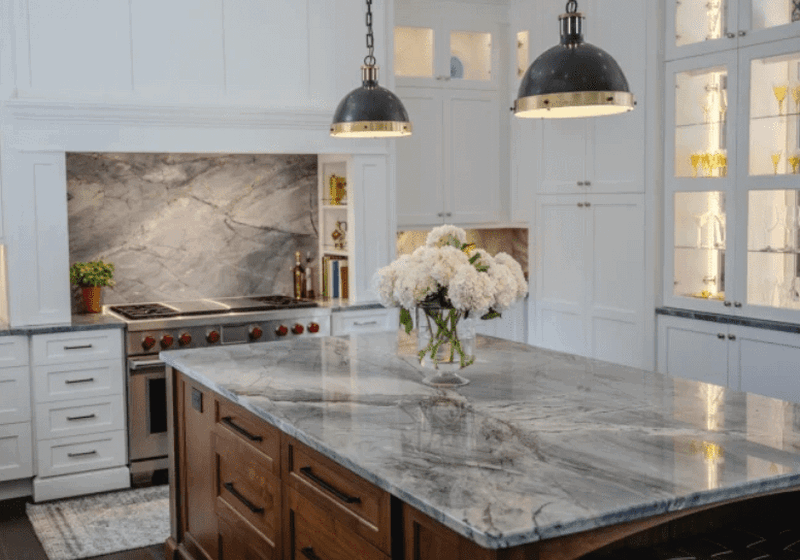
Porosity, Sealing, and Stain Resistance
How each material handles spills determines your cleaning workload. Quartz has zero porosity. Factory manufacturing eliminates air pockets, fusing stone dust and resin into an impenetrable sheet. Spilled red wine or sauce can sit overnight without penetrating the surface. You clean it with warm water, mild dish soap, and a microfiber cloth. Quartzite features microscopic pores and natural fissures. Left unsealed, liquids and grease soak into the stone matrix, causing permanent dark spots. Fabricators apply an impregnating sealer during installation, which homeowners must reapply every 1 to 2 years. A simple water drop test indicates when resealing is needed: if water soaks in within 10 minutes, reapply sealer.
UV Resistance and Sun Exposure
Natural light transforms a kitchen space, but UV radiation affects countertop materials differently. Deciding whether to install quartz or quartzite in sunlit spaces depends heavily on how ultraviolet radiation affects polymer binders. Direct sunlight causes dark quartz slabs to fade, while white slabs take on a dull yellow tint over time. Because of this reaction, manufacturers explicitly void warranties for quartz installed outdoors or in intense sunlight. Quartzite contains no resins or artificial additives. It withstands intense sun exposure without fading or degrading, making it an ideal choice for outdoor kitchens, patio islands, and sunrooms.
Visual Aesthetics and Pattern Variations
Aesthetic preference often directs final selection. Quartz appeals to homeowners seeking clean minimalism and uniform design. Manufactured synthetically, it produces matching slabs with bookmatched veins and consistent color transitions across seams. You can select pure whites, grays, or marble styles with certainty about how your slab will look. Quartzite appeals to homeowners who appreciate the drama of natural earth history. Slabs like Taj Mahal or Sea Pearl offer translucent layers and sweeping mineral bands that mimic marble with twice the durability. Slabs from different quarries showcase varying background tones and vein structures, so you must personally select your specific slab at the stone yard.
Fabrication Complexity and Edge Profiles
Fabricating stone requires specialized machinery and skilled artisans. Quartz cuts smoothly and predictably. Its uniform density eliminates structural surprises, allowing fabricators to rout complex edge profiles, cut clean sink cutouts, and create mitered apron edges with minimal tool wear. Quartzite is exceptionally dense and brittle. Cutting quartzite requires high-pressure waterjets, specialized diamond bridge saw blades, and constant water cooling to prevent cracking. Fabricating quartzite takes up to 3 times longer than granite or quartz, limiting intricate edge details in favor of eased, bevel, or half-bullnose edges.
Quartzite vs. quartz cost comparison
Budget calculations play a decisive role in kitchen remodeling. Reviewing quartz vs quartzite cost requires looking beyond raw material prices to examine total fabrication and installation expenses.
Standard entry tier quartz costs between $50 and $75 per sq ft installed. Mid tier quartz selections range from $75 to $100 per sq ft. Premium designer quartz with detailed veining runs between $100 and $150 per sq ft installed. Because quartz slabs arrive in standard dimensions with minimal structural flaws, material waste stays low, usually around 10% to 15%.
Quartzite pricing starts higher and spans a wider range. Entry level quartzite starts around $80 to $110 per sq ft installed. Popular designer varieties like Taj Mahal or Super White typically cost between $120 and $175 per sq ft. Rare or exotic quartzite with vivid emerald, blue, or crystalline gold veining can reach $200 to $250 or more per sq ft installed.
The higher overall cost of quartzite stems from 3 primary factors:
- Mining and extraction expenses: Quarrying hard stone blocks from remote regions requires heavy excavation machinery and substantial shipping freight.
- Fabrication labor: Tool wear on diamond blades and slow cutting speeds significantly raise fabrication shop labor costs.
- Slab waste: Natural fissures within raw quartzite blocks can force fabricators to cut around unstable sections, creating 20% to 30% material waste.
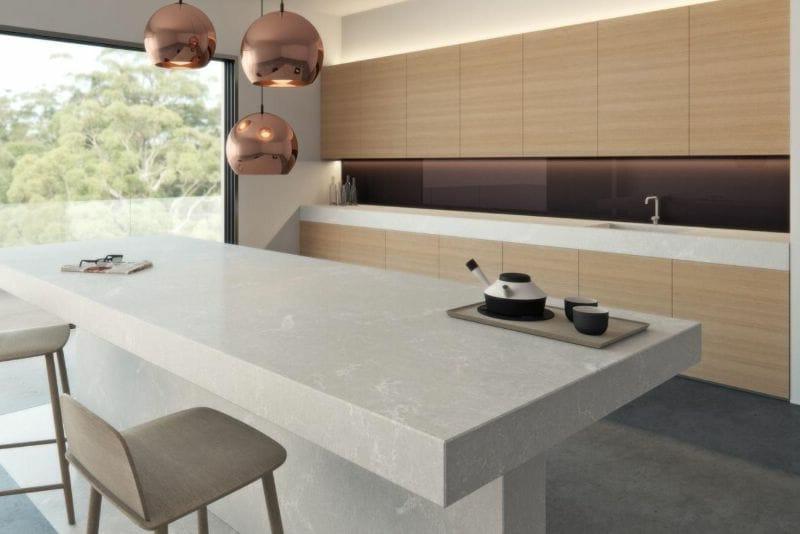
Pros and cons of quartz countertops
So, is quartzite the same as quartz? Consider these unique strengths and practical limitations of this factory crafted surface before buying.
Pros:
- Stain Resistant: Completely nonporous surface protects against red wine, tomato sauce, coffee, and oils.
- Low Maintenance: Requires zero chemical sealing, polishing, or conditioning.
- Visual Consistency: The slab installed in your kitchen will reliably match the showroom sample.
- Flexible Pricing: Options fit both moderate remodeling budgets and luxury builds.
- Hygienic: Antimicrobial surface prevents mold, mildew, and bacteria growth.
Cons:
- Heat Sensitive: Vulnerable to permanent damage from hot cookware or slow cookers above 300°F.
- Indoor Only: Discolors in direct, unfiltered sunlight and cannot be used for outdoor kitchens.
- Visible Seams: Seam lines on large islands may stand out if patterns do not align perfectly.
Pros and cons of quartzite countertops
Natural quartzite offers distinct structural strengths along with specific ongoing care obligations.
Pros:
- Authentic Natural Beauty: 100% natural stone featuring unique veining, crystal depth, and organic character.
- Extreme Hardness: Measures 7 to 8 on the Mohs scale, easily resisting scratches and heavy kitchen impacts.
- Exceptional Heat Resistance: Withstands hot cookware directly without scorching, melting, or thermal shock.
- UV Stability: Will not yellow or fade under direct sunlight, making it ideal for outdoor kitchens.
- Marble Aesthetics: Delivers the luxurious look of high-end marble with far greater durability.
Cons:
- Requires Sealing: Naturally porous structure demands regular applications of penetrating stone sealer.
- Higher Investment: Increased material and fabrication costs due to the stone’s extreme density.
- Etching Risk: Can etch if mislabeled soft marble or dolomitic stone is purchased by mistake.
Which is better: quartz or quartzite?
Deciding between these two popular surfaces depends on your cooking style, aesthetic priorities, and maintenance tolerance.
To determine which is better quartz or quartzite for your specific renovation project, consider these 4 practical kitchen scenarios:
- Select quartz if you have a busy household with young children, prepare messy meals with acidic ingredients, and want zero maintenance chores. If you never want to seal stone surfaces, quartz provides effortless daily living.
- Select quartz if your project requires precise visual symmetry, large seamless spans, or custom mitered waterfall edges on a controlled budget.
- Select quartzite if you want raw geological character, authentic stone depth, and heat resistance that lets you work freely around hot stoves without fear of melted resins.
- Select quartzite if you are designing an outdoor kitchen patio, a sunroom bar, or a luxury kitchen where unique natural artwork takes priority over routine maintenance.