
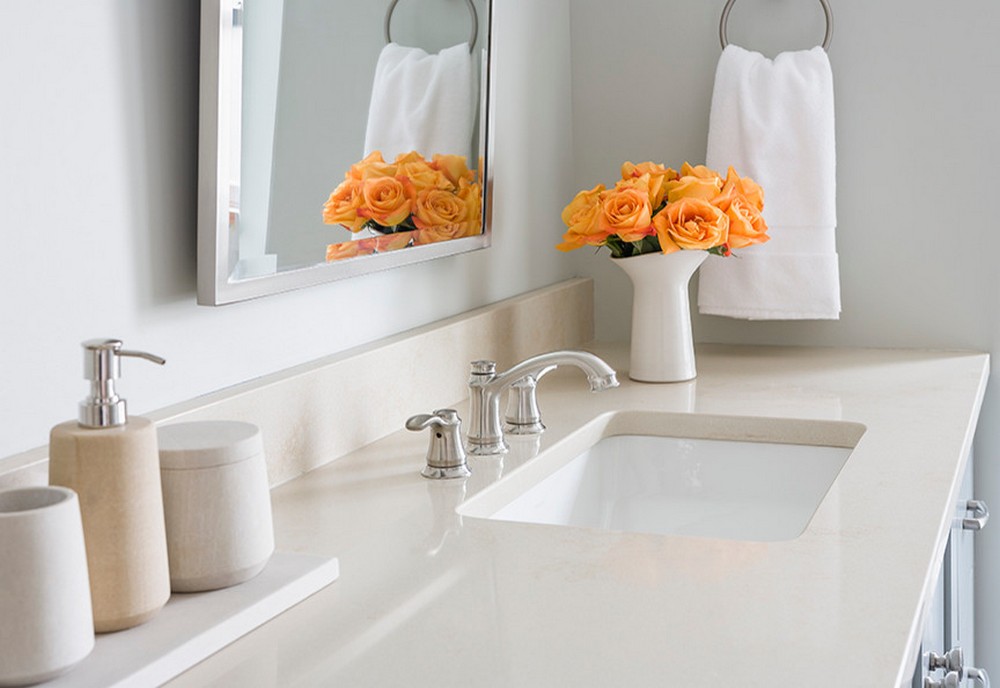
Selecting the best countertop for bathroom remodels requires balancing aesthetics, moisture resistance, and daily durability. Bathroom surfaces encounter daily exposure to water, toothpaste, cosmetics, hot styling tools, and chemical cleaners.
A high quality vanity surface elevates the room design while standing up to high humidity and continuous use. This guide breaks down surface options, performance characteristics, price ranges, and maintenance routines to help you make an informed choice for your home.
Key factors when choosing a bathroom countertop
Bathroom surfaces operate under distinct environmental stresses compared to kitchen counters. Kitchen surfaces face heavy knife impacts and hot cookware, whereas bathroom vanities face standing moisture, acidic toiletries, and concentrated heat from hair tools. Comparing the best bathroom countertops requires evaluating how each surface tolerates humidity, cosmetic chemicals, and daily wear.Consider these critical factors before evaluating specific materials:
- Moisture and humidity resistance: Bathrooms experience high ambient humidity and direct splashing. Porous surfaces absorb moisture, leading to internal discoloration, mold formation, or structural weakening over time.
- Stain and chemical tolerance: Daily products such as makeup, acetone, astringents, hair dye, shaving creams, and liquid soaps contain pigments and chemicals. Non-porous or properly sealed surfaces prevent liquid penetration.
- Heat resistance: Hair straighteners, curling irons, and blow dryers reach temperatures between 300°F and 450°F. Placing hot tools directly on certain engineered surfaces can cause thermal shock or resin burning.
- Maintenance requirements: Natural stones require periodic sealing, while engineered materials need only routine wipedowns with pH-neutral soap.
- Vanity size and layout: Standard vanity widths range from 24″ to 72″. Single-sink setups suit compact spaces, while double-sink layouts demand larger slabs with precise cutouts for plumbing.
- Budget and fabrication costs: Raw material pricing represents only 1 part of the total investment. Fabrication, edge profiling, sink cutouts, and professional installation determine the final expense.
Evaluating these performance criteria against your household habits ensures long-term satisfaction and protects your renovation budget.
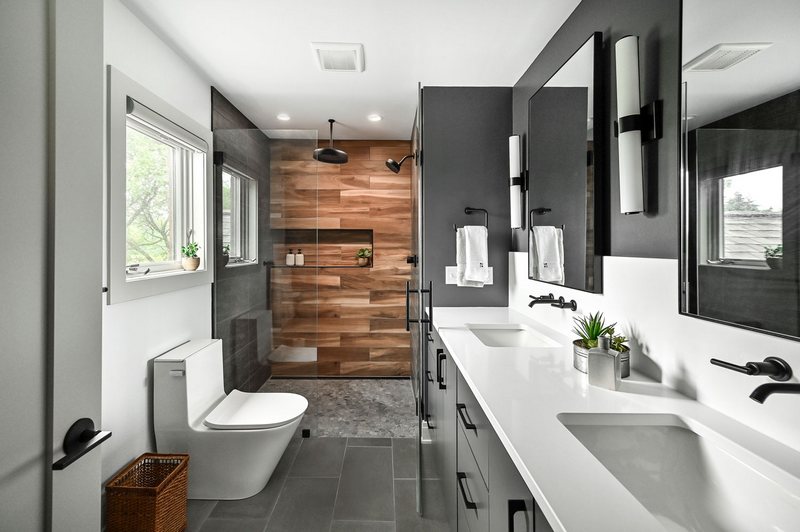
Best bathroom countertop materials
Comparing premium vanity surfaces helps you balance visual preferences with practical performance. The 5 most dependable surfaces for modern bathrooms are quartz, granite, marble, quartzite, and porcelain slabs.
Selecting the right stone surface depends on your routine, design aesthetic, and maintenance willingness.
Quartz
Engineered quartz consists of 90% to 93% ground natural quartz crystals combined with 7% to 10% polymer resins and color pigments. This manufacturing process produces an entirely non-porous slab that never requires topical sealers.
Quartz stands out as the best bathroom countertop material for households seeking zero-maintenance luxury. Because quartz lacks open pores, liquids like liquid foundation, nail polish, and mouthwash cannot penetrate beneath the surface.
Color consistency is a major strength of quartz. Manufacturers produce quartz with hyper-realistic veining that mimics Calacatta marble, uniform modern grays, or solid architectural blacks. Slab thickness typically measures 2 cm (around ¾″) or 3 cm (around 1⅛″).
The primary limitation of quartz involves direct heat exposure. The synthetic resins within the slab can discolor or blister if curling irons above 300°F rest directly on the surface for extended periods. Always utilize silicone resting pads to preserve the factory finish.
Granite
Granite is a natural igneous rock quarried from volcanic formations across the globe. Each slab contains a distinct blend of quartz, feldspar, and mica, resulting in 1-of-a-kind patterns, flecks, and movement.
Many fabricators consider granite the best countertop material for bathroom installations where natural beauty and heat resilience are top priorities. Granite easily withstands hot styling tools placed directly on its surface without scorching or cracking.
Granite delivers superior scratch resistance. Dropping perfume bottles or shaving gear will not gouge the stone. High-density granites resist moisture effectively, though all natural granite requires an initial impregnating sealer application followed by resealing every 12 to 24 months.
Marble
Marble remains the classic standard for luxury master suites and upscale powder rooms. Formed from metamorphosed limestone, marble delivers soft, luminous veining and a smooth tactile feel that manufactured materials attempt to replicate.
Homeowners frequently select marble as the best material for bathroom countertops when timeless elegance and high resale value are paramount. Italian varieties like Carrara, Calacatta Gold, and Statuario provide crisp white backgrounds accented by dramatic gray and gold veining.
Because marble is composed of calcium carbonate, it is porous and chemically reactive. Acidic liquids like perfume, citrus-based facial serums, and harsh grout cleaners cause surface etching (dull spots). Applying an impregnating sealer every 6 to 12 months prevents deep staining, while choosing a honed (matte) finish hides minor micro-etching better than a high-gloss polished finish.
Quartzite
Quartzite is a natural metamorphic stone created when pure quartz sandstone undergoes extreme heat and tectonic pressure inside the Earth. The result is an exceptionally hard stone that outperforms granite on the Mohs mineral hardness scale.
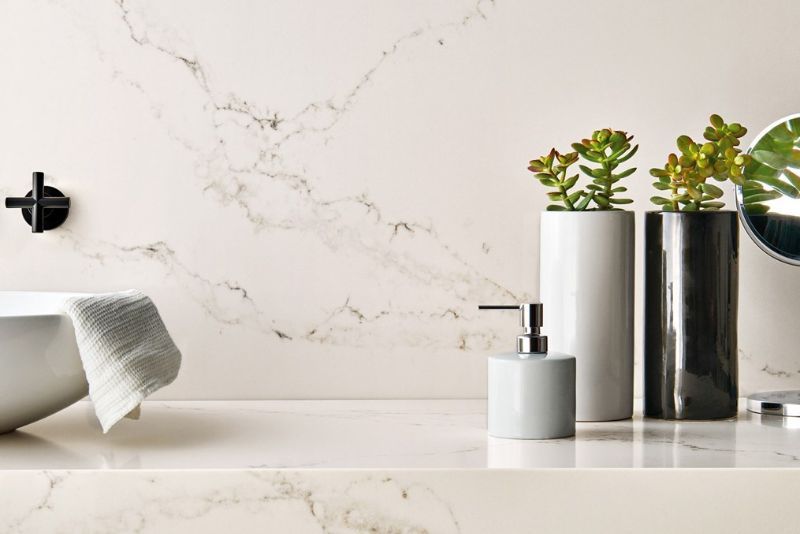
Among natural bathroom countertop materials, quartzite delivers the delicate, flowing appearance of white marble while providing the physical durability of granite. It is impervious to surface scratches from metal accessories and remains completely unaffected by hot hair tools.
Quartzite contains natural capillary pores, meaning it requires periodic sealing to block moisture, cosmetic oils, and colored soaps. Genuine quartzite must not be confused with engineered quartz; quartzite is 100% natural quarried stone.
Porcelain
Porcelain slabs are manufactured from dense kaolin clay, feldspar, and mineral oxides fired at temperatures exceeding 2200°F. This process fuses the raw ingredients into an ultra-dense, glass-like matrix with a water absorption rate below 0.5%.
Porcelain slabs range from 6 mm (around ¼″) to 12 mm (around ½″) in thickness. These thin profiles allow for sleek, contemporary designs, integrated ramp sinks, and continuous wall cladding behind the vanity.
Porcelain is scratch-proof, stain-proof, and impervious to thermal shock. Pigments are UV stable, ensuring the surface will not fade even in bathrooms with direct skylight exposure. Fabrication requires specialized waterjet cutting tools, so selecting an experienced stone fabricator is essential for clean edge finishing.
Best material for bathroom vanity tops by scenario
Different bathrooms serve distinct purposes within a residential property. Determining the best material for bathroom vanity top applications requires assessing user traffic, exposure to chemicals, and long-term care habits.
- Busy family bathrooms: High-traffic shared bathrooms experience heavy water splashing, dropped items, and spilled hygiene products. Engineered quartz and porcelain are the top choices here because they require no sealing and resist stains from toothpaste, hair dyes, and liquid soaps.
- Primary master suites: Master bathrooms function as personal wellness retreats where design impact and tactile luxury matter most. Marble, quartzite, and premium bookmatched quartz slabs provide stunning visual focal points while elevating overall property value.
- Powder rooms and guest baths: Powder rooms see low moisture levels, short visitor visits, and minimal daily cosmetic use. This environment is ideal for expressive natural marble, exotic quartzite, or dark granites that make an architectural statement.
- Rental properties and budget remodels: Rental units demand tough surfaces that withstand tenant neglect. Entry-grade granite or solid surface quartz slabs deliver long-lasting durability without requiring specialized maintenance instructions.
- Spa-inspired wet rooms: In bathrooms where the vanity sits adjacent to open showers or freestanding soaking tubs, porcelain slabs and engineered quartz provide total water resistance and zero mold growth risk.
Installation, cost & longevity
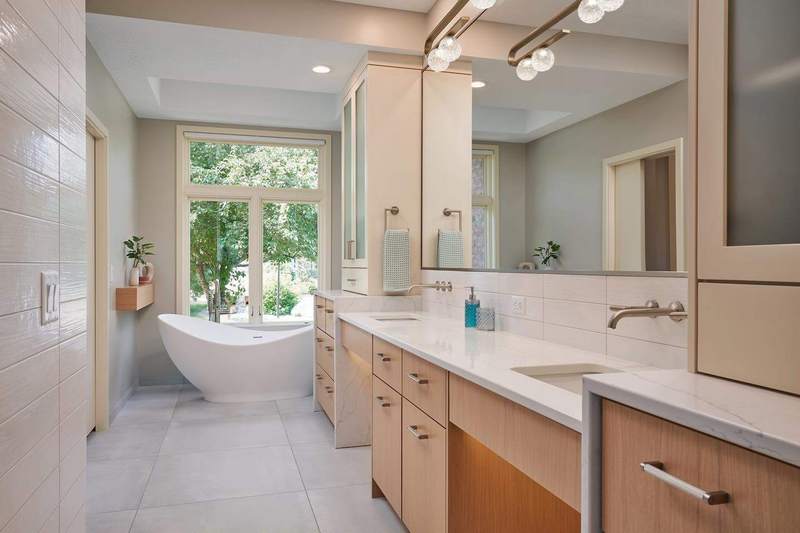
Bathroom countertop costs involve 3 distinct elements: material procurement, fabrication labor, and physical installation. Choosing standard slab cuts versus custom sink fabrication significantly influences project estimates.
Total pricing for various bathroom countertop options involves 3 distinct elements: material procurement, fabrication labor, and physical installation.The average total cost breakdown by material is:
- Quartz: $60 to $150 per sq ft
- Granite: $50 to $140 per sq ft
- Marble: $75 to $200 per sq ft
- Quartzite: $80 to $220 per sq ft
- Porcelain slabs: $60 to $130 per sq ft
Fabrication details influence the final look and functionality of the vanity top:
- Edge profiles: Standard 1½″ eased edges, pencil edges, and half-bullnose edges fit contemporary spaces. Ornate ogee, dupont, or waterfall mitered edges add visual weight and classical sophistication.
- Sink cutouts: Undermount sinks mount beneath the stone cutout for easy water wiping directly into the basin. Vessel sinks require a single drain hole cutout. Integrated stone ramp sinks require custom-mitered fabrication from the same slab for a continuous appearance.
- Backsplashes: Installing a 4″ matching stone backsplash protects drywall from direct water splashing. Full-height backsplashes running from the counter surface to the mirror or ceiling create a seamless designer aesthetic.
When installed over level, structurally sound vanity cabinets with silicone adhesives and mechanical brackets, natural stone and engineered slabs last 30 to 50+ years.
Maintenance & care tips by material
Consistent care preserves the original luster and structural integrity of bathroom surfaces. Implementing the correct cleaning routine prevents chemical etching, dulling, and water spots.
- Quartz care: Wipe daily with a microfiber cloth and warm water mixed with mild, pH-neutral dish soap. Avoid abrasive scouring pads, bleach, oven cleaners, and paint strippers. Use silicone trivets or heat mats beneath hot styling irons.
- Granite and quartzite care: Clean daily with stone-safe sprays. Apply an impregnating penetrating sealer once every 12 to 24 months. To check if resealing is necessary, place a few drops of water on the surface; if the water darkens the stone within 10 minutes, apply fresh sealer.
- Marble care: Clean exclusively with dedicated marble cleaners formulated at neutral pH levels (pH 7). Wipe up spills from perfume, aftershave, and cosmetic oils immediately. Avoid all vinegar, citrus cleaners, and standard bathroom descaling chemicals.
- Porcelain care: Clean with any standard household cleaner, disinfectant, or warm soapy water. Porcelain requires zero sealing and tolerates chemical cleaning agents without surface degradation.
Frequently Asked Questions
What are bathroom counters made of?
▼
Can hot hair tools damage a quartz countertop?
▼
What is the most durable material for bathroom vanity top?
▼
How do you remove water stains from natural marble vanity tops?
▼
What is the cheapest bathroom countertop material?
▼