
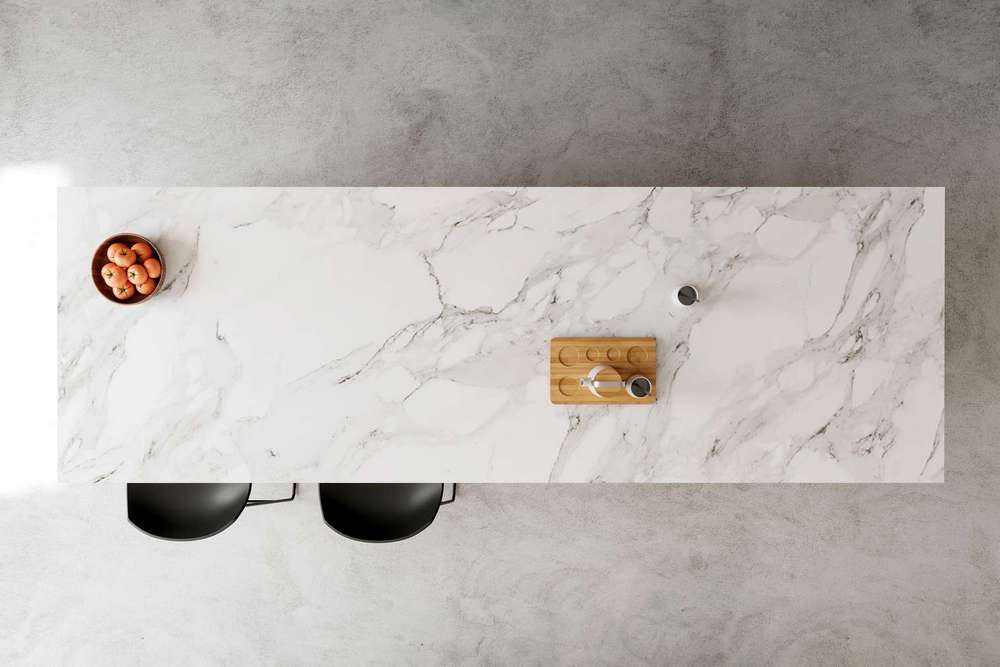
Selecting surface materials for a kitchen or bathroom renovation often comes down to one core decision: understanding the difference between quartz and quartzite. Popular among property owners and designers, these options share similar names but differ significantly in geological origin, chemical composition, and daily performance.
Beyond surface appearance, each slab responds differently to daily demands: from kitchen heat, acidic spills, and heavy traffic to bathroom moisture and personal care products. Choosing between engineered quartz and natural metamorphic stone directly impacts maintenance, long-term durability, aesthetics, and overall investment across residential and commercial projects.
What is quartz countertops?
Engineered quartz surfaces represent an advanced composite material engineered for maximum durability and visual consistency. These slabs consist of 90% to 93% pulverized natural quartz crystals derived from industrial quarrying. Binders consisting of 7% to 10% high-grade polymer resins, specialized pigments, recycled glass fragments, and micro-mirrors bind these raw mineral particles together into solid form.
The manufacturing process uses intense compaction under intense hydraulic pressure combined with atmospheric vacuum vibration technology. This process removes all internal air pockets, creating dense, uniform slabs with absolute structural integrity. The slabs undergo thermal curing in industrial ovens to solidify the resin matrix, followed by precision calibration and surface polishing.
Because factory engineers oversee production from start to finish, engineered quartz provides total pattern uniformity across production runs. Modern manufacturing lines can reproduce delicate marble veining, solid monolithic tones, fine terrazzo textures, or industrial concrete aesthetics with complete spatial predictability.
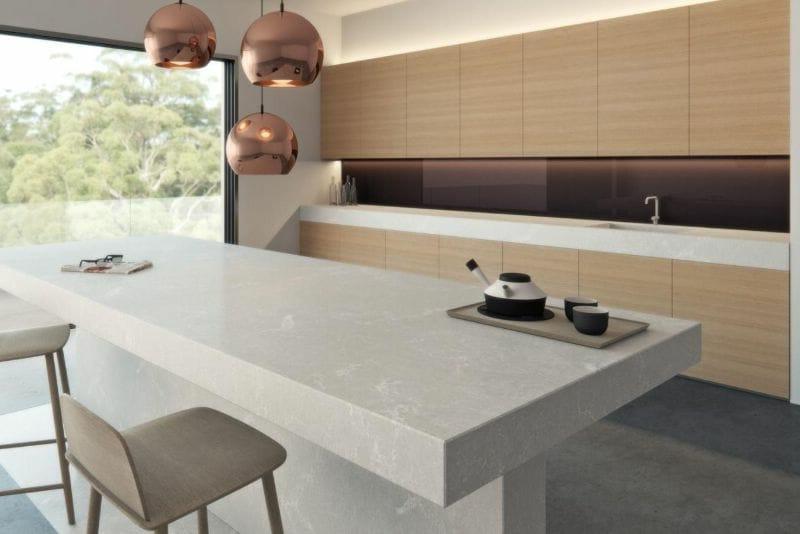
Engineered quartz requires 0 topical sealers, resists moisture absorption completely, and maintains simple upkeep across high-use kitchens, bathroom vanities, and commercial bar tops. Its non-porous structure prevents bacterial growth, liquid penetration, and mold accumulation without requiring complex chemical treatments.
What is quartzite countertops?
When exploring premium stone options, trade professionals and homeowners frequently ask: what is quartzite countertops? Natural quartzite originates deep within the crust of Earth as pure quartz sandstone. Over millions of years, intense geological heat and tectonic pressure transform soft sandstone into an extremely dense metamorphic rock composed almost entirely of interconnected quartz grains.
During this metamorphic transformation, individual quartz crystals recrystallize and fuse together into an interlocking mosaic structure. This natural fusion gives quartzite its immense structural strength and characteristic crystalline sparkle. Artisans extract raw blocks directly from geological quarries across Brazil, Italy, and India before slicing them into slabs with diamond gang saws.
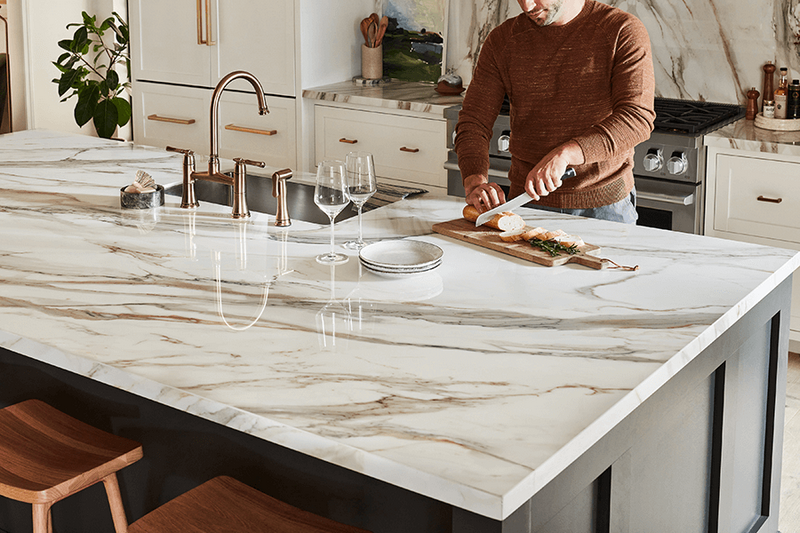
After cutting, fabricators polish slab surfaces to reveal rich mineral patterns, depth, and organic lustre. Natural quartzite features sweeping, fluid veining that rivals classical Italian marble while offering physical hardness superior to granite. Because each slab forms through natural geological forces, no 2 slabs feature identical pattern movements or color tones.
Colors range from pristine snow whites and subtle grey tones to exotic hues of emerald green, azure blue, and soft rose. These distinct color variations result from trace minerals like iron oxide, copper, and clay present during the metamorphic process.
Quartz vs quartzite countertops: key differences
Comparing quartz vs quartzite countertops requires evaluating raw physical attributes alongside realistic lifestyle demands. While engineered quartz relies on synthetic resin binders, natural quartzite remains 100% natural stone extracted directly from the crust of Earth. This fundamental distinction dictates thermal tolerance, surface porosity, UV stability, and long-term maintenance cycles.
Below is a detailed comparison matrix outlining how these 2 surfacing options perform across 10 vital operational categories:
| Parameter | Engineered Quartz | Natural Quartzite |
| Origin | Engineered composite made in factories | 100% Natural metamorphic stone |
| Composition | 90% to 93% quartz crystals, 7% to 10% resin | 100% Natural fused quartz sandstone crystals |
| Appearance & Patterns | Uniform, predictable, reproducible veining | Organic, unique, sweeping veining patterns |
| Hardness & Durability | 7.0 on Mohs scale; high flexibility | 7.0 to 8.0 on Mohs scale; rigid structure |
| Porosity | Completely non-porous (0% liquid absorption) | Micro-porous; density ranges from low to high |
| Heat Resistance | Moderate (safe up to 150 °F to 300 °F short term) | Exceptional (withstands up to 1000 °F+) |
| Stain Resistance | Superior; resists oils, wine, and acids | High when sealed; prone to acid etching unsealed |
| Maintenance | Simple cleaning; 0 sealing ever needed | Periodic sealing needed every 6 to 12 mos |
| Investment | Moderate to premium ($60 to $150 per sq ft) | Luxury investment ($80 to $200+ per sq ft) |
| Environmental Aspects | Reuses quartz scrap; uses polymer resins | Direct quarrying; long natural lifecycle |
Evaluating quartzite vs quartz countertops side by side reveals that neither material is universally superior for every room application. Instead, optimal performance depends entirely on specific space requirements, cooking habits, UV exposure, and personal maintenance routines.
To evaluate these options effectively for your project layout, review this structured list of decision factors:
- Direct sunlight exposure: Natural quartzite resists UV rays completely, while engineered quartz resins degrade under direct outdoor sunlight.
- Heat handling habits: Natural quartzite allows direct hot pan placement, while engineered quartz requires trivets to avoid heat marks.
- Daily maintenance preferences: Engineered quartz requires 0 sealing, while natural quartzite needs periodic penetrating sealant application.
- Visual preference: Engineered quartz offers repeatable patterns for large seam matches, while natural quartzite provides 1-of-a-kind organic movement.
Detailed breakdown of key differences
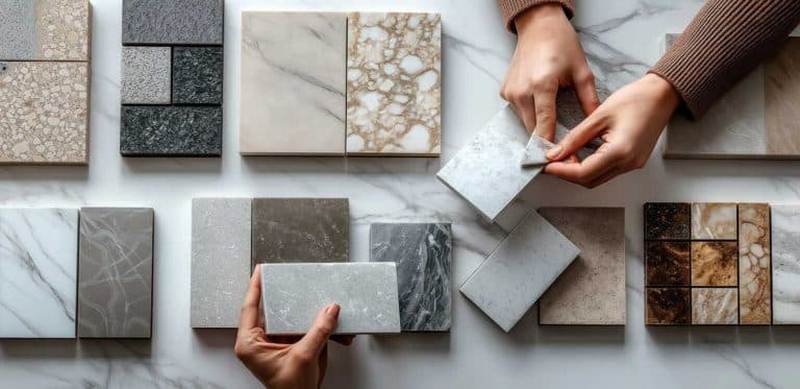
To clearly understand what’s the difference between quartz and quartzite, we must analyze the exact physical attributes governing real-world performance. From light exposure stability to scratch protection, each material brings specific physical strengths to residential and commercial environments.
Appearance & aesthetics
Aesthetics play a decisive role in surface selection.
Engineered Quartz:
- Design Control & Consistency: Guarantees seamless pattern continuity across every slab seam when matching multiple slabs across extensive kitchen islands, integrated waterfall side panels, and full-height wall backsplashes.
- Texture Replication: Modern manufacturing processes allow engineered quartz to replicate luxury Calacatta marble, dark slate, or modern concrete textures with remarkable accuracy.
- Controlled Color Palettes: Allows interior designers to specify exact shade codes across large residential developments.
Natural Quartzite:
- Organic Depth: Delivers unmatched organic luxury, unique visual translucency, crystalline sparkle, and sweeping veining created by ancient mineral deposits.
- Architectural Art: Slabs can feature dramatic contrast or soft monochromatic blending that transforms kitchen islands into fine architectural art.
- Uniqueness: Because no 2 quartzite slabs are identical, your home receives an exclusive focal point that cannot be duplicated.
- Authenticity: For homeowners who value authenticity, organic depth, and natural variation, quartzite stands as an unmatched stone choice.
Durability & strength
Comparing structural strength reveals important operational differences when evaluating quartz versus quartzite.
Natural Quartzite:
- Hardness Rating: Ranks between 7.0 and 8.0 on the Mohs scale of mineral hardness, making it harder than granite, marble, and structural steel tools.
- Scratch Resistance: Resists scratching from kitchen knives, metal cookware, heavy appliances, and daily household wear effortlessly.
- Impact Resistance: Dense crystalline lattice resists surface chipping under heavy impact once properly installed on level cabinet bases.
Engineered Quartz:
- Hardness Rating: Ranks at approximately 7.0 on the Mohs scale, offering excellent scratch resistance for daily food preparation.
- Flexibility: While slightly softer than pure quartzite, its 7% to 10% polymer resin composition provides internal tensile flexibility.
- Reduced Chipping Risk: This synthetic resin matrix makes engineered quartz less brittle during transportation, fabrication cutting, and edge profile shaping, reducing edge chipping risks during heavy installation work.
Maintenance & cleaning
Daily care requirements influence long-term satisfaction significantly.
Engineered Quartz:
- Non-Porous Structure: Liquids, spills, bacteria, and mold cannot penetrate beneath the surface.
- Zero Sealing Required: Requires 0 penetrating sealers, topical oils, or specialized wax treatments throughout its operational life.
- Simple Care: Routine maintenance requires simple wiping with warm water, mild dish soap, and a soft microfiber cloth.
- Stain Resistance: Common kitchen liquids like coffee, red wine, citrus juice, and olive oil sit on the surface without penetrating or causing permanent discoloration.
Natural Quartzite:
- Micro-Porosity: Features natural micro-porosity that varies depending on the specific quarry source.
- Sealing Schedule: Slabs require professional penetrating stone sealer application upon installation and reapplication every 6 to 12 mos based on surface usage.
- Vulnerability: Unsealed or improperly sealed quartzite can absorb liquids, leading to deep staining or surface etching from acidic spills like lemon juice and vinegar.
- Protection: Regular sealing preserves the crystalline surface and maintains a reliable barrier against liquid penetration.
Fabrication & Budget Considerations: Evaluating total project budgeting plays a central role. Factoring in total material cost and slab fabrication price helps clarify the overall investment required for each option:
- Engineered Slabs: Offer standardized cutting routines.
- Natural Quartzite: Requires specialized diamond blades, slower cutting speeds, and skilled craftsmanship.
Heat tolerance
Thermal performance marks 1 of the clearest functional differences between these 2 stone options.
Natural Quartzite:
- Geological Origin: Formed under extreme geological temperatures deep inside the crust of Earth.
- Direct Thermal Exposure: Withstands direct thermal exposure from hot baking sheets, boiling pots, and cast-iron skillets without scorching, discoloring, or cracking.
- High Temperature Tolerance: Its heat tolerance exceeds 1000 °F, making quartzite an ideal choice for high-volume residential kitchens, cooktop surrounds, and outdoor barbecue stations.
Engineered Quartz:
- Resin Sensitivity: Contains synthetic resin binders that react to sudden temperature spikes.
- Thermal Shock Risks: When exposed to temperatures exceeding 150 °F to 300 °F, resins undergo thermal shock, leading to resin burning, yellow discoloration, surface clouding, or localized cracking.
- Surface Protection: Placing hot cookware directly from an oven or burner onto engineered quartz can cause permanent surface damage.
- Best Practice: Always utilize protective trivets, hot pads, or silicone mats when placing warm cooking vessels onto engineered quartz.
Quartz or quartzite: which is better?
Deciding whether quartz or quartzite suits your property project depends on aligning material characteristics with your lifestyle, cooking style, and maintenance preferences. Neither surface represents a universal answer; each excels under distinct operational conditions.
Choose engineered quartz if your project priorities include:
- Minimal maintenance demands with 0 need for periodic sealing routines.
- Complete pattern predictability for multi-slab runs, seamless edge matching, and large commercial projects.
- Maximum stain resistance against daily spills like coffee, wine, oils, and sauces.
- Consistent performance across indoor kitchen areas, bathroom vanities, and laundry rooms.
Choose natural quartzite if your project priorities include:
- Authentic 100% natural stone beauty with unique organic veining and visual depth.
- Superior thermal tolerance that allows direct contact with hot pots and cooking pans.
- Maximum surface hardness that outperforms granite and resists knife scratches.
- Complete UV stability for outdoor kitchens, patio dining bars, and sunlit rooms.
To decide what is better quartz or quartzite for your space, evaluate how your household operates daily. Active families seeking hassle-free cleaning routines often favor engineered quartz. Professional chefs and home cooks who prioritize heat tolerance and natural beauty usually choose natural quartzite.