
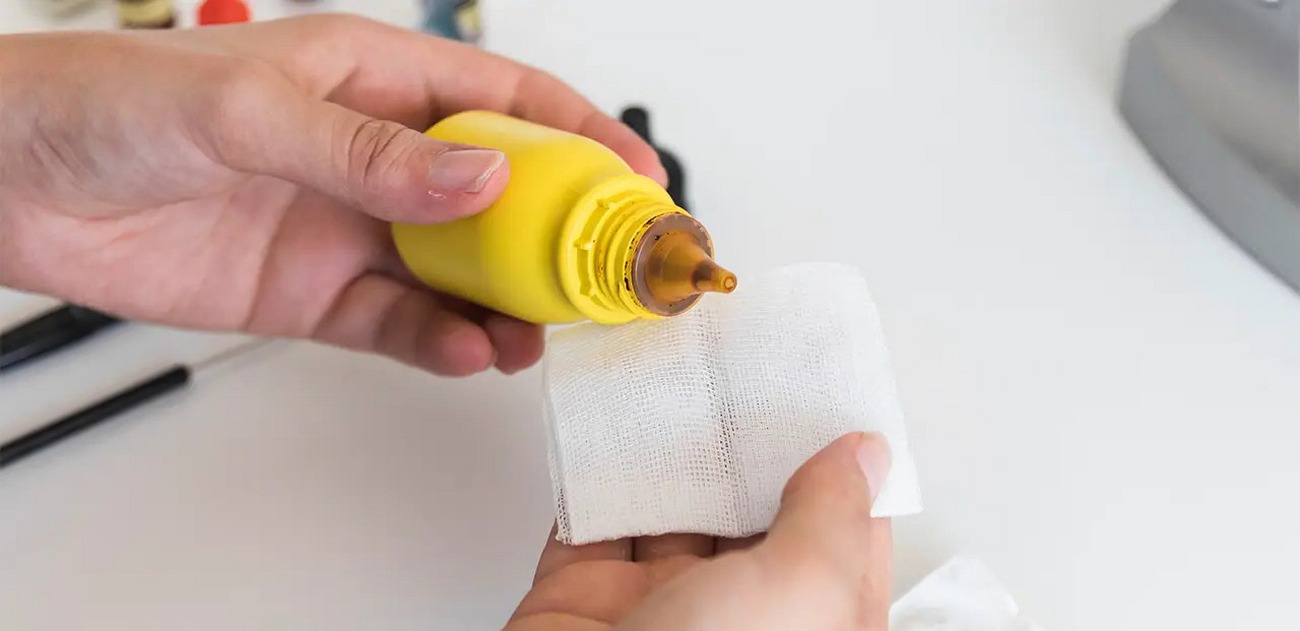
A hardened glue spot needs a careful approach, especially on a polished counter. Start with mild cleaning and avoid forcing the deposit loose. Choosing how to remove super glue from countertop finishes depends on the material, its coating, and the adhesive involved.
What to know before removing super glue from a countertop
Super glue usually contains cyanoacrylate, an adhesive that cures rapidly with moisture. Once hardened, it can resist ordinary wiping and leave a raised, transparent deposit.
Identify the surface and adhesive
Check your installation paperwork for the countertop material and brand. Granite, engineered quartz, porcelain, laminate, and acrylic surfaces can look similar while needing different care. Also identify any sealer, repair resin, or decorative coating.
Read the glue label before choosing a remover. Nail adhesive is often cyanoacrylate, but nail polish, craft resin, and construction adhesive require different treatments. Keep the packaging so you can check cleanup instructions against the countertop care guide.
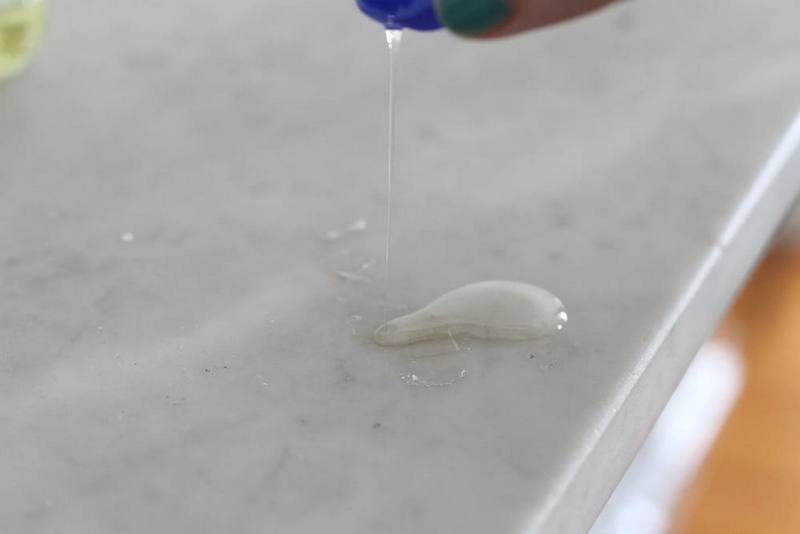
Prepare a small working area
Clear away food, utensils, and small appliances.
- Cleaning supplies: Gather warm water, mild dish soap, and a soft cloth for cleaning hardened residue.
- Lifting tool: Choose a clean plastic scraper with a smooth edge, provided the surface manufacturer permits it.
- Product approval: Confirm that any solvent or adhesive remover is suitable for the exact countertop and finish.
- Personal protection: Follow the remover label for ventilation, eye protection, and compatible gloves.
Test an approved product on an inconspicuous finished area first. Follow its contact time, remove it as directed, and let the spot dry completely before checking for changes. A successful test does not override a manufacturer’s prohibition.
General method: how to remove super glue from a surface
Work from the least aggressive treatment toward an approved adhesive remover. Check progress between applications instead of increasing pressure or extending contact time without guidance.
The practical answer to how to remove super glue from a surface is to soften the bond where possible, then lift only what releases easily.
Clean, soften, and lift
Use this sequence for hardened glue after confirming which tools and products your surface allows. If the adhesive is still liquid, follow its spill instructions instead of spreading it across the counter.
- Clean around the spot: Remove grit with mild soapy water and a soft cloth. Keep debris away from the scraper’s path.
- Try gentle softening: Hold a warm, damp cloth over the cured deposit where water exposure is permitted. Avoid flooding joints or exposed edges.
- Check the edge: With an approved plastic scraper held nearly flat, gently test whether the glue releases. Stop if it resists or the tool leaves marks.
- Apply an approved remover: If needed, treat only the deposit using the applicator and contact time specified on the label. Keep the liquid away from seams and trim.
- Remove loosened material: Lift softened residue without levering against the countertop. Collect fragments before another pass so they cannot drag across the finish.
- Wash and inspect: Remove cleaner residue as directed, rinse where permitted, and dry. Examine the area from several angles before deciding whether another application is needed.
There is no universal soaking time. Adhesive thickness and remover chemistry affect the result, and longer exposure can damage the surface before the glue releases. Stop if treatment produces discoloration, tackiness, or a change in sheen.
How to get super glue off of granite
Granite is natural stone, but the installed surface may include resin repairs, sealers, or other treatments. Those components can react differently from the minerals beneath them.
Deciding how to get super glue off of granite therefore requires checking the finish as well as identifying the stone. Start with mild soap and warm water, then try gentle lifting if your fabricator permits it.
Use acetone only after checking compatibility
Acetone can soften cured cyanoacrylate, but its effectiveness on glue does not establish compatibility with your countertop. Ask the fabricator whether it is suitable for the slab’s treatments and nearby repairs.
If approved, use a controlled spot application following the product instructions. Avoid pouring it over the counter or leaving a soaked pad beneath plastic without a specified procedure. Protect adjoining painted cabinets and keep solvent away from seam adhesive.
Some nail polish removers contain oils, dyes, fragrances, or other solvents. Do not substitute them for a specified product simply because the bottle mentions acetone.
Assess the surface after cleaning
Once dry, check whether the mark is still raised. A remaining ridge suggests adhesive residue; a flat cloudy patch may indicate residue or an altered finish. Further scraping cannot resolve every type of mark.
Do not automatically reseal the entire counter afterward. Ask whether the treatment affected the existing protection and whether local maintenance is needed. A stone professional should assess persistent discoloration or damage near a repaired fissure.
How to remove super glue from quartz countertops
Engineered quartz contains mineral particles bound with resin. Its resistance to everyday spills does not make every solvent or adhesive remover suitable.
So, how to remove super glue from quartz countertops? The safest starting point is the care guide for your exact brand and finish. Manufacturers differ in their permitted cleaners, so advice for another quartz product may not apply.
Follow the brand’s residue removal procedure
Begin with the approved routine cleaner or mild soap and water. Where permitted, gently test a hardened deposit with a plastic putty knife. Keep pressure low, particularly around edges and seams.
Do not assume acetone is allowed because another guide recommends it for stone. If the care instructions exclude it, skip that treatment. Ask the manufacturer for an approved procedure specifically for cured cyanoacrylate.
Photograph the deposit and provide the glue name when requesting advice. Mention previous cleaning attempts, including products and approximate contact times.
Avoid applying a sealer or countertop polish to disguise a cloudy area. Such coatings may leave uneven gloss and complicate assessment. Stop home treatment if the surface changes color or texture.
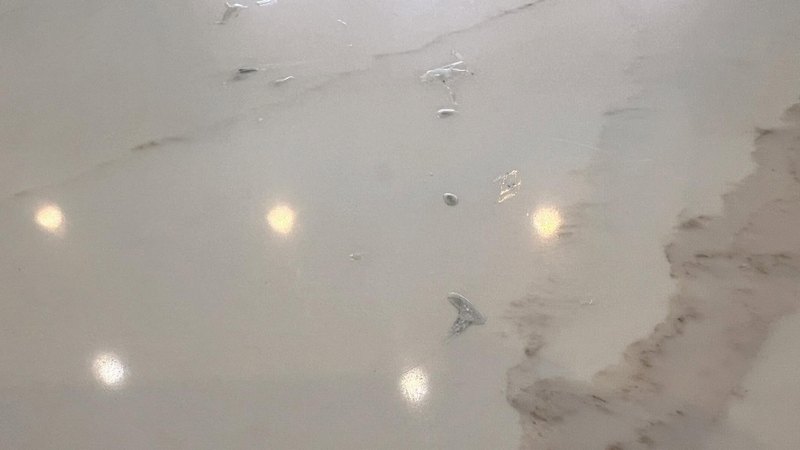
How to remove nail glue from countertop
Check that the spill came from the nail adhesive bottle rather than a polish or gel product. Similar clear deposits can have different ingredients and removal instructions.
This is how to remove nail glue from countertop finishes: follow the same material-specific checks that apply to household cyanoacrylate adhesives. A remover intended for artificial nails is not automatically suitable for granite, quartz, or laminate.
Handle fresh spills differently
Keep fresh adhesive away from cotton pads, cotton clothing, and wool. Cyanoacrylate can react with these fibers and release intense heat. Follow the adhesive manufacturer’s spill procedure rather than wiping a puddle with whatever is nearby.
Do not pull off a glued container, manicure tool, or artificial nail by force. The leverage may chip a surface or strip its coating. Keep the object undisturbed while obtaining a compatible removal method.
For future manicures, use a rigid protective tray with a disposable liner suitable for the products involved. Close the glue immediately after dispensing it and keep the bottle upright within the tray.
Alternative & gentler methods
Warm soapy water is a reasonable initial treatment where the countertop tolerates moisture. It may help loosen an edge, but it is unlikely to dissolve every hardened drop quickly.
Match the method to other materials
If you need to remove superglue from countertop materials beyond stone, identify the decorative finish before trying a solvent. Damage to a thin surface layer can be more visible than the original spot.
Use the material’s care instructions to narrow your options. Pay particular attention to joints, coatings, and exposed edges.
- Laminate: Avoid prolonged wetting at seams and edges, where moisture can reach the underlying board. Obtain approval before using a solvent.
- Acrylic solid surface: Check the brand’s adhesive cleanup instructions. Leave sanding or refinishing to an approved repair procedure.
- Wood: Identify whether the top is oiled, varnished, or otherwise coated. Solvents may remove the finish, while excess water can affect the wood.
- Marble: Avoid vinegar and lemon juice because acids can etch the stone. Confirm compatibility with sealers and repaired areas before solvent treatment.
- Porcelain: Follow the slab manufacturer’s guidance and protect joints and decorative treatments. Avoid prying at exposed edges.
Commercial cyanoacrylate debonders can be useful when both the adhesive and surface instructions support their use. A general adhesive remover may target sticker residue without working well on cured super glue. Check the intended adhesive type before buying.
What not to do
Do not scrape with a kitchen knife or attack the spot with steel wool, scouring powder, or abrasive pads. Even a plastic tool can mark a surface if grit becomes trapped beneath it.
Avoid heat guns, boiling water, and direct flame. Localized heating can damage the finish or stress the material, and solvent vapors can ignite. Keep acetone and other flammable removers away from ignition sources.
Do not combine cleaning products or apply a new chemical over leftover cleaner. Remove the previous treatment according to its instructions first. Baking soda pastes and abrasive sponges are also poor substitutes for a compatible removal method.
If gentle treatment fails, contact your fabricator before escalating. For a Luxiomer countertop, provide the material name, order details, photos, and the adhesive label when asking about care. A professional assessment is especially useful for deposits spanning seams or repaired areas.
Frequently Asked Questions
How to get dried super glue off of a countertop?
▼
Can rubbing alcohol remove hardened glue?
▼
Will acetone ruin countertops?
▼
Why is a cloudy mark left after cleaning?
▼
What gets superglue off a surface?
▼