
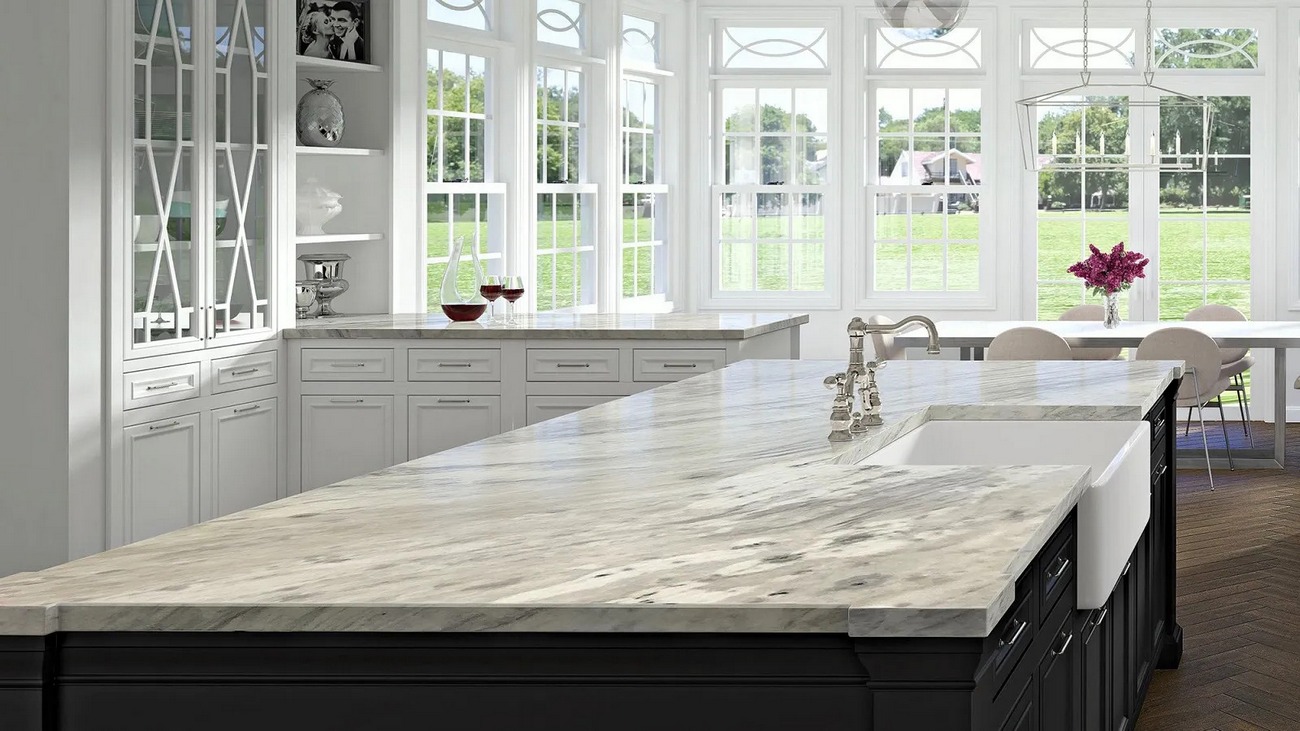
Granite usually suits busy kitchens because it resists scratches and everyday food acids better than marble. Marble appeals to homeowners who value its veining and accept changes from daily use. Your choice depends on cooking habits, budget, and the appearance you want to maintain.
What is the difference between granite and marble?
Granite is an igneous rock formed as molten material cools underground. Marble is a metamorphic rock formed when heat and pressure transform limestone or dolostone.
For homeowners asking, “What is the difference between granite and marble?“, mineral composition explains much of their behavior. Granite typically contains quartz and feldspar, while marble contains mainly calcite or dolomite. These minerals respond differently to scratches, liquids, and acidic spills.
Appearance and natural variation
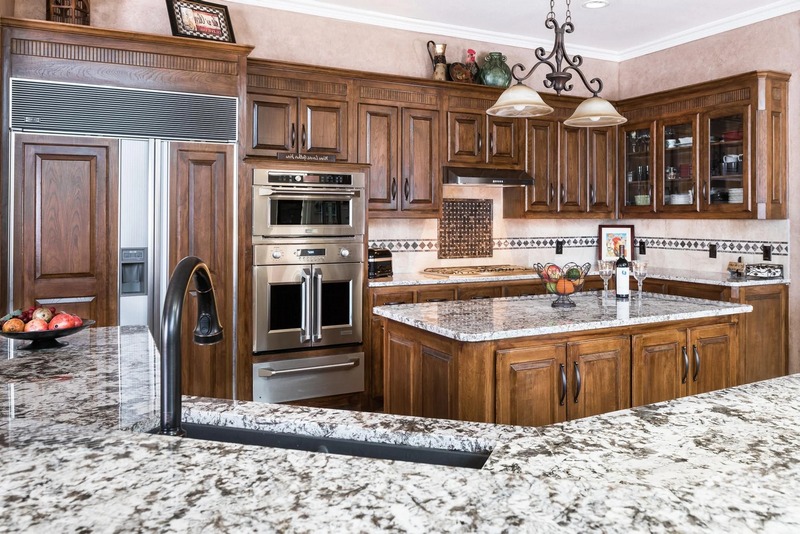
Granite often has visible mineral grains that create a speckled or crystalline pattern. Some slabs feature broad waves or bands, so the familiar dotted appearance does not describe every option.
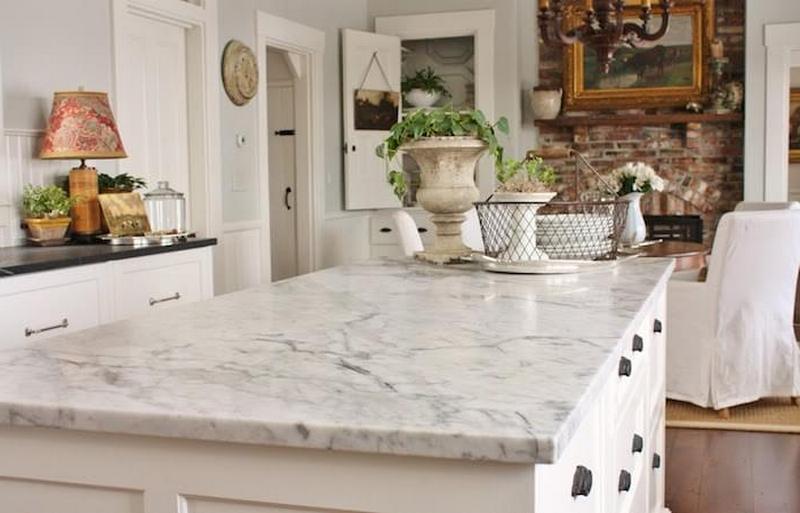
Marble often displays veins across a relatively uniform background. Its colors extend beyond white and gray to include warmer shades and darker varieties. Neither material guarantees a particular pattern, and photographs cannot show every detail of a full slab.
When comparing granite and marble stone, inspect the actual slabs intended for your project. A small sample may miss a large vein, color shift, or repaired area. View the surface beside cabinet and flooring samples before approving the layout.
Staining and etching
A stain develops when a substance penetrates the surface and leaves discoloration. Etching occurs when an acid reacts with susceptible minerals, leaving a dull or altered patch.
Marble can etch after contact with lemon juice, vinegar, or other acidic ingredients. An impregnating sealer can reduce liquid absorption, but it does not prevent this chemical reaction. Granite generally handles ordinary kitchen acids better, although the exact material and any surface treatments still matter.
Which is stronger: granite or marble?
Granite generally offers better resistance to everyday scratching. However, scratch resistance and structural strength describe different properties, so neither stone should be treated as unbreakable.
Hardness and surface wear
The question “is marble stronger than granite” often arises from concerns about utensils, dishes, and countertop wear. Marble generally scratches more easily because its dominant minerals are softer. Cutting boards protect the finish of either material and help preserve knife edges.
Hardness describes resistance to scratching. It does not establish how much weight an unsupported overhang can carry. That requires an assessment of the slab and its installation.
Cracks, edges, and support
To judge which is stronger, granite or marble, for a specific countertop, a fabricator must consider thickness, fissures, cutouts, and support. Narrow sections around sinks need particular attention. Heavy impact can chip exposed edges on either material.
A thicker slab does not automatically eliminate reinforcement requirements. Large overhangs may need brackets or another support system, and cabinets must provide a suitable base.
Do not stand or sit on countertops. Use trivets beneath hot cookware, even when the stone itself tolerates heat well. Sudden temperature changes can affect vulnerable areas, repairs, or treatments.
Cost comparison: is marble cheaper than granite?
Both materials include relatively accessible options and expensive specialty slabs. Color, availability, slab dimensions, and fabrication requirements can change the total substantially.
Material price versus installed price
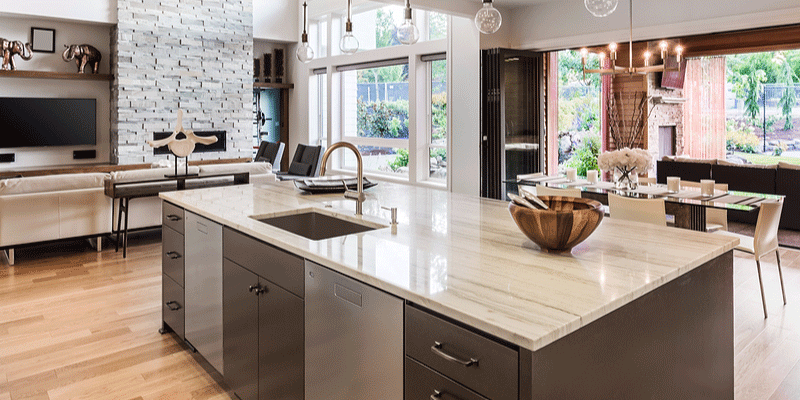
Is marble cheaper than granite? For a particular project, the answer depends on the slabs and work being quoted. A readily available marble can cost less than a rare granite. Conversely, sought after marble with dramatic veining can carry a substantial premium.
Compare complete estimates for the same layout. A slab price alone does not tell you what the finished countertop will cost.
Ask each supplier to identify the following items:
- Material allowance: Confirm the exact stone, finish, thickness, and quantity included.
- Fabrication work: Check charges for sink openings, faucet holes, edge profiles, and polishing.
- Installation scope: Identify delivery, access requirements, supports, and seam work.
- Additional services: Clarify removal, disposal, plumbing, and any cabinet preparation.
Pattern placement can affect how much material you need. Keeping a prominent vein continuous across an island may require a larger slab or additional material. A less restrictive layout can reduce waste.
Maintenance and future expenses
Is granite or marble more expensive over time? Consider the finish you expect to preserve. Marble owners who want a consistently polished appearance may budget for professional surface restoration. Owners who welcome patina may tolerate minor marks without refinishing.
Sealing needs vary with the stone, product, and use. Avoid assuming every countertop needs treatment on the same annual schedule. Follow the fabricator’s care advice and reassess absorption when recommended.
How to tell granite from marble
Start by looking closely at the surface under good lighting. Distinct mineral grains suggest granite, while a more uniform background with veins may suggest marble.
Appearance alone cannot confirm the stone’s identity. Some granite varieties have flowing patterns, and other materials resemble marble closely.
Check the name and documentation
Learning how to tell granite from marble requires more than matching a showroom photograph. Request the material classification and available technical information from the supplier. A commercial name may describe appearance without accurately identifying the geology.
Ask whether the slab has resin treatments, filled areas, or reinforcement. These details can affect fabrication and care. Confirm that the written estimate identifies the same material you inspected.
Evaluate a sample
Ask the supplier for a representative offcut and permission before carrying out any tests. Acid or scratch testing can permanently damage stone, so it belongs on a disposable sample rather than an installed surface.
A fabricator can help assess acid sensitivity and absorption. Observe the sample after it dries, since temporary darkening from moisture can differ from a lasting mark. Use the findings alongside documentation rather than relying on a single informal test.
Where are granite and marble commonly used?
Both materials appear in countertops, wall cladding, flooring, and decorative features. Suitability depends on the specific stone, finish, installation, and exposure.
Kitchens and food preparation areas
Comparing granite vs marble kitchen countertops is largely a decision about surface wear and maintenance expectations. Granite usually suits frequent cooking and shared family kitchens. Marble can work well when its owner accepts etching and uses protective habits consistently.
Marble pastry surfaces are valued for their smooth feel during dough preparation. That use does not make them resistant to oil stains or acidic ingredients. Keep food preparation equipment and cleaning products suitable for the chosen finish.
Backsplashes also encounter cooking splashes. Consider how easily grease can be removed and whether acidic spills could reach the stone behind preparation areas.
Bathrooms and decorative surfaces
Marble’s veining can suit vanity tops, shower walls, and fireplace surrounds. Cosmetics and some cleaning products can still leave marks, so bathroom placement does not eliminate care requirements.
Granite can suit vanity tops and other frequently used surfaces where scratch resistance is useful. For flooring, select a finish appropriate to expected foot traffic and wet conditions.
Shower assemblies need proper waterproofing beneath the finish. Fireplace surrounds must comply with the appliance’s installation requirements. Outdoor projects require separate confirmation of weather suitability, treatments, and installation details.
Granite vs. marble: which stone should you choose?
Start with the way you use the room. A surface beside a heavily used stove faces different demands from a decorative console.
Match the stone to your priorities
For a household that cooks daily, the question “is granite better than marble?” usually comes down to tolerance for visible wear. Granite is generally the easier choice when scratch and acid resistance rank highest. Marble remains appealing when its particular appearance matters more than keeping the finish unchanged.
Choose granite if you want a practical preparation surface with varied colors and mineral patterns. Its limitations include possible staining, edge damage, and natural variation that may complicate matching.
Choose marble if you prefer its veining and are comfortable with more visible signs of use. A honed finish may make some etching less noticeable, but it does not prevent damage.
Review the project before ordering
Use a consistent process to compare your shortlisted options:
- Define priorities: Rank appearance, maintenance, and budget before choosing a slab.
- Review samples: Compare finishes with your cabinetry under daylight and evening lighting.
- Approve the layout: Discuss seams, vein direction, sink placement, and overhang support.
- Compare estimates: Request matching scopes so differences in price are meaningful.
- Confirm care: Obtain cleaning and sealing guidance for the selected stone and treatments.
Bring room measurements, cabinet plans, and inspiration photos when discussing your project with Luxiomer. Request a countertop estimate for your preferred material and layout. Confirm current availability before coordinating fabrication with the rest of your renovation.
Frequently Asked Questions
Is marble the same as granite?
▼
Which is better, granite or marble?
▼
Can damaged stone be repaired?
▼
Which is more expensive granite or marble?
▼