
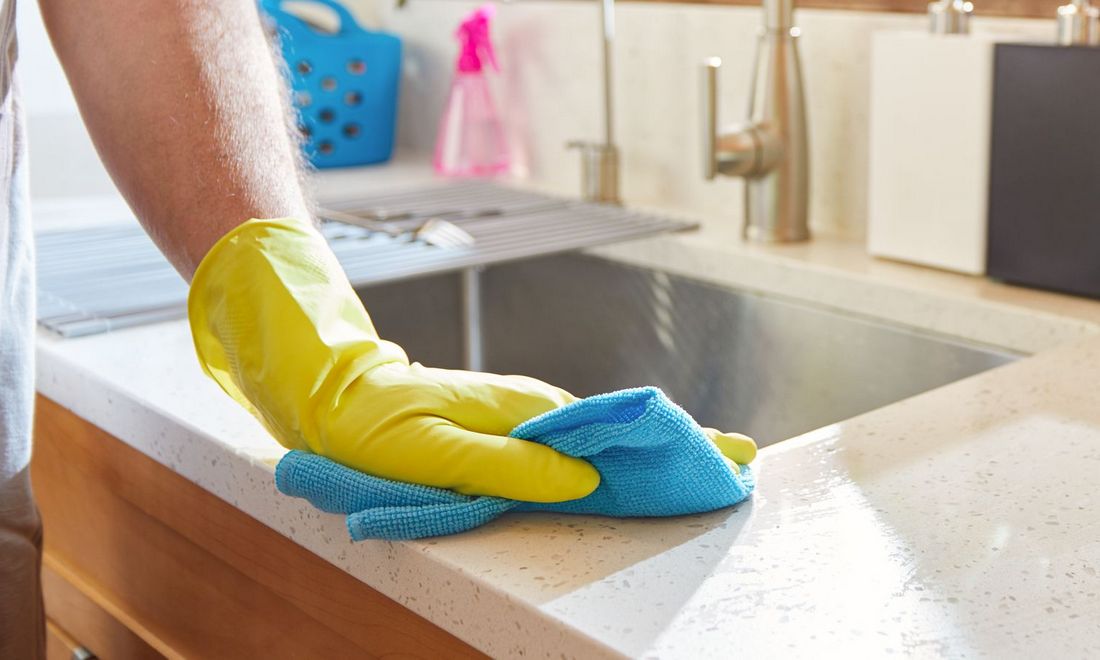
Engineered quartz surfaces combine natural stone minerals with durable polymer resins. This engineering creates an elegant, non-porous surface that resists moisture, spills, and everyday kitchen wear. Keeping these surfaces pristine requires proper techniques and gentle formulas that protect the resin binder.
Knowing how to clean quartz countertops without harsh chemicals helps maintain their glossy factory finish for decades. This guide covers daily care routines, safe cleaning agents, stain removal techniques, and preventative maintenance for luxury kitchen and bathroom surfaces.
Why quartz countertops need specific cleaning care
Natural stone surfaces like marble and granite require periodic chemical sealers to block liquid absorption. Engineered quartz is manufactured differently. Slabs contain roughly 90% crushed quartz crystals bound with 10% polymer resins and color pigments. Because resin fills every microscopic void during production, quartz is completely non-porous and never requires topical sealers.
The same resin matrix that makes quartz waterproof also creates specific maintenance boundaries. High concentrations of alkalis or harsh acids break down polymer bonds. When the resin layer degrades, the surface loses its luster and develops dull, cloudy patches known as chemical etching.
Physical damage can also happen if you use abrasive scrubbers. Steel wool, wire brushes, and gritty powders create micro-scratches across the polished slab. These fine scratches trap cooking oils, dirt, and soap scum, making future maintenance much harder. Proper cleaning quartz countertops preserves the protective resin layer so your stone stays smooth, hygienic, and bright.
Quartz also reacts to extreme heat. Sudden thermal shock from hot cookware can crack the stone slab or scorch the polymer binders. Understanding the physical properties of engineered stone ensures your countertops remain intact and visually striking for decades.
What to clean quartz countertops with
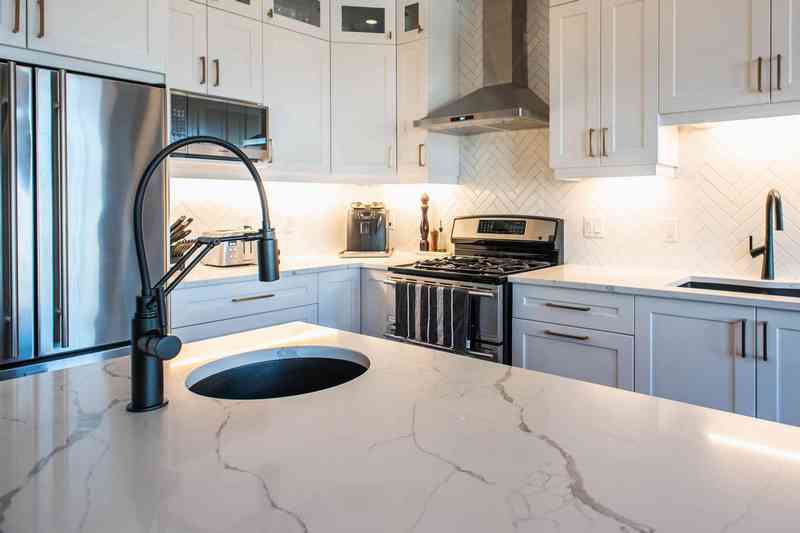
Selecting the right supplies prevents chemical discoloration and physical wear. Because quartz is non-porous, cooking grease, liquids, and crumbs rest entirely on top of the surface. Mild, pH-neutral cleaning products easily lift dirt without damaging the synthetic binders.
Knowing what to clean quartz countertops with simplifies daily kitchen cleanup and protects your countertop investment. You can rely on several household and commercial items:
- Warm tap water and mild liquid dish soap for routine daily wipe-downs.
- Soft microfiber cloths that capture dust and grease without scratching the finish.
- Non-abrasive synthetic sponges for gentle scrubbing on sticky spots.
- 70% isopropyl rubbing alcohol for sanitizing surfaces and removing sticky residues.
- Specially formulated, pH-balanced commercial sprays.
- Flexible plastic putty knives or scrapers for dried food deposits.
- Distilled white vinegar diluted with water in a 1:3 ratio for light mineral buildup, applied briefly and rinsed immediately.
- Baking soda mixed with water into a gentle paste for stubborn organic surface marks.
- 3% household hydrogen peroxide for spot-treating persistent marks on light slabs.
When shopping for commercial formulas, check the product label to ensure it is certified safe for engineered quartz surfaces. Avoid standard all-purpose sprays containing bleach, ammonia, pine oils, or citrus extracts.
The best way to clean quartz countertops
Daily maintenance takes less than 5 min when performed consistently. Following a step-by-step routine ensures you remove surface debris, eliminate cooking grease, and prevent streaking.
Applying the best way to clean quartz countertops on a daily basis prevents residue buildup and maintains maximum surface shine.
Step 1: Prepare the surface
Clear the entire countertop area of small kitchen appliances, cutting boards, and cooking utensils. Take a dry microfiber cloth and sweep away loose crumbs, dry spices, and surface debris into your hand or a trash container. Clearing dry particles first prevents gritty debris from scratching the polished resin when you apply wet cleaning solutions.
Step 2: Apply the cleaning solution
Fill a small bowl or clean sink with warm water and add 2 to 3 drops of mild, pH-neutral liquid dish soap. Submerge a soft microfiber cloth or non-abrasive sponge in the soapy water and wring it out until it is damp but not dripping. Wipe down the entire countertop using overlapping circular motions to loosen dried liquids and oily splatters.
Step 3: Scrape dried spills
Inspect the stone surface for hardened food spills, dried syrup, or sticky residue. Hold a flexible plastic scraper at a shallow 30-degree angle against the counter and slide it under the dried residue. Do not use metal blades or knives, as metal leaves grey transfer marks or chips the resin. Once loosened, wipe the flakes away with your damp cloth.
Step 4: Rinse thoroughly with clean water
Rinse the microfiber cloth thoroughly under clean tap water until all soap residue is gone, or use a second clean cloth dampened with fresh water. Wipe the entire surface a second time to remove all residual soap suds. Leaving soap film on quartz attracts dust and creates a cloudy appearance over time.
Step 5: Buff dry for a perfect finish
Take a dry, plush microfiber towel and buff the entire countertop completely dry. Drying the surface immediately prevents water spots caused by dissolved minerals in hard tap water. Buffing in small circular motions restores the smooth, streak-free shine of the polished stone.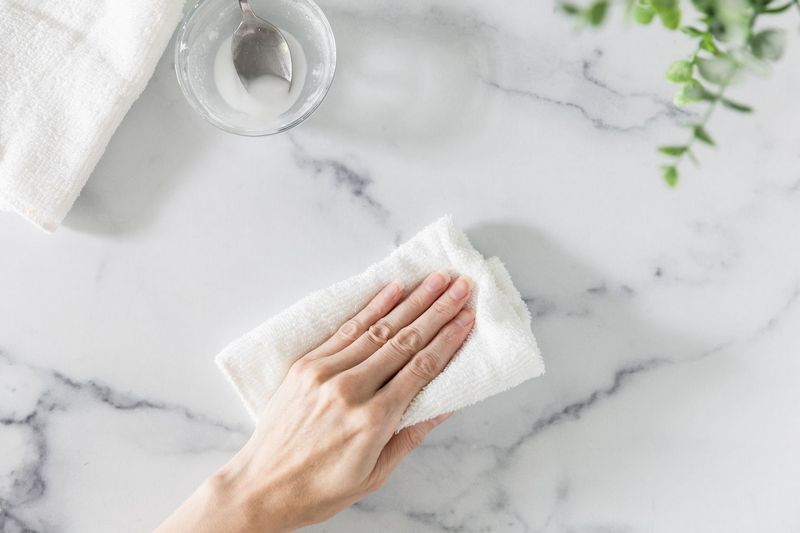
How to remove stains from quartz countertops
Engineered quartz resists most household stains, but highly pigmented liquids and chemical spills can leave stubborn surface marks if neglected. Permanent markers, red wine, turmeric, coffee, and rust require targeted cleaning solutions that dissolve marks without compromising the stone resin.
Follow these steps for specific stain categories:
- Grease and cooking oil: Spray a 50/50 mixture of 70% isopropyl alcohol and warm water directly onto the greasy patch. Allow the solution to sit for 2 to 3 min. Wipe clean with a damp microfiber cloth, then buff dry.
- Dried wine, coffee, and dark tea: Create a thick paste using equal parts baking soda and warm water. Spread the paste over the discoloration with a soft cloth. Let the paste sit for 5 to 10 min without letting it dry completely. Wipe away gently using a damp sponge, applying light pressure, and rinse with clean water.
- Ink, dye, and permanent marker: Apply a few drops of 70% isopropyl rubbing alcohol directly to a cotton ball or pad. Gently dab the ink mark until the pigment transfers to the cotton. Avoid rubbing aggressively in broad strokes, which can spread the ink across unaffected areas.
- Hard water mineral deposits: Soak a paper towel in a mild solution containing 1 part distilled white vinegar and 3 parts water. Lay the damp towel over the mineral ring around the faucet for 2 to 3 min to soften calcium deposits. Remove the towel, scrape the softened ring lightly with a plastic scraper, rinse thoroughly with fresh water, and dry.
- Rust spots and metal transfer marks: Apply a small dab of specialized oxalic acid based quartz countertop cleaner, or a baking soda paste. Let it react with the iron oxide for 1 to 2 min. Wipe away with a soft damp cloth, rinse with water, and dry thoroughly.
- Dried paint or nail polish: Place a cloth soaked in warm soapy water over the paint spot for 10 min to soften the binder. Gently peel or scrape the softened paint with a plastic putty knife. For nail polish, dab a small amount of non-acetone nail polish remover on a cotton swab, apply only to the spot, and rinse immediately within 30 sec.
- Candle wax and gum: Place an ice cube in a plastic bag and set it on top of the wax or gum for 5 min to freeze it. Once the substance becomes brittle, pop it off the counter with a plastic scraper and wipe away residual oils with rubbing alcohol.
Special care for white quartz countertops
Homeowners frequently select white quartz countertops for their bright, luminous aesthetic and modern appeal. Light-colored quartz varieties, including pure white and marble-look slabs with delicate veining, highlight small blemishes, fingerprints, and dark spills more readily than darker patterns.
Preventing discoloration on light engineered stone requires rapid response to spills. Dark liquids such as red wine, balsamic vinegar, soy sauce, espresso, tomato paste, and curry should be wiped up within 5 to 10 min. While these liquids cannot penetrate deep into the material, prolonged contact allows strong pigments to bond with the surface resin layer.
Do not use liquid bleach or chlorine-based scouring cleansers to brighten pale quartz. While bleach may appear to lighten surface discoloration initially, it oxidizes polymer resins over time. This chemical reaction causes permanent yellow or brownish patches that cannot be polished out.
For routine maintenance of light surfaces, use a gentle hydrogen peroxide solution. Apply 3% household hydrogen peroxide to a cotton pad and place it over the persistent blemish for 5 min. Hydrogen peroxide acts as an oxidizer on organic food stains without breaking down polymer resins. Wipe the area clean with fresh water and dry with a clean microfiber cloth to maintain a uniform, bright finish.
What not to use on quartz countertops
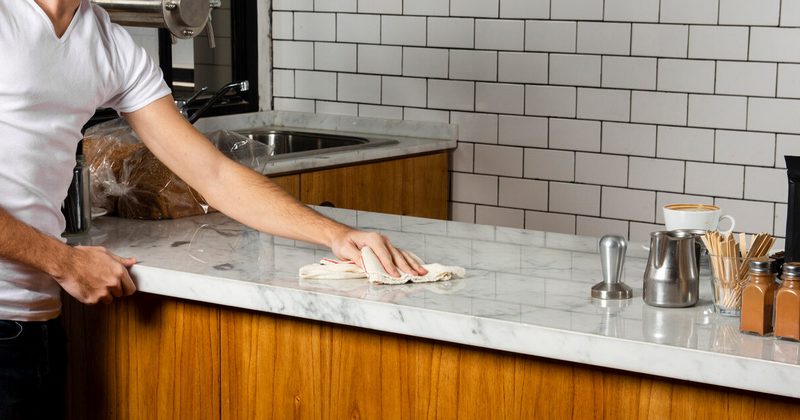
Protecting your quartz surfaces requires knowing which chemicals, tools, and habits cause irreversible surface damage. Even though quartz rates high on the Mohs hardness scale, improper handling compromises its structural integrity and beauty. Understanding what to use to clean quartz countertops prevents accidental damage and keeps surfaces looking brand new.
Avoid the following tools, chemicals, and habits:
- High-pH alkaline cleaners: Oven cleaners, drain uncloggers, grill cleaners, and heavy degreasers have a pH over 10, which strips the glossy resin binder.
- Highly acidic solutions: Undiluted vinegar, lemon juice, toilet bowl cleaners, and hydrofluoric acid formulas etch the polished stone finish.
- Abrasive tools: Steel wool, wire brushes, scouring pads, and pumice stones cause micro-abrasions across the polished surface.
- Abrasive powders: Scouring powders and gritty creams leave fine scratches that permanently dull the surface reflection.
- Harsh chemical solvents: Acetone, methylene chloride, paint thinners, and industrial strippers dissolve resin molecules and leave cloudy white rings.
- Direct heat exposure: Placing hot pots, cast-iron skillets, baking sheets, air fryers, or slow cookers directly onto quartz causes thermal shock. Sudden temperature changes above 150°C (300°F) crack the stone slab or scorch the resin binders. Always use heat trivets and silicone pads under hot cookware.
- Cutting directly on the slab: Using kitchen knives directly on quartz dulls your blades and leaves metal transfer marks that are difficult to scrub away. Always use wood or plastic cutting boards.
- Excessive weight and pressure: Sitting or standing on countertop overhangs can crack joints, seams, or unreinforced cutouts around sinks and cooktops.
Frequently Asked Questions
What can I use to clean quartz countertops?
▼
Can I use vinegar or lemon juice on quartz?
▼
What is the best everyday cleaner for quartz countertops?
▼
Does quartz need to be sealed regularly?
▼
How to get rid of stains on quartz countertops?
▼